

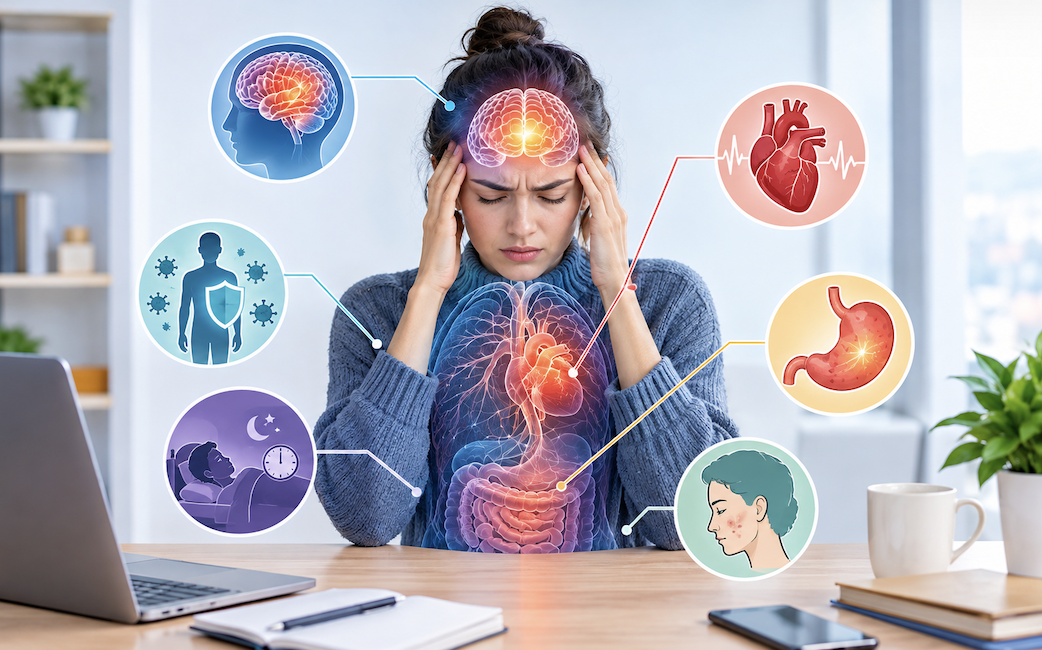
Everyone experiences stress occasionally, and in short bursts, it can even prove useful, sharpening focus during a deadline or providing the adrenaline needed to react quickly in a genuinely urgent situation. Chronic stress, the kind that lingers for weeks, months, or years without meaningful relief, operates very differently, gradually wearing down systems throughout the body in ways that often go unnoticed until symptoms become impossible to ignore.
Understanding what’s actually happening physiologically during prolonged stress helps clarify why managing it matters for far more than just emotional comfort, touching nearly every major system the body relies on to function well.
The Body’s Stress Response and Why It Exists
When faced with a perceived threat, the body activates what’s commonly called the fight-or-flight response, releasing hormones like cortisol and adrenaline that prepare muscles for quick action, sharpen alertness, and temporarily deprioritize functions like digestion that aren’t immediately necessary for survival in that specific moment.
This response evolved to handle acute, short-term dangers, such as escaping a predator, and it works beautifully for exactly that purpose. The trouble arises when this same physiological response gets triggered repeatedly by modern stressors, like ongoing work pressure or financial worry, that never resolve the way a genuine physical threat would, leaving the body stuck in a prolonged state of activation it wasn’t designed to sustain.
The Basic Stress Response Cycle
- A perceived threat triggers the release of cortisol and adrenaline
- Heart rate and blood pressure rise to prepare the body for quick action
- Non-essential functions like digestion get temporarily deprioritized
- Under normal circumstances, the body returns to baseline once the threat passes
How Chronic Stress Affects the Cardiovascular System
Persistently elevated cortisol keeps blood pressure higher than it should be over extended periods, placing ongoing strain on blood vessels and the heart itself. Over months and years, this sustained pressure contributes to a measurably increased risk of hypertension, a well-documented risk factor for heart disease and stroke.
Chronic stress also tends to encourage behaviors that compound this cardiovascular risk indirectly, such as poor sleep, reduced physical activity, and reliance on comfort foods high in sugar and unhealthy fats. Together, the direct physiological effects and these indirect behavioral shifts create a combined burden on heart health that grows more significant the longer stress remains unmanaged.
- Elevated cortisol contributes to sustained higher blood pressure over time
- Chronic stress is linked to increased long-term cardiovascular disease risk
- Stress-related behaviors, like poor sleep, compound cardiovascular strain indirectly
- Heart rate variability, a marker of cardiovascular resilience, often decreases under sustained stress
The Impact on Immune System Function
Short bursts of stress can actually give the immune system a temporary boost, useful for fighting off an infection during a brief, acute challenge. Chronic stress reverses this benefit entirely, gradually suppressing immune function and leaving the body less capable of fending off illness effectively over extended periods.
People under prolonged stress often notice they catch colds more frequently or take longer to recover from minor illnesses, a pattern that research on stress and immunity has consistently documented. Wound healing has also been shown to slow measurably under chronic stress conditions, illustrating just how broadly this suppression extends across different bodily repair processes.
- Chronic stress suppresses immune function, unlike beneficial short-term stress responses
- Frequent minor illnesses and slower recovery times often signal ongoing immune suppression
- Wound healing has been shown to slow under sustained stress conditions
- Vaccine effectiveness can even be somewhat reduced during periods of prolonged stress
Digestive Health Under Prolonged Pressure
The gut and brain communicate constantly through what researchers call the gut-brain axis, meaning psychological stress translates directly into physical digestive symptoms for many people. Chronic stress has been linked to increased symptoms of irritable bowel syndrome, acid reflux, and general digestive discomfort that persists even when no other underlying digestive condition can be identified.
This connection works in both directions, with digestive distress sometimes worsening psychological stress in turn, creating a difficult cycle that can be hard to interrupt without addressing both the physical and emotional components simultaneously rather than treating them as entirely separate issues.
- Chronic stress frequently worsens symptoms of irritable bowel syndrome
- The gut-brain connection means psychological stress produces real physical symptoms
- Appetite changes, both increased and decreased, commonly accompany prolonged stress
- Digestive symptoms and stress can create a reinforcing cycle that’s hard to break
Cognitive and Emotional Effects That Build Gradually
Beyond physical symptoms, chronic stress gradually affects cognitive function, often manifesting as difficulty concentrating, increased forgetfulness, and a general sense of mental fog that can feel confusing when someone hasn’t connected it directly to ongoing stress. Prolonged elevated cortisol has been associated with changes in areas of the brain related to memory and emotional regulation.
Sleep disruption frequently accompanies chronic stress as well, creating a difficult cycle where stress interferes with restful sleep, and poor sleep in turn makes stress feel considerably harder to manage the following day. This particular cycle often proves to be one of the most stubborn aspects of chronic stress to break without deliberate intervention.
- Difficulty concentrating and increased forgetfulness often accompany prolonged stress
- Elevated cortisol over time has been linked to changes in memory-related brain regions
- Sleep disruption and chronic stress frequently reinforce each other in a difficult cycle
- Emotional regulation often becomes noticeably harder under sustained stress conditions
Skin and Physical Appearance Changes Worth Noting
Chronic stress shows up visibly for many people through skin changes, including increased breakouts, slower healing of blemishes, and in some cases, flare-ups of existing skin conditions like eczema or psoriasis that seem to worsen noticeably during particularly stressful periods. Elevated cortisol contributes to increased oil production and inflammation, both of which affect skin health directly.
Hair health can also reflect prolonged stress, with some people experiencing noticeable shedding a few months after a particularly intense stressful period, a delayed pattern that often makes the underlying connection to stress harder for people to recognize at the time it actually occurs.
- Increased breakouts and slower blemish healing commonly accompany chronic stress
- Existing skin conditions like eczema often worsen during stressful periods
- Hair shedding sometimes appears months after an intensely stressful period
- These visible changes often serve as an early signal of stress worth addressing
A Closer Look at How Prolonged Deadlines Affected One Office Worker
Consider a project manager who spent nearly a year working under a demanding client account with unpredictable, last-minute deadlines. He initially dismissed his frequent headaches and occasional stomach upset as simply part of a stressful job, not connecting them to anything requiring real attention beyond the occasional over-the-counter pain reliever.
After a routine checkup revealed elevated blood pressure for someone his age with no other obvious risk factors, his doctor asked directly about stress levels at work. Reflecting honestly, he realized the demanding account had been running for nearly a year without any meaningful break, and the physical symptoms he’d been dismissing lined up closely with what his doctor described as textbook signs of chronic, unmanaged stress.
Adjusting his workload and building in regular breaks, changes he’d previously dismissed as impractical, brought his blood pressure back toward normal within a few months.
Recognizing the Difference Between Acute and Chronic Stress Symptoms
Distinguishing between a normal, temporary stress response and genuinely chronic stress matters for knowing when to take action. Occasional stress before a big presentation or during a busy week, followed by a return to normal once the event passes, reflects the body’s healthy, adaptive stress response working exactly as intended.
Chronic stress instead shows a pattern of persistence, where the body never fully returns to a relaxed baseline between stressors, or where a single significant stressor extends over weeks or months without meaningful resolution. Noticing this pattern, rather than dismissing ongoing symptoms as simply a busy phase that will eventually pass on its own, often marks the first genuine step toward addressing chronic stress before it compounds into more serious physical health concerns.
- Acute stress resolves once a specific triggering event has passed
- Chronic stress persists without the body returning to a relaxed baseline
- Physical symptoms lasting several weeks or longer deserve genuine attention
- Recognizing this pattern early supports more effective, timely intervention
Building Realistic Habits to Interrupt the Cycle
Recognizing chronic stress as a genuine physical health concern, rather than purely an emotional inconvenience, often motivates people to take management seriously in ways that treating it as “just stress” doesn’t always accomplish. Regular physical activity, even moderate amounts, has been consistently shown to help regulate cortisol levels and improve overall resilience to ongoing stress.
Prioritizing consistent, adequate sleep, building in genuine breaks throughout a demanding day, and seeking support from a therapist or counselor when stress feels unmanageable are all evidence-based approaches that address the physiological reality of chronic stress rather than simply trying to push through it with willpower alone.
- Regular physical activity helps regulate cortisol and build resilience over time
- Prioritizing consistent sleep supports both stress management and overall health
- Building genuine breaks into demanding days helps interrupt sustained cortisol elevation
- Professional support from a therapist can address stress that feels difficult to manage alone
Final Thoughts
Chronic stress reaches far beyond feeling emotionally overwhelmed, touching cardiovascular health, immune function, digestion, cognition, and even physical appearance in ways that accumulate gradually over time. Recognizing these wide-ranging effects, and taking practical steps to address ongoing stress, represents a genuine investment in long-term physical health, not merely a matter of emotional comfort alone.
Frequently Asked Questions
1. How long does stress need to persist before it’s considered chronic?
There’s no exact universal threshold, but stress lasting weeks to months without meaningful relief is generally considered chronic rather than a brief, acute episode.
2. Can chronic stress cause physical illness on its own?
Chronic stress significantly increases risk factors for various conditions, particularly cardiovascular disease, though it typically interacts with other factors rather than being the sole cause of illness.
3. Is exercise really effective for managing chronic stress?
Yes, regular physical activity has been consistently shown to help regulate stress hormones and improve overall resilience, making it one of the more evidence-backed management strategies available.
4. Should someone see a doctor about symptoms possibly related to chronic stress?
Yes, particularly if symptoms are significantly affecting daily life, since a doctor can help rule out other causes and recommend appropriate management strategies.
5. Can chronic stress be fully reversed once management begins?
Many physiological effects can improve significantly with consistent stress management, though the timeline varies by individual and depends on how long the stress persisted beforehand.
6. Are certain personality types more prone to chronic stress than others?
Individual differences do influence stress response, though environmental and situational factors, such as workload and support systems, typically play a larger overall role than personality alone.
7. Can diet influence how the body handles chronic stress?
Yes, a balanced diet supports overall resilience, while excessive caffeine, alcohol, or sugar can sometimes amplify stress symptoms or interfere with sleep quality during stressful periods.