

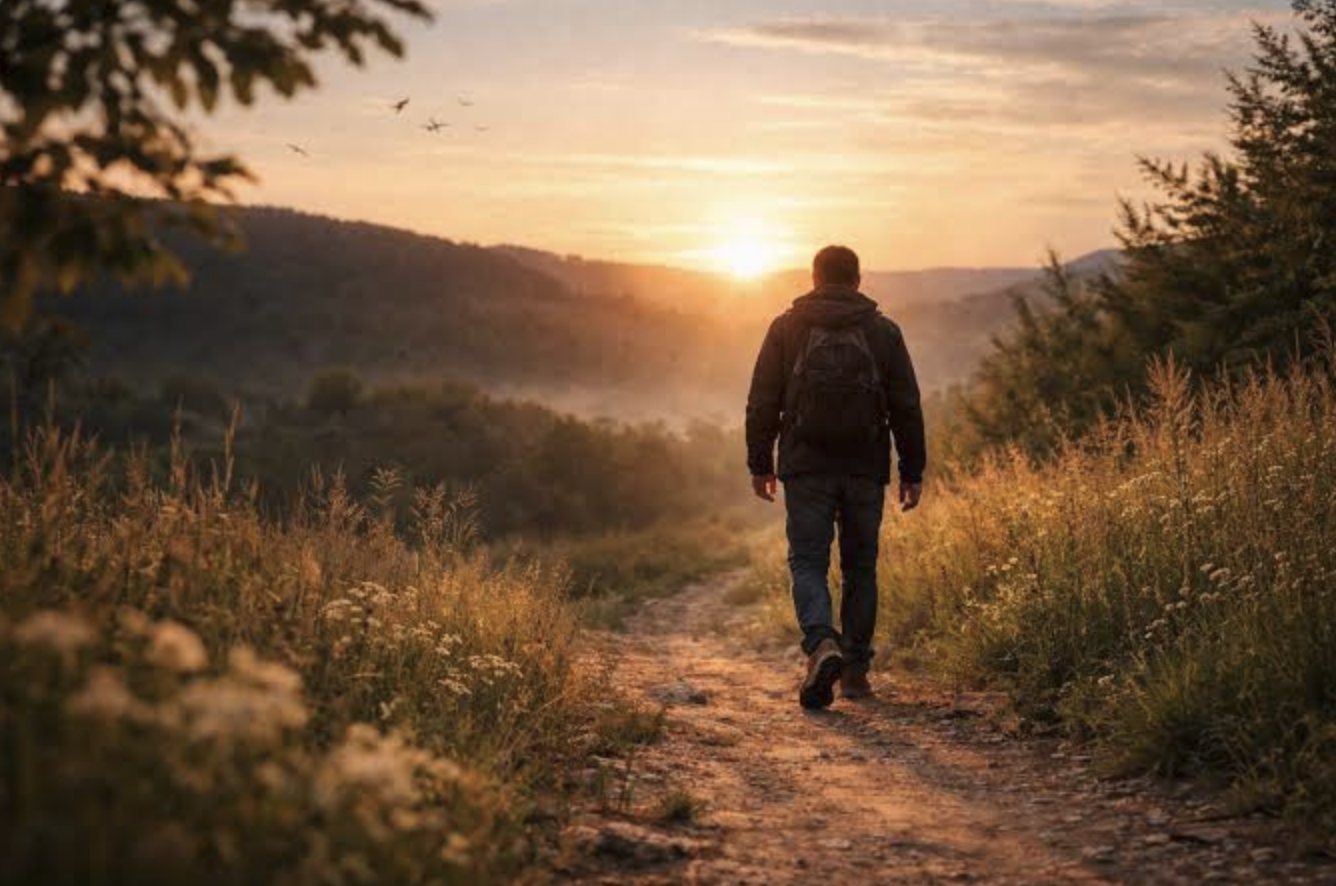
Priya Nair used to fill every commute with a podcast, every gym session with a playlist, and every dog walk with a phone call to her sister. Then, on a whim during a stressful week last spring, she left her earbuds at home for a walk around her neighborhood. “I noticed a bird for the first time in months,” she said. “It sounds small, but I realized I hadn’t heard silence on purpose in years.”
That small experiment has since become a daily habit, and Nair is one of a growing number of people embracing what has come to be known as silent walking: moving through the world without a soundtrack, a podcast, or a phone call competing for attention.
A Reaction to Permanent Background Noise
Silent walking did not emerge in a vacuum. It arrived as a direct response to a media environment where nearly every waking moment has an audio or visual companion attached to it. Commutes, workouts, chores, and even bathroom breaks have become opportunities for content consumption, driven by an entertainment economy that treats attention as a resource to be captured at every possible moment.
- Always-on audio culture: podcasts, audiobooks, and music streaming have made silence feel like wasted time rather than a neutral default.
- Notification-driven attention: constant alerts train the brain to expect frequent stimulation, making unstructured quiet feel unfamiliar or even uncomfortable at first.
- Productivity framing of downtime: even leisure activities like walking get marketed as opportunities for self-improvement content, from language-learning apps to business podcasts.
Silent walking pushes back against all three by treating the walk itself, unaccompanied, as the point rather than a container for something else. It is a small but pointed rejection of the assumption that every spare minute needs to be filled with something useful, entertaining, or optimized, an assumption that has crept into daily routines gradually enough that many people never consciously chose it in the first place.
Some early adopters describe the first few silent walks as deeply uncomfortable, filled with a restless urge to reach for a phone out of habit rather than need. That discomfort itself has become part of the appeal for people who see it as evidence of how deeply the habit of constant input had taken hold.
What Practitioners Say They Notice
People who adopt the habit describe a range of effects, many of them modest but consistent. Reduced racing thoughts, improved mood, and a sharper sense of the physical environment around them come up repeatedly in social posts and wellness forums dedicated to the practice.
- Sensory reconnection: walkers report noticing sounds, textures, and sights they had tuned out for years while multitasking.
- Mental decluttering: without external input competing for attention, unresolved thoughts and feelings tend to surface, which some describe as uncomfortable at first and clarifying afterward.
- Reduced decision fatigue: skipping the choice of what to listen to removes a small but real cognitive task from the walk.
- Improved sleep reports: some practitioners link the habit, especially when done in the evening, to calmer minds at bedtime.
None of these outcomes have been rigorously isolated in controlled studies specific to the trend itself, but they echo decades of broader research on the mental health benefits of time spent outdoors and away from screens. Practitioners who keep informal journals about the habit often note that the benefits compound with consistency, describing the tenth silent walk as noticeably different from the first, once the initial restlessness fades into something closer to ease.
Several practitioners also describe an unexpected byproduct: sharper recall of the walk itself. When a walk is paired with a podcast or phone call, the details of the route often blur together from one day to the next, since attention is split between the environment and the audio content. A silent walk, by contrast, tends to leave a clearer memory of specific sights or moments, which some describe as making the same familiar route feel less repetitive over time.
A smaller number of practitioners report an initial spike in anxiety rather than calm during their first attempts, something wellness coaches attribute to the discomfort of confronting thoughts that audio content had been quietly suppressing. Coaches who work with clients on the practice generally recommend pushing through that early discomfort for a few sessions before deciding whether the habit is a good fit, since the calming effect many describe tends to build gradually rather than appearing immediately on the first attempt.
A related observation from long-term practitioners concerns timing within the day. Many describe a morning silent walk producing a noticeably different effect than an evening one, with the morning version more often linked to a sense of clarity heading into the day’s tasks, and the evening version more often linked to processing whatever happened during the hours before. Neither pattern has been formally studied, but the consistency of the anecdotal reports has prompted some wellness writers to recommend experimenting with timing rather than treating any single time of day as the definitive version of the practice.
Neuroscience Adjacent to the Trend
Silent walking overlaps with concepts long studied in attention and stress research, even if the specific label is new. Researchers who study default mode network activity, the brain state associated with mind-wandering and reflection, have found that unstructured downtime supports memory consolidation and creative problem-solving in ways that constant stimulation can crowd out.
Walking itself has separately been linked to improved mood and cognitive flexibility, a connection long recognized by writers and thinkers who described walking as central to their creative process. Combining that physical benefit with the absence of competing audio input may amplify effects that either practice offers on its own, though researchers caution that much of this connection remains inferential rather than established through studies of silent walking specifically.
Some cognitive scientists point to the concept of attention restoration, a framework suggesting that natural, low-demand environments allow directed attention to recover after periods of focused mental effort. A silent walk through a park or quiet neighborhood may deliver exactly the kind of restorative environment this framework describes, especially compared with a walk filled with competing audio content that keeps the mind engaged in a different, still demanding, task.
A separate body of research on boredom and idle time has found that people tend to avoid unstructured mental space even when it benefits them, sometimes preferring mild discomfort, such as a small electric shock in one widely discussed laboratory study, over sitting alone with their thoughts for a short period. That research offers a useful frame for why silent walking can feel harder than it sounds on paper. The habit is not simply about removing a podcast; it is about tolerating a kind of open mental space that a lot of modern life is structured to avoid.
From Personal Habit to Wellness Marketing
As with most personal wellness trends, silent walking has attracted commercial attention. Fitness apps have added guided no-audio walking modes, wellness influencers sell structured programs around the practice, and some workplaces have begun promoting phone-free walking breaks as part of broader mental health initiatives.
- App features: several fitness platforms now offer settings that intentionally withhold audio prompts during a session, marketed specifically around the silent walking trend.
- Corporate wellness programs: some employers have incorporated designated quiet walking time into workplace mental health offerings, especially in industries with high screen-time demands.
- Retreat and coaching offerings: wellness retreats increasingly build silent walking segments into broader mindfulness itineraries, charging a premium for structured versions of an otherwise free activity.
Critics note the irony of monetizing an activity whose entire appeal rests on subtracting rather than adding anything, and some wellness commentators have started treating that irony itself as a talking point, arguing that a free habit requiring no equipment should not need a paid app or retreat to be accessible to the people who might benefit from it most.
Public Space and the Etiquette of Quiet
Silent walking has also sparked small but real conversations about shared public space. Urban planners and public health advocates have periodically raised the idea that walkable, low-noise environments benefit entire communities, not just individual walkers, and the trend has given that older argument fresh cultural relevance.
- Neighborhood noise levels: advocates argue that reducing personal audio output, even indirectly through fewer people on speakerphone, contributes to calmer shared environments.
- Park and trail usage patterns: some parks report anecdotal increases in visitors specifically seeking quiet, screen-free time, prompting renewed interest in preserving low-stimulation green spaces.
- Safety considerations: pedestrian safety advocates note that removing earbuds also restores situational awareness around traffic and surroundings, an incidental benefit of the trend.
City planning departments in a handful of municipalities have referenced growing public interest in quiet green space as one factor in decisions about where to expand pedestrian-only zones, treating the demand as part of a broader case for walkable infrastructure rather than a passing personal habit. Advocacy groups focused on noise pollution have also pointed to the trend as supporting evidence for their long-standing argument that ambient urban noise carries real public health costs, from elevated stress hormones to disrupted sleep, rather than functioning as a purely cosmetic quality-of-life concern.
Pushback and Practical Limits
Not everyone finds the practice appealing or even feasible, and the trend has drawn its share of skepticism. Critics point out that framing basic quiet time as a notable lifestyle innovation reflects how far removed daily life has become from unstimulated moments, rather than representing any breakthrough on its own.
- Accessibility concerns: not everyone has a safe, quiet neighborhood to walk in, and for some, noise-canceling audio serves a protective rather than distracting function in less secure environments.
- Neurodivergent considerations: some individuals rely on audio input to manage sensory processing differences, and framing silence as universally beneficial can overlook those needs.
- Time scarcity: critics note that treating a walk as multitasking time, whether for calls, podcasts, or audiobooks, is itself a response to limited free time rather than a personal failing.
Others argue the trend simply repackages something people did without a name for generations, questioning whether it needed a label at all to be worth doing. A smaller group of critics raises a sharper point: that turning quiet into a trend risks making it feel like another item on a wellness checklist rather than the unstructured, low-pressure experience it is meant to offer.
There is also a practical critique from urban dwellers who note that a truly quiet, ambient-noise-free walk is simply unavailable in many dense city environments regardless of intention, since traffic, construction, and crowd noise persist whether or not a walker chooses to wear headphones. For these critics, the trend’s appeal reflects a suburban or semi-rural experience of walking that does not translate cleanly to every setting where people might want to try it.
Stimulation Fatigue as a Cultural Backdrop
Silent walking fits into a wider cultural moment where consumers across generations report exhaustion with constant digital input. It shares emotional territory with other recent behaviors like deliberately reducing screen time, taking structured breaks from social media, and seeking out analog hobbies as a counterweight to algorithm-driven feeds. What distinguishes silent walking is its low barrier to entry: no subscription, no equipment, and no special skill required, just the decision to leave the noise behind for the length of one walk.
That low barrier may explain why the trend spread as widely as it did, reaching people who had never engaged with more elaborate wellness practices but found the idea of simply unplugging for twenty minutes approachable in a way a meditation app or retreat never felt to them.
International Variations on the Practice
Interest in unaccompanied, screen-free walking is not unique to any single country, though the cultural framing around it differs from place to place. In parts of Scandinavia, long traditions around outdoor time and low-stimulation nature exposure predate the social media era entirely, and local commentators have noted with some amusement that a habit their grandparents took for granted is now being marketed to a younger, digitally saturated generation as a discovery.
- Scandinavian outdoor traditions: countries with strong cultural norms around daily time outside describe silent walking less as a new trend and more as a rebranded version of an established habit.
- Urban Japan and dedicated quiet zones: some cities have designated quiet commuting cars or paths specifically to reduce ambient noise, a policy approach that predates the current wellness framing but supports the same underlying goal.
- North American commuter culture: the trend has resonated strongly in car- and transit-heavy commuting cultures, where audio content has become deeply embedded in daily travel routines that silent walking now pushes back against.
These regional differences highlight an important point about the trend’s framing: what reads as a fresh discovery in one media market often reflects a long-standing, unremarkable habit somewhere else, suggesting the real shift is less about the walking itself and more about a specific culture’s relationship with constant audio input finally being named and examined.
Final Thoughts
Silent walking is, on its surface, nothing more than walking without a soundtrack, an activity available to nearly anyone since long before smartphones existed. Its resurgence says less about the walk itself and more about how saturated daily life has become with competing demands for attention. That a basic, free, unstructured activity needed a name and a wellness-industry adoption curve to feel notable again speaks to the scale of the stimulation most people now navigate constantly.
Whether it endures as a lasting habit or fades as a passing trend, it has opened a useful conversation about how much quiet modern life leaves room for in practice.
Frequently Asked Questions
1. Is silent walking the same as mindful walking or walking meditation?
They overlap but are not identical. Walking meditation typically involves structured breathing or attention techniques guided by a teacher or tradition, while silent walking simply means removing audio input and letting the mind wander freely without a specific meditative framework.
2. Do people who silent walk avoid all technology during the walk?
Most practitioners still carry a phone for safety or navigation but avoid using it for audio content, messaging, or scrolling during the walk itself. The core practice is about removing input, not necessarily removing the device entirely.
3. How long should a silent walk last to notice benefits?
There is no fixed duration, and many people start with short walks of ten to fifteen minutes before extending the practice. Consistency over time appears to matter more than the length of any single session, based on anecdotal reports from regular practitioners.
4. Can silent walking help with anxiety?
Some people report reduced anxious rumination after regular silent walks, possibly linked to the combined effects of physical movement, time outdoors, and reduced sensory input. It is not a substitute for professional mental health care, but many describe it as a helpful supplementary habit.
5. Why has this practice become popular now rather than earlier?
The rise of always-available audio content through smartphones created a habit of constant stimulation that previous generations did not have the technology to sustain at the same scale. Silent walking has gained visibility partly as a countertrend to that saturation, amplified by social media discussion of digital fatigue.
6. Is there a downside to walking without any audio input?
Some people find unstructured quiet uncomfortable, especially if they rely on audio to manage stress, focus, or sensory regulation, and forcing the practice without adjustment can feel counterproductive. Starting gradually, rather than eliminating all audio at once, tends to work better for those who find total silence overwhelming.