


Dog owners are not walking away from their pets, but many are quietly rearranging where the money goes. A new industry report suggests the household budget for a dog is being managed with more care than ever, even as the number of dog-owning homes keeps growing.
In this article we will explore what the American Pet Products Association found, how owners are mixing premium and budget choices, which spending lines are shrinking, and which ones are risky to trim.
The Shift Behind the Headline Numbers
The American Pet Products Association, usually shortened to APPA, published its 2026 Dog Report in late July, built on survey data collected in 2025. The headline is not a collapse in pet ownership or a retreat from caring for animals. According to the association, roughly 71 million US households own adog, an increase of 4 percent, which works out to about 53 percent of all households. More than half of American homes now share space with a dog, and the group is still growing.
What changed is the way owners shop. APPA chief executive Pete Scott put it this way in the release: “What we’re seeing isn’t a reduction in commitment. It’s a shift toward more intentional spending.” That sentence is a useful lens for everything else in the report, because it separates two ideas that often get blurred together. Spending less overall and spending differently are not the same thing, and the survey data points to the second.
This article is built on US figures, since the APPA survey covers American households. The broad pattern, owners trading down in some places to protect other places, will feel familiar in Canada, the United Kingdom, Australia and elsewhere, but prices, pet insurance markets and vet systems differ by country, so treat the percentages as American numbers rather than global ones.
It also helps to remember what a survey of this kind can and cannot say. Respondents describe what they bought and fed during the year, and the association summarizes it. That tells us which behaviors became more common. It does not tell us how any single household felt about the trade-offs, or whether a cheaper choice turned out well for a particular dog. Readers should treat the findings as a map of habits, not a verdict on which habits are wise.
Commitment Versus Cost
A dog is a long, mostly fixed commitment. Unlike a streaming subscription, you cannot pause a dog for a month while money is tight, and you cannot cancel the vaccinations that keep it healthy. That is exactly why the report reads as a story about reallocation. When the cost of living pushes on a household, the dog stays, and the flexible parts of the budget absorb the pressure.
Flexible parts are easy to identify once you look at the list. They include where food is bought, how many treats are bought and which brand, whether grooming happens at a salon or in the bathtub, and whether the dog goes to a boarding kennel or stays home with a friendly neighbor visiting. The report touches every one of those, and the next sections take them in turn.
Vet Care and Food Take the Biggest Shares
APPA reports that veterinary care is the largest single slice of dog spending at 29 percent, with food close behind at 27 percent. Put together, those two lines account for a little over half of what owners spend. Everything else, from toys and beds to grooming, boarding, training and treats, shares the remainder.
That ordering matters because it tells owners where a small percentage change moves the most money, and where it carries the most risk. Food is a purchase made every week, which means a modest saving per bag compounds across a year. Vet care is lumpier. It arrives as routine visits, vaccines and preventive medicine, and then occasionally as a large, unplanned bill. The two lines behave very differently, and smart budgeting treats them differently.
Why Food Is the Easiest Line to Adjust
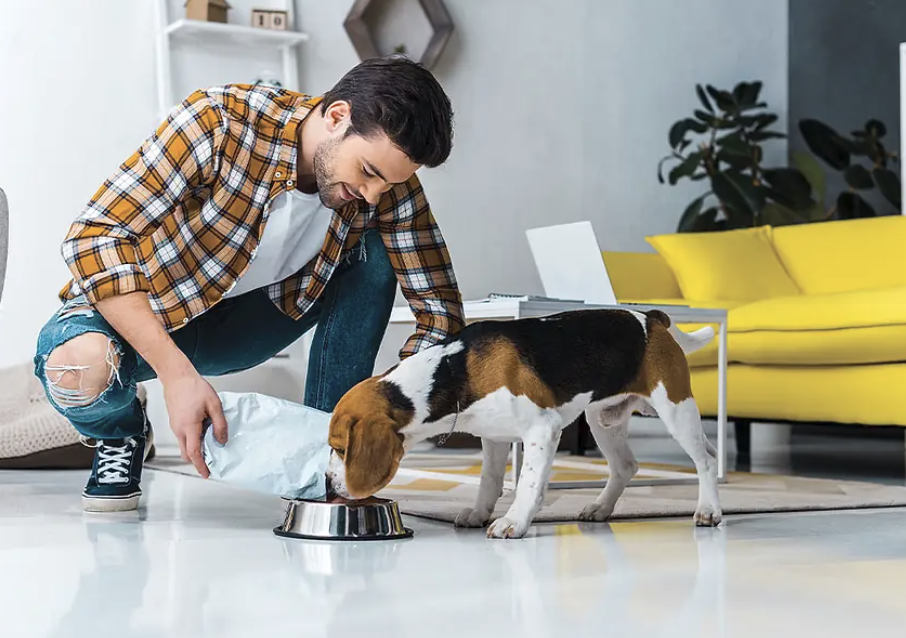
Food is the line where owners have the most room to maneuver without touching the dog’s health care. Brands, formats, retailers and bag sizes all vary, and a household can change any of them in an afternoon. The report shows owners doing exactly that, which the next section covers in detail.
Food is also the line where marketing is loudest. Words such as premium, natural and human-grade appeal to owners who want to give their dog the best, and the report does show strong interest in the upper end. But the existence of a premium aisle does not prove that every dog needs what is in it. A vet can say whether a particular animal has a medical reason for a specific diet, and a label can tell you whether a food claims to be complete and balanced for your dog’s life stage.
Why Vet Care Deserves Protection
Vet care is the line to defend. Preventive care is usually cheaper than treating the illness it prevents, and a sudden emergency is far harder to absorb if no money has been set aside. A household that trims food spending by switching stores but keeps routine visits on the calendar is making a very different choice from one that skips the visits to afford the same bag of food.
None of this is veterinary advice, and the right schedule for any dog depends on its age, breed, health history and where you live. A vet can lay out what is essential and what can wait. The budgeting point is simpler: when something has to give, vet care should be the last place to cut and the first place to plan for.
Mixing Premium and Budget in the Food Bowl
The food data in the APPA report is where the word intentional becomes concrete. Premium food is the type most commonly fed, at 31 percent of owners. That finding alone would suggest nobody is trading down. But the share of owners feeding basic dog food rose by 11 percent, reaching 21 percent of owners, and 19 percent said they bought human-grade food. Three very different price tiers are all well represented in the same survey.
The plain reading is that many households are not choosing a single tier at all. They are blending. Behavior described in the report includes mixing premium food with budget options, which can mean topping a basic kibble with a more expensive wet or fresh product, or alternating bags depending on the month. It is a way to keep some of the benefits owners value without paying the top-shelf price for every meal.
Where Owners Buy Matters as Much as What They Buy
The retail picture shifted too. According to the report, 32 percent of owners buy dog food at supermarkets, up 7 percent, and 22 percent buy at discount retailers, up 22 percent. The discount figure grew faster than the supermarket one, which suggests price-conscious shoppers are looking beyond the traditional pet store and online subscription services.
For a household, the same bag of food can carry quite different shelf prices depending on the store, and loyalty programs, bulk sizes and store brands add more variation. A practical habit is to compare the price per pound rather than the price per bag, because bag sizes are not standardized. Checking two or three retailers once, then saving the comparison somewhere you will remember, takes ten minutes and tends to pay back for months.
A Simple Illustration of Blending
Here is an illustration with invented round numbers, not figures from the report. Suppose a premium food costs $3 per pound and a basic food costs $1.50 per pound, and a medium dog eats about 40 pounds of food in a few months. Feeding only premium would cost $120. Feeding half and half would cost $90, a saving of $30 over that stretch, or roughly $120 across a year. Your own prices will differ, but the arithmetic shows why a blend appeals to owners who like the premium product and want the budget to breathe.
A Cautious Note on Switching Foods
Changing a dog’s food abruptly can upset its stomach, so most vets suggest transitioning gradually over several days by blending the old and new product. That advice is a reason to be careful with the blending strategy as well. If you are alternating between a premium product and a basic one, keep the mix consistent and watch your dog’s appetite, stool and energy. If anything looks off, a vet visit is cheaper than guessing.
It is also worth reading the nutritional adequacy statement on any bag, which is the line indicating whether the food is intended to be complete and balanced for a stated life stage. Puppies, adults and seniors have different needs, and a food that suits one stage may not suit another. Price tier is a poor proxy for whether the label meets that standard, so the label itself is the better guide.
Treats, Chews and the Multi-Purpose Product
Treat spending offers one of the more interesting signals in the report. Average treat spending fell by 11 percent, yet the number of owners buying 11 or more treat packages a year rose. In other words, owners are still buying treats often, but each purchase seems to be smaller or cheaper. A household that once bought one large premium bag may now buy several modest ones, or swap to lower-priced brands.
That pattern fits the idea of trimming without withdrawing. Treats are a small, emotionally rich part of a dog’s day, linked to training, bonding and routine. Few owners want to give them up, so they look for ways to keep the ritual while spending less per unit.
Chews That Do More Than One Job
The report says 65 percent of owners bought chews, up 5 percent, and 46 percent own dental care products. Those two figures fit together. A chew can double as a treat, a way to occupy a restless dog and, in some products, a tool intended to support dental hygiene. A single purchase doing three jobs is attractive when each dollar has to work harder.
Owners should apply a little caution here. Chews vary widely in hardness, size and ingredients, and a product that suits a small dog may be unsafe for a large, powerful chewer. Reading the size guidance on the packaging, supervising a dog with a new chew and asking a vet about dental products are all sensible habits. A multi-purpose product saves money only if the dog uses it safely.
Dental Care as a Quiet Budget Item
Dental disease is common in dogs, and professional cleanings are among the pricier routine procedures a vet performs. That context explains why home dental products are popular and why they may be a thoughtful place to spend. Brushing, dental chews and other at-home products cannot replace a vet’s exam, but they may help owners keep problems from growing, which can reduce the frequency of costly work later.
Whether a given product works for a given dog is a question for the vet, and many products carry little proof of effect. Still, the 46 percent figure shows that a large share of owners already see dental care as part of ordinary dog ownership, rather than a luxury.
Paid Services Give Way to Friends and Neighbors
The report is just as clear about what owners are cutting back on. Spending on boarding, salon grooming and mobile grooming declined. These are services where a professional does something an owner could, in principle, handle with enough time, and they are also easy to schedule less often or skip. Compared with food or medicine, they are discretionary, and discretionary lines go first in nearly every household budget.
Travel is a good example. Boarding a dog for a week can cost a meaningful sum, so owners are finding alternatives. According to the report, about four in ten use someone they know to visit the home when they are away. That might be a friend, a relative or a neighbor who stops by to feed, let the dog out and offer company.
Making Informal Care Work
Informal arrangements can work very well, but they work best when treated with the same seriousness as a paid booking. Write down the feeding amounts, medications, vet contact and an emergency plan. Give the helper a key, a spare leash and permission to call the vet if something goes wrong. A short meet-and-greet before the trip lets the dog and the helper get used to each other.
It also helps to offer something back, whether that is returning the favor, bringing a gift or paying a modest amount. A casual favor that becomes a regular arrangement can wear thin without some recognition, and a willing friend is a resource worth keeping.
When a Professional Is Still Worth It
Some dogs should not be left to a casual arrangement. A dog with a complex medical condition, strong separation anxiety or a history of escaping may be safer in a professional setting where trained staff are on site. Puppies and very old dogs may need more frequent attention than a drop-in visit provides. In those cases, paying for boarding or a licensed sitter is not a failure of thrift. It is a decision about risk.
Another approach is to use paid services selectively. Owners might book a professional groomer a few times a year for the tasks that are hard to do at home, and handle routine maintenance themselves. That keeps costs down without removing expertise from the picture.
Home Grooming and the Wipe Boom
The grooming data may be the clearest example of the do-it-yourself trend. APPA reports that 51 percent of dog owners groom at home, and that ownership of dog wipes more than doubled, up 108 percent. Wipes are cheap, convenient and useful between baths, which makes them a natural fit for owners who are skipping the salon.
It is easy to see why the habit spreads. A home groomer saves the appointment fee, the travel time and the stress some dogs feel in unfamiliar places. Basic tasks such as brushing, wiping paws after walks and cleaning around the face do not need professional training, and for many short-coated dogs they cover most of what is needed.
The Basics Worth Learning
A few skills go a long way. Regular brushing, at a frequency suited to the dog’s coat, removes loose hair and helps prevent mats. Bathing needs a dog-specific shampoo, since products made for people can irritate canine skin, and thorough rinsing avoids residue. Ears and teeth need gentle attention, and nail trimming is the task most owners find intimidating.
Nail trimming is a good example of when to ask for a demonstration. A groomer or vet technician can show the right angle and the quick, the sensitive inner part of the nail that bleeds if cut. Many practices will do this for a small fee, and a single lesson can save a lot of money over a dog’s life.
Where Grooming at Home Falls Short
Some coats really do need professional work. Breeds with continuously growing hair, heavy double coats or a tendency to mat can be hard to manage without the right tools and technique, and badly matted fur can cause skin problems. Skin conditions, strong odors or sudden changes in coat condition are health clues, not grooming issues, and they call for a vet.
Cost is only one part of the picture. A dog that is brushed and wiped regularly also gets a quick check of its skin, ears and paws, which makes it easier to notice a lump, a rash or a sore spot early. That habit is worth something even for households that still use a salon now and then.
A fair summary is that home grooming handles maintenance, while professionals handle the harder jobs. Owners who keep that division in mind can cut their grooming budget without compromising the dog’s comfort.
Savings That Cost More Later
Every shift in the report carries a risk if it goes too far. A cheaper food bought at a discount store is not harmful in itself. A skipped vet visit, a delayed vaccine or a half-dose of a prescribed medicine is a different matter. The APPA data does not say owners are cutting these items, and it would be wrong to claim they are. But the broader lesson for readers is where the line sits between smart saving and false economy.
Vet Care and Medication
Preventive care, prescribed medication and diagnostic follow-ups are the places where cost-cutting tends to backfire. A condition caught early is often simpler and cheaper to manage. If a bill feels out of reach, tell the vet. Many clinics can discuss payment plans, generic medications or a staged treatment schedule, and some communities have low-cost clinics. Pet insurance and wellness plans exist in the US market, but policies differ in what they cover, so reading the exclusions matters before relying on one.
Food Quality and the Label Test
Cheaper food can be perfectly adequate, but it should still meet the complete-and-balanced standard on the label for the dog’s stage of life. Owners whose dogs have allergies, kidney disease or other conditions should not change diets without talking to a vet, because a prescription or therapeutic food may be part of treatment. For a healthy adult dog, comparing labels and watching how the animal does on a new food is a sound method.
Safety on the Cheap
Low price should never override safety. That applies to chews and toys that are the wrong size, to unsupervised play with items that can splinter or be swallowed, and to informal care arrangements that skip basic precautions. A few dollars saved on a poorly chosen product can turn into an emergency visit. When in doubt, ask the vet or choose the item that clearly matches your dog’s size and chewing style.
Final Thoughts
For owners who want to apply the report’s lessons, the order in which you make decisions matters more than any single tactic. Start by protecting the essentials, then trim the flexible lines, and only then consider luxuries. A rough sequence looks like this.
First, put vet care at the top. Book the routine visits, keep vaccines and preventive medicines current, and set aside a small, regular amount for emergencies. Even a modest monthly transfer into a separate account builds a cushion that makes an unexpected bill less frightening.
Second, look at food. Check the label for the complete-and-balanced statement, compare price per pound across two or three retailers, and consider blending a premium product with a basic one if your vet agrees it suits your dog. Supermarkets and discount stores may offer the same or comparable items for less than a specialty shop.
Third, review treats and chews. Choose products that do more than one job, match size and chewing strength, and keep treat quantities in check, since extra calories add up for a small dog. Fourth, handle grooming at home where it is realistic, and keep a professional for the jobs you cannot do safely.
Finally, plan for travel before you need it. Line up a trusted friend or neighbor, write the instructions down and keep a paid option in reserve. The table below summarizes where each type of spending usually sits.
| Spending line | Typical flexibility | Sensible approach |
| Vet care and medication | Low | Protect first, plan for emergencies |
| Food | Medium | Compare per-pound prices, check labels, blend tiers if suitable |
| Treats and chews | High | Choose multi-purpose items sized for your dog |
| Grooming | High | Do maintenance at home, use a professional for hard jobs |
| Boarding and sitting | High | Arrange trusted help, keep a paid backup |
None of this is a rule, and every household and dog is different. The deeper point of the report is that caring for a dog and watching the budget can coexist when the decisions are made on purpose. A vet or a qualified financial counselor can help with the details of a specific situation.
Frequently Asked Questions
1. How many US households own a dog?
According to the American Pet Products Association, about 71 million households own a dog, an increase of 4 percent. That is roughly 53 percent of all households. The figure comes from the 2026 Dog Report, which draws on survey data from 2025.
2. Are dog owners spending less on their pets?
The association says the change is a shift rather than a cut. Its chief executive described it as a move toward more intentional spending, not a reduction in commitment. Owners are trading down in some areas, such as services and treats, while keeping other priorities.
3. What is the biggest expense for dog owners?
Veterinary care is the largest share at 29 percent, according to the report. Food comes next at 27 percent. Together they make up a little over half of dog spending.
4. Is it safe to mix premium and budget dog food?
Many owners do it, and the report describes the practice. Whether it suits your dog depends on age, health and the food itself, so ask a vet. Transition between products gradually and check that each one is labeled complete and balanced for your dog’s life stage.
5. Is grooming a dog at home cheaper than using a salon?
Usually it costs less, since you avoid appointment fees and travel, and the report says 51 percent of owners groom at home. Some coats and tasks are hard to manage without training, though. A professional can handle the difficult jobs while you do the routine ones.
6. What should dog owners avoid cutting from the budget?
Vet care and prescribed medication are the lines most likely to cost more if neglected. Safe, appropriately sized products also matter. This is general information, and a vet can advise on your own dog.