

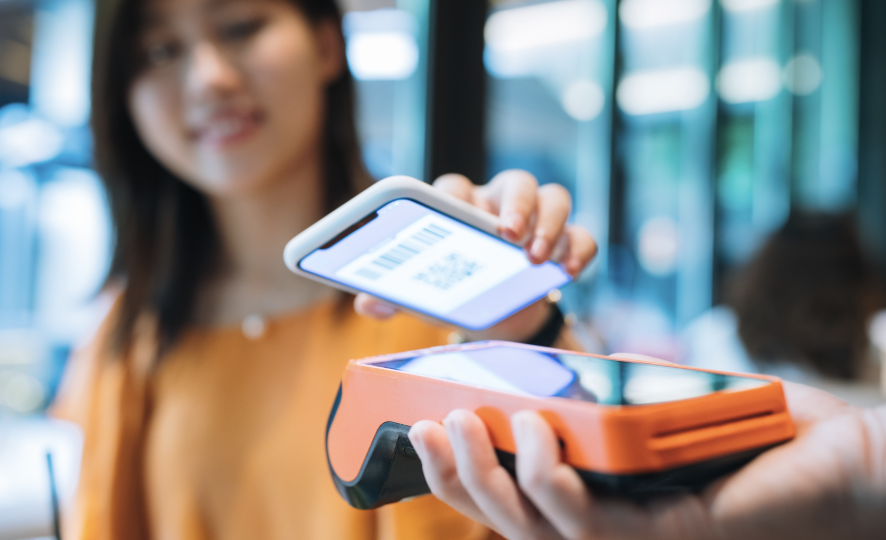
Walk into a coffee shop, a sandwich counter or a pop-up market and you may find a small sign saying that only cards and phones are welcome. For many shoppers this is a minor convenience, but for others it is a closed door, which is why the question matters to ordinary households.
In this article we will explore why some businesses stop taking cash, who gains and who loses, how rules differ between countries, and what customers and owners can do to handle the shift fairly.
Cash-free signs have become a familiar sight
For most of modern history, cash was the default way to pay for small things, and a shop that refused coins and notes would have looked strange. Over the past two decades, card readers, contactless payments and phone wallets have become cheap and common. As a result, a growing number of cafes, food trucks, boutique stores, parking lots, gyms and event venues now run entirely without cash.
Many commentators describe this as a quiet change in habit rather than a single decision by any government or company.
The trend is uneven. In some countries, cash use has fallen sharply in everyday shopping, while in others people still rely on it for rent, wages, tips and small markets. Even inside one city, a trendy downtown cafe may refuse cash while a corner grocery two streets away keeps a drawer full of notes. Because the picture changes by place, any broad claim that society is going cashless should be treated with care.
It also helps to separate three different things that are often mixed together. The first is that more people choose to pay digitally, which is a personal preference. The second is that businesses choose not to accept cash, which is a seller decision that limits what customers can do. The third is that governments or banks actively reduce cash services, such as closing branches or machines, which changes the whole environment. The pushback in the public debate is mostly aimed at the second and third.
Supporters of cashless shops say the sign is simply a business decision, much like a restaurant choosing not to take reservations. Critics reply that money is a public tool, and that a shop open to the public should serve people who hold legal currency. Both views have some force, and the rest of this article looks at the evidence and arguments behind each side without assuming that one is plainly right.
Another way to see the change is through the everyday experience of a typical shopper. A person who pays for coffee, lunch, a bus fare and a parking space may now do all four without touching a note. Each of those moments feels small, yet together they teach people to expect that cash is optional, and shops respond to that expectation. Over time the habit feeds on itself, because the fewer people who carry cash, the less sense it makes for a business to keep a drawer.
Convenience and cost drive the shift for businesses
The reasons owners give for going cash-free are usually practical. Handling cash takes time at the end of every shift: counting the drawer, preparing a deposit, reconciling the till against sales records and carrying money to the bank. Those tasks cost labor hours, and small teams often have few hours to spare. Removing cash can shorten closing routines and reduce the chance of counting errors.
Security is another common reason. A drawer of cash can attract theft, and staff who work late may feel safer in a shop that holds none. Owners also point to the risk of counterfeit notes and of honest mistakes when giving change, both of which are rare but irritating. A business with no cash on site may also find that insurance, staff training and cash-handling procedures become simpler, though the details depend on the insurer and the country.
Speed matters too, especially in busy settings such as coffee counters, stadium kiosks and market stalls. Many operators believe that a tap of a card or phone moves a queue faster than counting change, and observers broadly agree that this can be true when lines are long. Digital sales also create automatic records, which can make bookkeeping, tax preparation and stock tracking easier. For a young business that wants clean data, that is an appealing benefit.
However, the savings are not free. Card payments normally involve processing fees charged to the merchant, and the structure of those fees varies by country, card type and payment provider. Terminals, internet connections and software subscriptions also cost money. Some owners find that the fees are a fair trade for the time saved, while others find that they quietly shrink already thin margins. The honest answer is that the math differs from shop to shop, and any owner considering the change should compare the true cost of handling cash with the true cost of accepting cards before deciding.
Shoppers without cards are the ones left waiting
The most serious objection to cash-free shops is that some people simply cannot pay in other ways. Households without a bank account, people who have been refused credit, and customers who rely on prepaid or cash-based budgeting methods all depend on notes and coins. Many budgeting advisers like the envelope method, where money is set aside in physical form for each category of spending, because the limit is easy to see. A shop that refuses cash can make that approach impossible.
Age matters as well. Teenagers and children often carry pocket money, not cards, and may be turned away from a cafe where they were hoping to buy a snack. Some older people prefer cash because they find touchscreens, passcodes and phone apps confusing or stressful. People with certain disabilities may also find card terminals awkward to use, especially where the device is fixed in place or the screen is hard to read, though accessibility varies by device and by shop.
Visitors from other countries face a different problem. A traveler may arrive with foreign currency and a card that charges extra fees abroad, or with a card network that is not accepted everywhere. Cash can be the simplest way to cover a small purchase on a first day in a new place. When a shop declines it, the traveler is forced into a currency exchange, a machine search or an expensive card charge.
There are also quieter effects on people who are not excluded outright. Customers who budget tightly may spend more freely with a card because the money feels less real, a pattern many behavioral researchers have discussed, though it does not hold equally for everyone. Others worry about overdraft fees if a card payment overshoots their balance. None of these points proves that cash-free shops are wrong, but they show that the choice has costs that fall unevenly across a community.
Legal rules vary widely from place to place
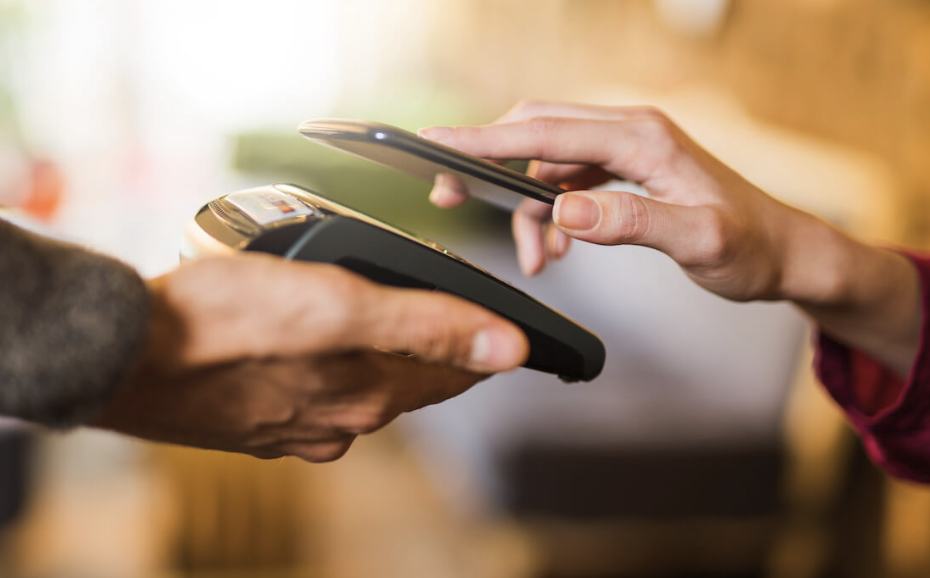
Because rules differ so much, readers should be careful about assuming what is allowed. In some countries and local areas, laws require shops to accept cash for in-person sales, sometimes with exceptions for certain kinds of venues, automated machines or online orders. In other places, a business may set its own payment policy, as long as it posts that policy clearly. Some regions have debated the question for years without a settled answer, and rules can be changed by local councils, so checking the current local position is wise.
The legal idea of legal tender is often misunderstood in everyday talk. In many systems it describes how a debt can be settled, not an obligation for every seller to take cash at the counter. A shop that states its terms before a sale is often free to refuse certain payments, while a debtor trying to repay an existing bill has different protections. The exact details vary, and a consumer rights organization or local authority can explain what applies in a given country.
Related policy questions sit alongside the shop-counter debate. Governments and banks make decisions about how many bank branches and cash machines to keep, whether post offices can handle deposits, and whether people can get free access to their own cash. Some officials worry that if cash infrastructure thins out, even people who want to use it will struggle. Others argue that the market should decide, since demand for cash services is falling.
Readers who think a local rule is unfair or unclear have practical options. They can contact their local consumer protection office, raise the matter with the business politely, or write to elected representatives. Business owners, for their part, should check their own local rules before posting a no-cash sign, since a policy that is allowed in one place may be restricted in another. Keeping written notes of how payment policies are displayed can help avoid disputes later.
A final legal point concerns fairness and honesty about policy. Even where a business may refuse cash, most consumer rules expect that the policy is stated clearly before a customer commits to a purchase. A sign at the door, a note on the menu and a line on the website all help. Customers who find out only at the till are often the angriest, and the dispute is usually avoidable with better notice.
Digital payments bring their own risks and outages
Defenders of cash like to point out that electronic payment systems depend on power, networks and software, and these can fail. A shop that has a terminal outage, a card network problem or a lost internet connection can lose its whole day of sales if it cannot take cash. Customers can be stranded at a till with a full basket and no way to pay. Such failures are usually short, but they show that a purely digital system has fewer fallback options.
Account problems are another worry. People can have a card blocked for suspected fraud while traveling, a phone battery die at the wrong moment, or an account frozen while a bank reviews a transaction. Most of these issues are resolved, yet they happen at moments of real inconvenience. Cash does not need a signal or a battery, which is why many emergency planners commonly suggest keeping a small reserve of it at home.
Privacy is a further concern. Cash leaves no automatic record of who bought what, while card and app payments create data that may be stored by banks, payment firms and merchants. Many people are comfortable with that trade, since the data also powers fraud detection and spending summaries. Others feel uneasy about the possibility of profiling, or about records being used in ways they did not expect, so rules on data protection and how long records are kept matter here.
Digital systems also have their own risks of crime. Card skimming, phishing messages and account takeovers are well-known problems, and while banks usually offer protections, the rules differ by country and by payment method. Cash has its own risks, since it can be lost or stolen with little hope of recovery. The fair summary is that no payment method is risk-free, and the better question is how to combine methods so that a single failure does not leave someone stuck.
The table below summarizes how common ways of paying compare on the points that came up in the debate. It is a general guide, since details vary by country, provider and shop. Read it as a reminder that every option trades one strength for one weakness.
| Payment method | Main strengths | Main weaknesses | Who it helps most |
| Cash | Works without power or signal, leaves no data trail, easy for budgeting | Can be lost or stolen, slower to handle in bulk, costly to bank | People without cards, tourists, those who budget with envelopes |
| Debit or credit card | Fast, widely accepted, protections against fraud in many places | Merchant fees, possible account blocks, needs a terminal | Most regular shoppers with bank accounts |
| Phone wallet | Very quick, no need to carry a card, can add extra security | Depends on battery and signal, not everyone owns a suitable phone | Frequent commuters and people who like to travel light |
| Prepaid card | Access to digital payment without a full bank account, spending is capped | May carry fees, balance must be topped up | Teenagers, people rebuilding credit, budget-conscious households |
Defenders of cash point to inclusion and resilience
Supporters of cash often frame it as an inclusion issue. They argue that a public space where only some people can pay is a quiet form of exclusion, even if no one intended it. Community groups that work with low-income residents, older adults and people with limited access to banking frequently raise this concern. They ask that essential services such as groceries, transport, pharmacies and public facilities keep cash as an option.
Resilience is the second major argument. Emergency planners in many countries suggest that households keep a modest amount of cash for use during power cuts, storms or system failures, because card terminals may not work. A community that has moved entirely to digital payments could find itself in difficulty during a wide outage. Cash is a simple backup, and some observers see it as a kind of public infrastructure that should be protected the way spare tires are kept in a car.
Not everyone accepts these arguments in full. Some economists and business owners reply that cash use is falling because people prefer other methods, and that forcing shops to keep it would add costs that get passed on to all customers. They also note that most people who lack bank accounts can be helped through basic account programs or prepaid cards instead of by requiring every shop to take notes. There is truth in this, though such programs are not available or well known in every place.
A fair reading is that both camps are describing real problems. Exclusion is real for a minority who cannot easily get a card, and the extra cost of cash handling is real for the businesses that must manage it. The hardest part of the debate is not deciding which problem exists but deciding who should carry the cost of solving it: shops, banks, governments or customers.
Hybrid models are emerging as a middle path
In practice, many businesses and communities are settling on a mixed approach. Some shops accept cash only at certain counters or only for lower-value purchases. Others use self-service machines that turn cash into a card balance, or let customers pay cash at a separate register. Some cafes keep cash on offer but encourage tapping a card by making it faster, which respects the choice while still helping the line move.
Retailers that serve a wide public, such as grocery chains, pharmacies and transport operators, tend to keep cash because their customers are varied. Specialty shops, events and trendy venues are more likely to drop it. Observers often note that the choice reflects who the business expects its customers to be, which is a sensible approach but one that can leave some residents with fewer options.
Technology can help bridge the gap. Prepaid cards sold for cash, cash top-up points in stores, and payment kiosks that accept notes all let people without bank accounts take part in digital payment systems. Some governments and banks have promoted basic accounts with low fees to widen access. These tools do not fully replace cash for everyone, but they reduce the number of people for whom a no-cash sign is a barrier.
It is worth separating hype from lasting change. Predictions that cash will vanish within a few years have been repeated for a long time, and in many places notes and coins remain in steady use. At the same time, digital payments are clearly here to stay and will keep growing. The more likely future is a patchwork in which cash shrinks in some settings, survives in others, and is protected by rules in some countries but not in others.
Community and charity events show how the mix can work in practice. A school fair, a village market or a fundraiser often draws people who carry only small notes, so organizers frequently keep a cash box alongside a card reader. Organizers who do this say it keeps the event open to everyone, though it does require someone trustworthy to count and bank the takings. The lesson many of them draw is that offering two ways to pay costs a little effort but widens the circle of people who can join in.
How different people can respond
Households can take simple steps without strong opinions about the debate. Carry more than one payment method, such as a card and a small amount of cash, and keep a second card from a different provider where practical. Make sure your phone wallet, if you use one, has a backup way to pay when the battery is low. At home, keep a modest emergency reserve in a safe place, since the amount commonly recommended by preparedness guides depends on household size and local risks.
Business owners can think about the costs and benefits in an organized way. Compare the time spent on cash handling with the fees on card payments, and consider what share of your customers might be turned away. Decide whether accepting cash only for some products, or only at certain times, would meet your needs. If you do choose to go cash-free, post a clear sign at the entrance and on your website, so customers do not find out at the till.
Workers who are paid in cash or tips can plan for the change as well. If your tips are increasingly left by card or phone, ask how they are recorded and how quickly they are paid out. Keep your own notes of what you receive, since records help with taxes and disputes. If you work in a place that has stopped using cash, ask whether your employer will cover any fees or offer a clear process for tip distribution.
Citizens who care about the issue can speak up through the channels open to them. Local consumer groups, councils and elected officials often collect feedback on payment access, and thoughtful, specific comments tend to be more useful than general complaints. It can help to describe the effect on real people, such as an older neighbor or a teenager with pocket money, rather than arguing in the abstract. A calm tone usually works better than outrage, especially with small business owners who are trying to make their numbers work.
Final Thoughts
If you are a shopper, start by checking what you carry on a normal day. Make sure you have at least two ways to pay, and add a small amount of cash if you do not already have one. When you plan a trip, look up how payment usually works at your destination, since customs differ from one country to the next. If a shop turns you away because it refuses cash, stay polite, and report it to the relevant local authority if you believe a rule has been broken.
If you run a small business, take a quiet hour to list the true costs of handling cash and accepting cards. Talk to a few regular customers about how they like to pay, and check your local rules with your council or a trade association before making a decision. If you decide to go cash-free, try a trial period and see whether sales or complaints change. If you decide to keep cash, consider a small sign that invites tapping a card for speed.
When you review your own habits, a short checklist can help. Ask whether you could pay for a meal if your phone died, whether a family member without a card could buy what they need nearby, and whether your usual shops would take cash if their terminal failed. If the answer to any of these is no, a small adjustment now is cheaper than a stressful moment later. Review the answers every year or so, because shops and habits change.
If you are worried about being left behind by the change, look into basic bank accounts or prepaid options offered in your area, and ask a trusted adviser or a community organization for help. Money and legal questions can be complicated, so a qualified financial adviser or a consumer rights body can give advice that fits your situation. The goal is not to defend cash or to condemn cards, but to make sure that no one is shut out of everyday purchases without good reason.