

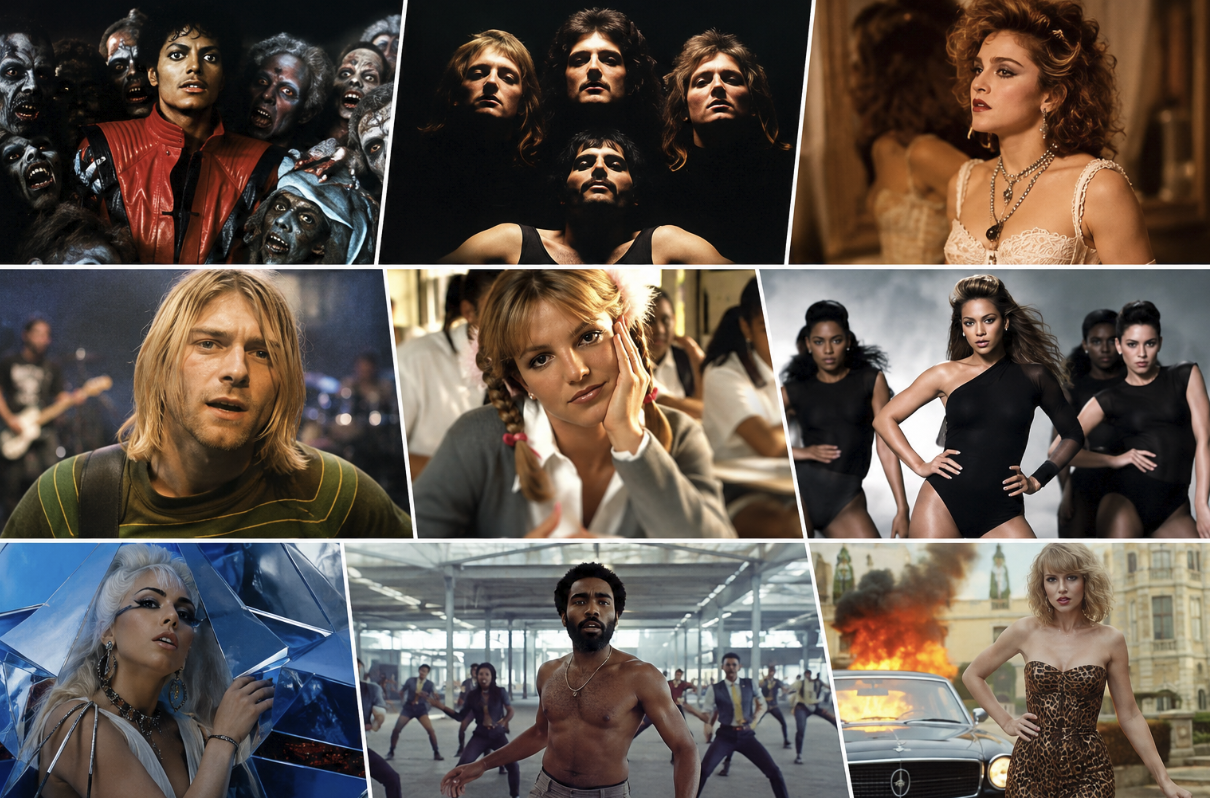
Music videos have become much more than promotional clips for songs. Over the decades, they have developed into a powerful form of visual storytelling that can influence fashion, culture, entertainment, and even the way people remember a song.
Some of the most iconic music videos of all time became unforgettable because they introduced groundbreaking visual effects. Others stood out because of their storytelling, choreography, fashion, cinematography, or ability to capture the mood of an entire generation.
From Michael Jackson’s elaborate productions to Beyoncé’s visual storytelling and innovative modern releases, music videos have continued to evolve alongside technology and popular culture.
But what makes a music video truly iconic? It is not simply a large budget or millions of views. The most memorable videos usually offer something that audiences have not seen before and leave a lasting impression long after the song ends.
What Makes a Music Video Iconic?
An iconic music video usually combines several elements successfully. The song itself is important, but the visual presentation can completely change how audiences experience it.
Originality is one of the biggest factors. A video that introduces an unusual concept, visual style, or production technique can influence other artists for years.
Storytelling also matters. A strong narrative can give a song a deeper meaning and make viewers want to watch the video repeatedly.
Then there is cultural impact. Some videos become closely associated with particular fashion trends, dance moves, social conversations, or moments in pop culture.
Finally, an iconic video has lasting power. Even years after its release, people still recognize its imagery, discuss its influence, and introduce it to new audiences.
Michael Jackson’s “Thriller”
Thriller is one of the clearest examples of a music video becoming a cultural event.
Directed by John Landis, the video transformed the traditional music video into something closer to a short film. It featured a storyline, elaborate costumes, choreography, makeup, and cinematic production.
The famous dance sequence became particularly influential. The video’s combination of music, horror, and performance helped demonstrate that a music video could stand on its own as an entertainment experience.
Its influence can still be seen in Halloween performances, dance routines, parody videos, and pop culture references.
Queen’s “Bohemian Rhapsody”
Bohemian Rhapsody helped establish the idea that a music video could effectively promote a song without requiring a conventional live television performance.
The video’s memorable close-up portraits of the band became instantly recognizable. Its relatively simple visual approach matched the dramatic personality of the song while creating imagery that audiences could easily remember.
The video is especially important because it arrived during a period when promotional music clips were becoming increasingly useful for reaching television audiences.
Its success helped demonstrate the commercial potential of music videos as part of a song’s overall identity.
Madonna’s “Like a Prayer”
Like a Prayer became one of the most discussed music videos of its era.
The video combined religious imagery, race, romance, symbolism, and social themes. Instead of simply presenting Madonna performing the song, it created a visual narrative designed to provoke thought and discussion.
That controversy became part of the video’s cultural impact. It showed that a music video could become a major conversation outside the music industry.
This approach also helped establish Madonna’s reputation for using visual media to challenge expectations and create a distinct artistic identity.
Nirvana’s “Smells Like Teen Spirit”
Smells Like Teen Spirit captured the rebellious energy associated with alternative rock in the early 1990s.
The video takes place around a chaotic school pep rally and features energetic performances from the band. Its deliberately rough atmosphere was very different from the polished pop productions that dominated much of mainstream music television.
The visual style helped introduce Nirvana’s music to a much wider audience and became strongly connected with the alternative-rock movement.
The video matters because it demonstrated how authenticity and attitude could be just as powerful as expensive production.
Britney Spears’ “…Baby One More Time”
…Baby One More Time became one of the defining pop videos of the late 1990s.
The school setting, choreography, styling, and confident performance created a recognizable visual identity for Britney Spears. The video also demonstrated how important image and presentation had become to launching a young pop artist.
Its influence extended beyond the song itself. The video’s school-inspired fashion became strongly associated with late-1990s pop culture.
More importantly, it helped establish Spears as a major pop figure and showed how a memorable video could contribute significantly to an artist’s breakthrough.
Beyoncé’s “Single Ladies”
Single Ladies (Put a Ring on It) became famous for its minimalist black-and-white presentation and highly recognizable choreography.
Rather than relying on complicated sets or an elaborate storyline, the video focused heavily on performance. Beyoncé and her dancers delivered synchronized movements that quickly became recognizable around the world.
The choreography was widely recreated by fans and became a major part of the song’s identity.
The video’s success illustrates an important lesson in visual creativity: an iconic concept does not necessarily require complicated production. A simple idea, executed exceptionally well, can become more memorable than an overly complicated one.
Lady Gaga’s “Bad Romance”
Bad Romance demonstrated how music videos could become fashion spectacles and works of visual art.
The video uses unusual costumes, futuristic imagery, dramatic choreography, and a surreal storyline. Its bold presentation perfectly matched Lady Gaga’s distinctive artistic identity.
At a time when online video platforms were becoming increasingly important, videos like “Bad Romance” showed how visually ambitious music could thrive on the internet.
The video’s memorable imagery also reinforced Gaga’s reputation as an artist who treated fashion, performance, music, and visual design as connected parts of the same creative world.
Childish Gambino’s “This Is America”
This Is America took the music video into more serious social territory.
The video uses choreography, symbolism, sudden changes in tone, and carefully staged scenes to address issues surrounding race, violence, entertainment, and American society.
Rather than explaining its ideas directly, it encourages viewers to interpret the imagery and look for meaning beneath the surface.
Its impact showed how quickly a music video could become part of a wider cultural discussion in the social media era.
It also demonstrated that music videos can function as commentary, not simply entertainment.
Taylor Swift’s “Blank Space”
Blank Space took a different approach by turning the public image surrounding Taylor Swift’s romantic reputation into a deliberately exaggerated character.
Set in a luxurious location, the video uses fashion, cinematic visuals, humor, and storytelling to create a fictional world.
The polished production helped make the video feel like a miniature movie while supporting the song’s satirical message.
It is a good example of how artists can use music videos to control and reshape the stories audiences associate with their public personas.
Why Iconic Music Videos Still Matter
The importance of music videos goes beyond entertainment.
First, they can change an artist’s career. A powerful video can introduce an artist to new audiences and create an identity that listeners immediately recognize.
Second, music videos can influence fashion and trends. Clothing, hairstyles, choreography, and visual aesthetics from successful videos often spread into mainstream culture.
Third, they can push creative technology forward. Directors and artists have experimented with animation, visual effects, cinematic techniques, virtual environments, and increasingly sophisticated digital production.
Most importantly, music videos give songs a visual memory.
A person may remember where they first heard a song, but they may also remember a specific dance, costume, scene, or visual moment from its video. That connection can make the music much more memorable.
How Music Videos Have Changed in the Digital Era
The music video industry has changed dramatically with the rise of platforms such as YouTube, TikTok, and social media.
In the television era, viewers often encountered music videos through scheduled programming. Today, audiences can discover a video almost anywhere and share short clips instantly.
This has changed how artists approach visual content. A successful video now needs to work as a complete piece while also containing moments that audiences can easily share or recreate.
Short-form platforms have also made choreography particularly powerful. A dance move from a music video can spread rapidly and become a trend among millions of users.
At the same time, artists have more creative freedom. Independent musicians can produce and distribute videos without relying entirely on traditional television networks or major media companies.
The Lasting Legacy of Iconic Music Videos
The best music videos remain relevant because they do something more than illustrate a song. They create an experience.
Whether through cinematic storytelling, unforgettable choreography, controversial symbolism, experimental visuals, or simple originality, these videos become part of popular culture.
They also influence the next generation of musicians and directors. A young artist watching an influential video may borrow its visual techniques, storytelling methods, or approach to performance while developing something completely new.
That is why the history of music videos is also a history of changing technology, artistic expression, and popular culture.
Conclusion
The most iconic music videos of all time prove that music and visual storytelling can be incredibly powerful together. From cinematic productions to simple performance-based concepts, memorable videos have helped define artists, influence fashion, introduce new creative techniques, and capture important cultural moments.
What makes these videos special is not simply their budgets or popularity. Their real strength comes from giving audiences something worth remembering.
As technology continues to evolve, music videos will undoubtedly change too. Yet the basic goal will remain the same: create a visual experience that makes a song impossible to forget.
Frequently Asked Questions
1. What is the most iconic music video of all time?
There is no single universally agreed answer, but Michael Jackson’s “Thriller” is widely regarded as one of the most influential and recognizable music videos ever created.
2. What makes a music video iconic?
An iconic music video usually combines originality, memorable visuals, strong storytelling or performance, cultural influence, and long-term recognition.
3. Why are music videos important to artists?
Music videos help artists communicate their identity visually, reach new audiences, support song promotion, and create memorable connections between their music and popular culture.
4. Which music video changed the industry?
Several videos have influenced the industry, including “Thriller,” “Bohemian Rhapsody,” and “Like a Prayer.” Each helped expand expectations for what a music video could accomplish.
5. Do music videos still matter today?
Yes. Although audiences now consume music differently, music videos remain important for branding, storytelling, online promotion, and connecting songs with visual trends.
6. How have YouTube and social media changed music videos?
They have made music videos easier to discover, share, and discuss. Artists can reach global audiences directly, while memorable clips and choreography can spread rapidly through social platforms.