

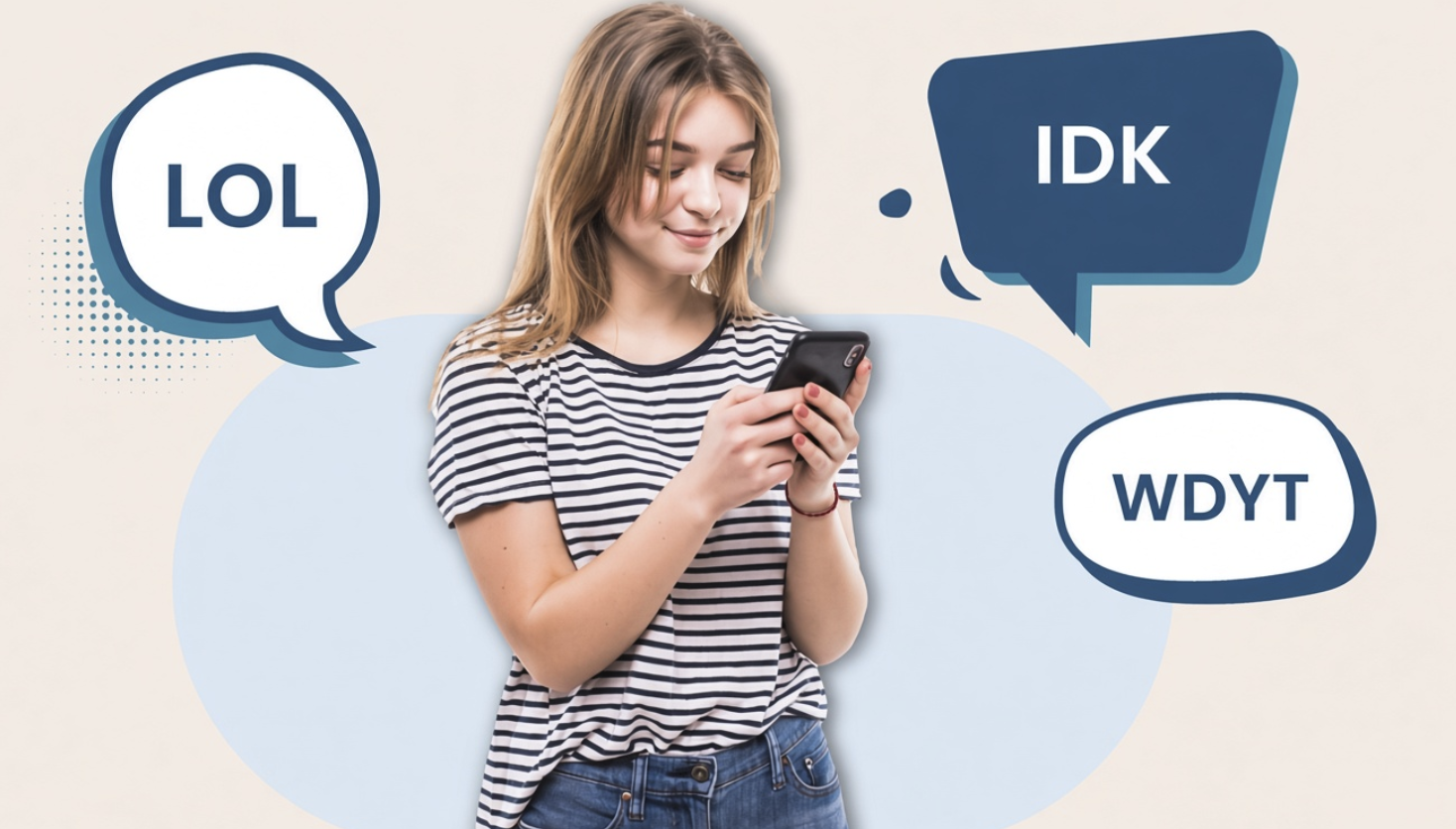
The internet has created its own constantly changing language.
Every year, new expressions appear across social media, messaging apps, gaming communities, comment sections, and online forums. Some disappear within months, while others become part of everyday conversations.
In 2026, internet slang is more diverse than ever. A person might see terms such as rizz, delulu, no cap, NPC, sus, or aura and wonder what they actually mean.
Understanding these expressions can make online conversations much easier to follow. It can also help parents, students, creators, marketers, and anyone who spends time online understand what people are saying.
This guide explains some of the most popular internet slang words and meanings in 2026, along with examples of how they are commonly used.
Note: Internet slang changes quickly. Meanings can vary depending on the platform, community, age group, and context.
What Is Internet Slang?
Internet slang is informal language that develops and spreads through online communication.
It can include shortened words, abbreviations, memes, expressions, acronyms, and phrases created or popularized by online communities.
Unlike traditional dictionary definitions, internet slang often changes rapidly. A word can start in one community, become popular on social media, and eventually enter mainstream conversations.
Some terms are used humorously, while others simply make online communication faster.
Examples include:
- LOL
- BTW
- IDK
- TBH
- POV
- FR
- IRL
- IMO
Other slang terms are less straightforward and rely heavily on internet culture and context.
Popular Internet Slang Words and Their Meanings in 2026
1. Rizz
Meaning: Charm or ability to attract someone, especially romantically.
“Rizz” became one of the most recognizable internet slang terms after gaining widespread popularity on social media.
Example:
“He’s got serious rizz.”
The term can also be used jokingly when someone appears particularly confident or charming.
2. Delulu
Meaning: A playful shortened form of “delusional.”
“Delulu” is often used humorously when someone has unrealistic expectations or an overly optimistic belief about a situation.
Example:
“I’m being delulu, but I think my favorite creator might notice my comment.”
The word is generally informal and should be understood in context rather than treated as a serious description of someone’s mental health.
3. No Cap
Meaning: Seriously; honestly; without lying or exaggerating.
“Cap” can mean a lie or something untrue, while “no cap” means the speaker is being genuine.
Example:
“Honestly, that was the best film I’ve seen all year.”
4. Cap
Meaning: A lie, exaggeration, or something untrue.
Example:
“That’s cap. You said you finished it yesterday.”
“Cap” and “no cap” are commonly used as opposites.
5. Sus
Meaning: Suspicious or questionable.
“Sus” became especially widespread through online gaming and social media culture.
Example:
“That excuse sounds sus.”
It is usually casual and can be used seriously or as a joke.
6. NPC
Meaning: Originally, a non-player character in a video game.
Online, “NPC” can describe someone who appears to behave predictably, mechanically, or without much independent thought.
Example:
“Everyone in that video was acting like NPCs.”
The expression can sometimes be insulting, so context matters.
7. Aura
Meaning: A person’s perceived presence, confidence, charisma, or overall vibe.
“Aura” has become a popular way to describe someone’s coolness or presence.
Example:
“She walked onto the stage and instantly had aura.”
People may also jokingly talk about gaining or losing “aura points.”
8. Ate
Meaning: Did something extremely well.
When someone says a person “ate,” they usually mean that person performed impressively or looked particularly good.
Example:
“She absolutely ate with that performance.”
The expression is often followed by “left no crumbs,” although that phrase is usually used humorously rather than literally.
9. Slay
Meaning: To do something exceptionally well or look impressive.
“Slay” has been popular online for years and continues to appear in social media conversations.
Example:
“You slayed that presentation.”
Depending on context, it can describe someone’s appearance, performance, achievement, or confidence.
10. Mid
Meaning: Average, mediocre, or disappointing.
“Mid” is often used when someone thinks something is neither terrible nor particularly impressive.
Example:
“The new update was kind of mid.”
11. Based
Meaning: An expression of approval for an opinion or statement considered confident, authentic, or admirable.
Example:
“Choosing your own path instead of following trends? Based.”
The meaning can change depending on the online community using it.
12. Touch Grass
Meaning: Spend less time online and reconnect with real-world activities.
This phrase is usually used jokingly or critically toward someone who appears overly invested in an online argument or trend.
Example:
“You’ve been arguing about this for three hours. Go touch grass.”
13. Brain Rot
Meaning: Informal internet slang for excessive exposure to low-value, repetitive, or highly addictive online content.
The phrase is often used humorously by people who recognize that they have spent too much time consuming internet content.
Example:
“I’ve watched so many short videos that my brain is completely cooked.”
The term can also refer to a style of absurd online humor.
14. POV
Meaning: Point of view.
“POV” is commonly used in social media captions and videos to introduce a situation from a particular perspective.
Example:
“Imagine finally completing your homework just five minutes before it’s due.”
15. FR
Meaning: “For real.”
It is commonly used to agree with someone or emphasize that a statement is genuine.
Example:
“That exam was difficult.”
“FR.”
16. TBH
Meaning: “To be honest.”
It is commonly used before giving a personal opinion or honest response.
Example:
“TBH, I prefer the older version.”
17. IMO
Meaning: “In my opinion.”
Example:
“IMO, the simpler design looks better.”
18. IRL
Meaning: “In real life.”
It distinguishes real-world experiences from online interactions.
Example:
“We’ve been chatting online for years, but we’ve never actually met face-to-face.”
19. IYKYK
Meaning: “If you know, you know.”
This expression refers to an inside joke, shared experience, or information understood mainly by people familiar with the situation.
Example:
“That café’s secret menu is amazing. IYKYK.”
20. GOAT
Meaning: “Greatest of all time.”
GOAT is commonly used to praise someone considered exceptionally successful or talented.
Example:
“Many fans consider her the GOAT.”
21. GOATED
Meaning: Extremely good, impressive, or among the best.
Example:
“That game was absolutely goated.”
22. FOMO
Meaning: “Fear of missing out.”
FOMO describes the feeling that other people are enjoying something important or exciting without you.
Example:
“I hadn’t intended to go, but seeing everyone’s pictures made me feel like I was missing out.”
23. JOMO
Meaning: “Joy of missing out.”
JOMO is often presented as the opposite of FOMO. It describes enjoying the decision to skip something and spend time doing what you prefer.
Example:
“While everyone else was out, I decided to stay in and ended up having a wonderful night. Total JOMO.”
24. BFFR
Meaning: “Be f***ing for real.”
This abbreviation is used to challenge someone’s statement or tell them to be serious. Because it contains profanity, it is best avoided in formal settings.
Example:
“BFFR, you really think that’s going to happen?”
25. It’s Giving
Meaning: Something has the appearance, feeling, or overall vibe of a particular thing.
Example:
“That outfit is giving vintage.”
The phrase became widely popular through social media and can be adapted to many situations.
Common Internet Abbreviations Everyone Should Know
Not all internet slang consists of trendy Gen Z expressions. Many abbreviations have been used online for years and remain common.
| Slang | Meaning |
|---|---|
| LOL | Laughing out loud |
| LMAO | Laughing very hard |
| BRB | Be right back |
| BTW | By the way |
| IDK | I don’t know |
| IDC | I don’t care |
| TTYL | Talk to you later |
| NGL | Not gonna lie |
| RN | Right now |
| ASAP | As soon as possible |
| FYI | For your information |
| DM | Direct message |
| AFK | Away from keyboard |
| OMW | On my way |
| WDYT | What do you think? |
These abbreviations are especially common in texting, gaming, social media, and casual online conversations.
Why Does Internet Slang Change So Quickly?
Internet slang spreads faster than traditional language because social platforms allow millions of people to communicate instantly.
A phrase can become popular through:
- Viral videos
- Memes
- Influencers
- Music
- Gaming communities
- Online creators
- Streaming platforms
- Social media challenges
- Comment sections
Algorithms can also expose users to the same expression repeatedly, helping new terms spread quickly.
However, internet slang has a short lifespan. Some expressions remain popular for years, while others become outdated after only a few months.
Where Does Internet Slang Come From?
There is no single source of internet slang.
Some terms originate in specific online communities before becoming mainstream. Others come from music, television, gaming, Black and LGBTQ+ communities, regional dialects, or everyday speech.
Social media can then accelerate their spread.
This is why the same word can have different meanings depending on where it is used.
A term that is harmless and humorous in one community may have a completely different meaning somewhere else.
How to Understand Internet Slang From Context
The best way to understand unfamiliar slang is to consider the surrounding conversation.
Ask:
- What platform is being used?
- Who is using the expression?
- Is the conversation serious or humorous?
- Is the word being used positively or negatively?
- Could the term have multiple meanings?
For example, “ate” usually has nothing to do with eating when it appears in a social media comment such as “She ate that performance.”
Context changes everything.
Should You Use Internet Slang?
That depends on the situation.
Slang can make conversations feel casual and natural among friends or online communities. However, it may not be appropriate in every setting.
For school assignments, professional emails, job applications, formal reports, and official communication, standard language is usually a better choice.
You don’t have to try to use slang just because it’s popular; it should come naturally.
Using an expression naturally is usually better than trying to imitate internet language.
Internet Slang vs. Traditional Language
Internet slang is not necessarily replacing standard English.
Instead, it adds another informal layer to communication.
People naturally adjust the way they speak depending on who they are talking to and where the conversation takes place.
Someone might use “LOL” while texting a friend but write “That was funny” in a formal email.
This ability to switch between different styles is an important communication skill.
Conclusion
Internet slang has become an important part of modern online communication. From simple abbreviations such as LOL and IDK to newer expressions such as rizz, aura, delulu, and brain rot, online language continues to evolve.
The meaning of a slang term can also depend heavily on context. A word may be humorous in one conversation and confusing or inappropriate in another.
The easiest way to understand internet slang is to look at how the word is being used, who is using it, and which online community it comes from.
As internet culture continues to change throughout 2026 and beyond, new words will inevitably appear. Some will disappear quickly, while others may become part of everyday language.
Frequently Asked Questions
1. What is the most popular internet slang in 2026?
Popular terms vary by platform and community, but expressions such as rizz, aura, delulu, no cap, sus, ate, mid, based, and brain rot remain recognizable parts of online slang.
2. What does “rizz” mean?
“The term “rizz” means having charm or being able to attract someone easily. It is often used casually to describe confidence or charisma.
3. What does “no cap” mean?
“No cap” means the speaker is being honest or serious and is not lying or exaggerating.
4. What does “delulu” mean?
“Delulu” is a playful shortened form of “delusional.” Online, it is often used humorously to describe unrealistic or overly optimistic expectations.
5. What does “ate” mean in internet slang?
“Ate” means someone did something extremely well, such as giving an impressive performance, creating something excellent, or putting together a great look.
6. Why does internet slang keep changing?
Internet slang changes quickly because social media, memes, gaming, creators, music, and online communities can spread new expressions to millions of people in a short time. Some terms remain popular while others quickly fade.