

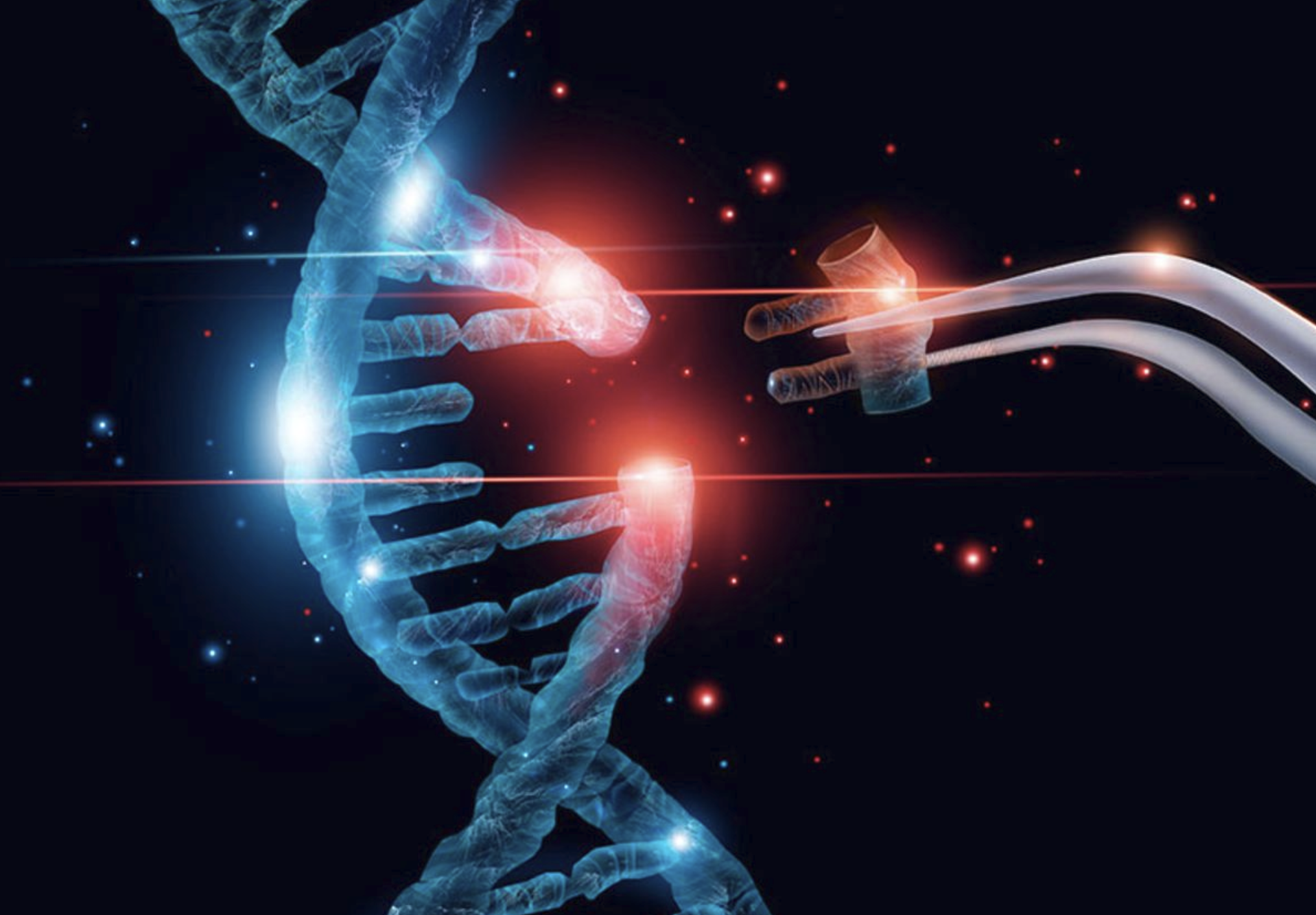
CRISPR technology is one of the most exciting scientific breakthroughs of the 21st century. It has transformed how scientists study genes and opened new possibilities for treating diseases that were once considered untreatable. While the science behind gene editing may sound complicated, the basic idea is surprisingly simple. CRISPR acts like highly precise molecular scissors that allow scientists to locate and modify specific sections of DNA.
Imagine finding a single typo in a book containing billions of letters and correcting only that mistake without changing anything else. That comparison closely resembles what researchers are trying to achieve with CRISPR technology. Instead of editing words in a book, scientists are editing genetic information within living cells.
Today, CRISPR is used in laboratories worldwide for medical research, agriculture, biotechnology, and drug development. Recent advances have also led to approved CRISPR-based therapies for certain genetic conditions, demonstrating that gene editing is moving beyond scientific theory and into real-world healthcare applications.
What Does CRISPR Mean?
CRISPR is an acronym that refers to Clustered Regularly Interspaced Short Palindromic Repeats, a revolutionary gene-editing technology. While the name sounds highly technical, its discovery originated from bacteria.
Scientists discovered that some bacteria possess a natural defense system that helps protect them against viruses. When viruses attack bacteria, the bacteria store fragments of viral genetic material and use specialized proteins to identify and destroy future invaders. Researchers realized this remarkable biological process could potentially become a powerful gene-editing tool.
The protein most commonly associated with CRISPR is called Cas9. Working together with specially designed guide molecules, Cas9 can identify specific DNA sequences and make highly targeted changes. This discovery fundamentally changed genetic research and earned pioneering researchers worldwide recognition for their contributions to modern biotechnology.
Today, CRISPR systems have evolved considerably beyond their original discovery and continue to become increasingly precise and efficient in scientific applications.
How Does CRISPR Gene Editing Work?
Understanding CRISPR becomes easier when you think of DNA as an instruction manual for your body. Those instructions determine everything from how cells function to how proteins are produced.
CRISPR follows a relatively straightforward process:
- Scientists identify the gene they want to study or modify.
- A guide RNA is designed to locate the specific DNA sequence.
- The Cas protein acts like molecular scissors.
- The targeted DNA section is cut precisely.
- Cells naturally repair the DNA, allowing researchers to remove, replace, or modify genetic information.
The process can be compared to using a search function in a digital document. Instead of manually searching billions of genetic letters, CRISPR quickly identifies the correct location and performs highly targeted edits.
Researchers continuously improve these techniques because precision remains critically important. Scientists carefully study potential unintended changes, known as off-target effects, to ensure treatments remain as safe and effective as possible.
Why is CRISPR Technology Important?
Before CRISPR, gene-editing techniques were often slower, more expensive, and significantly more complex. CRISPR dramatically improved accessibility for scientific research because it is comparatively efficient and adaptable across numerous applications.
Its importance extends across multiple industries:
- Medical research
- Genetic disease treatments
- Cancer research
- Agriculture
- Biotechnology
- Drug development
- Personalized medicine
Scientists are particularly interested in CRISPR’s potential to address inherited genetic disorders. Many diseases result from changes within a single gene or a relatively small number of genetic abnormalities. By targeting those specific regions, researchers may eventually develop more precise therapeutic approaches.
Gene editing is also helping scientists better understand how diseases develop. Even when CRISPR isn’t being used directly as a treatment, it remains an invaluable research tool that accelerates scientific discoveries worldwide.
The technology continues evolving rapidly as researchers develop safer and more sophisticated methods for editing genetic material.
Real-World Applications of CRISPR
CRISPR is no longer limited to laboratory experiments. Its applications are expanding every year.
Some of its most promising uses include:
| Application | Purpose |
|---|---|
| Genetic Diseases | Correcting harmful mutations |
| Cancer Research | Developing targeted therapies |
| Drug Development | Improving treatment discovery |
| Agriculture | Enhancing crop resilience |
| Biotechnology | Improving biological processes |
| Personalized Medicine | Designing patient-specific treatments |
One of the most significant milestones occurred when the first CRISPR-based therapy received regulatory approval for treating certain patients with sickle cell disease. Additional research continues exploring treatments for beta-thalassemia, rare metabolic disorders, cancers, and other inherited conditions.
Researchers are also investigating highly personalized approaches that may someday allow treatments to be tailored for individual patients suffering from extremely rare genetic conditions.
Although many therapies remain under investigation, recent progress demonstrates that CRISPR technology has moved beyond theoretical possibilities and into clinical medicine.
Is CRISPR Used to Cure Diseases?
The answer is both exciting and carefully nuanced.
CRISPR technology has successfully contributed to approved therapies for specific genetic disorders. However, it should not be described as a universal cure for disease.
Many factors influence whether gene editing can effectively treat particular conditions, including:
- The underlying genetic cause
- Treatment safety
- Delivery methods
- Clinical effectiveness
- Long-term outcomes
Scientists continue conducting clinical trials worldwide to determine where CRISPR can provide the greatest medical benefits.
Gene editing may prove particularly valuable for diseases caused by single-gene mutations because they present clear therapeutic targets. More complex conditions involving multiple genetic and environmental factors often require additional scientific understanding.
While headlines sometimes portray CRISPR as miraculous science, responsible researchers emphasize both its tremendous potential and its current limitations.
Scientific progress frequently advances step by step rather than through overnight revolutions.
Are There Risks Associated With CRISPR?
Like every medical technology, CRISPR presents challenges that scientists continue working to overcome.
Potential concerns include:
- Unintended genetic changes
- Delivery challenges
- Long-term safety questions
- Ethical considerations
- Treatment accessibility
- Regulatory oversight
One important scientific consideration involves off-target editing, where unintended DNA regions may potentially be modified. Researchers have significantly improved CRISPR’s accuracy over time, but safety remains a primary focus of ongoing investigations.
Ethical discussions also continue surrounding gene editing applications. Most medical research focuses upon treating serious diseases rather than altering human characteristics unrelated to health.
Regulatory agencies worldwide carefully evaluate gene-editing therapies before approving their clinical use. Extensive testing remains necessary to determine whether treatments are both safe and effective for patients.
Responsible scientific advancement depends upon balancing innovation with rigorous safety standards.
The Future of CRISPR Technology in 2026 and Beyond
CRISPR technology continues progressing at an extraordinary pace.
Scientists are currently developing:
- More precise editing systems
- Improved delivery technologies
- Personalized treatments
- Advanced gene therapies
- AI-assisted genetic research
- Novel CRISPR variants
Recent developments have demonstrated that customized CRISPR treatments may potentially be designed for exceptionally rare diseases within remarkably short timeframes. Researchers are also exploring applications involving cardiovascular diseases, neurological disorders, and various cancers.
Artificial intelligence is increasingly contributing to CRISPR research by helping scientists design safer and more accurate gene-editing strategies. These interdisciplinary advances could significantly accelerate future discoveries.
Although considerable challenges remain, gene editing has already transformed modern biotechnology and will likely continue influencing medicine for decades to come.
The future of CRISPR will depend not only upon scientific breakthroughs but also upon ethical, regulatory, and societal discussions regarding its responsible use.
Conclusion
CRISPR technology represents one of the most remarkable scientific achievements in modern genetics. By enabling researchers to make precise changes to DNA, it has fundamentally changed how scientists study diseases and develop potential treatments. What began as a bacterial defense mechanism has evolved into a powerful tool with applications across medicine, biotechnology, and agriculture.
Gene editing is not magic, nor is it a cure for every disease. It remains a rapidly developing field that combines extraordinary promise with important scientific and ethical responsibilities. Approved CRISPR-based therapies have already demonstrated its real-world potential, while ongoing research continues expanding its possibilities.
Understanding CRISPR doesn’t require advanced scientific training. At its core, it is simply a method for editing genetic instructions with increasing precision, offering hope for future medical advances while reminding us of the importance of thoughtful and responsible innovation.
Frequently Asked Questions
1. What is CRISPR technology in simple words?
CRISPR is a gene-editing tool that allows scientists to locate and modify specific sections of DNA with remarkable precision.
2. Is CRISPR technology currently used in medicine?
Yes. CRISPR-based therapies have received regulatory approval for certain genetic disorders, including specific forms of sickle cell disease and beta-thalassemia.
3. Can CRISPR completely cure genetic diseases?
Some treatments have shown extraordinary results for particular diseases, but CRISPR is not a universal cure and remains an active area of scientific research.
4. Is CRISPR technology safe?
Scientists continue improving its safety through extensive research and clinical testing. Approved therapies undergo rigorous regulatory evaluation before clinical use.
5. How is CRISPR different from traditional gene therapy?
Traditional gene therapy often introduces new genetic material, whereas CRISPR enables scientists to edit existing DNA sequences with high precision.
6. What might CRISPR achieve in the future?
Researchers are investigating applications involving rare diseases, cancer treatments, personalized medicine, and next-generation gene-editing technologies that may further improve safety and effectiveness.