

Your brain is one of the most complicated organs in your body, yet you use it every second without consciously thinking about how it operates.
When you read a sentence, recognize someone’s face, remember something from yesterday, move your hand, or decide what to eat, your brain is coordinating an enormous number of processes behind the scenes.
It receives information from your senses, processes signals, stores and retrieves memories, controls movement, regulates many automatic body functions, and helps you understand the world around you.
But how does all of this actually happen?
The human brain contains billions of nerve cells called neurons that communicate with one another through electrical and chemical signals. These networks work with supporting cells, blood vessels, chemicals, and different brain regions to create the complex activity responsible for perception, thought, movement, learning, and much more.
Let’s break down how the human brain works in simple terms.
What Is the Human Brain?
The brain is the main control organ of your nervous system.
It sits inside your skull and connects with the rest of your body through the spinal cord and peripheral nerves.
Rather than working like a single computer with one central processor, the brain consists of many interconnected regions that perform different but overlapping roles.
Some areas are particularly important for movement.
Others are involved in processing sensory information, language, memory, emotion, decision-making, or automatic body functions.
The brain also communicates continuously with the rest of your body.
For example, when you touch something hot, sensory nerves send information toward your central nervous system. Your brain and spinal cord process that information and coordinate an appropriate response.
This can happen extremely quickly.
The Main Parts of the Brain
The brain is often divided into several major structures to make its organization easier to understand.
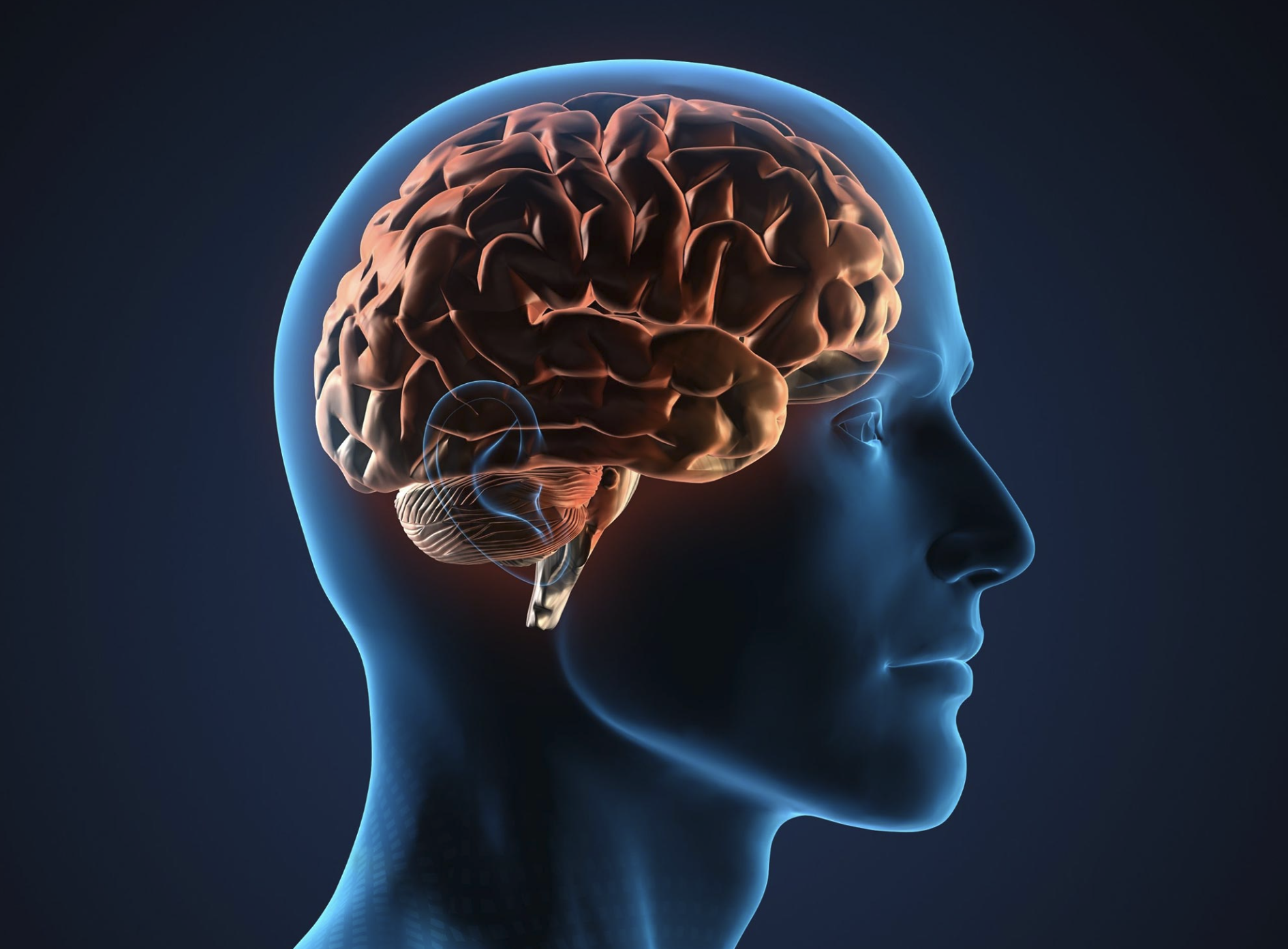
Cerebrum
The cerebrum is the largest part of the brain.
It is divided into two cerebral hemispheres, commonly called the left and right hemispheres.
The cerebrum is involved in many functions associated with conscious experience, including thinking, perception, language, memory, and voluntary movement.
Its outer layer, called the cerebral cortex, contains extensive networks of neurons.
Cerebellum
The cerebellum is located toward the back and lower part of the brain.
It plays an important role in coordinating movement, balance, posture, and motor learning.
When you learn to perform a physical skill, the cerebellum is part of the network helping your movements become more coordinated.
Brainstem
The brainstem connects the brain with the spinal cord.
It is involved in several essential functions, including breathing, heart rate, blood pressure regulation, swallowing, and levels of alertness.
These functions are critical for keeping your body operating automatically.
What Are Neurons?
To understand how your brain works, you need to understand neurons.
Neurons are specialized cells that communicate information through electrical and chemical signals.
A typical neuron contains structures with different roles.
The dendrites receive signals from other cells.
The cell body contains the nucleus and maintains the cell.
The axon carries electrical signals away from the cell body toward other cells.
At the end of the axon are structures that can release chemical messengers called neurotransmitters.
This arrangement allows neurons to communicate across enormous networks.
Think of neurons as individual members of a massive communication system.
One neuron alone can’t produce everything your brain does.
The remarkable part is what happens when billions of neurons connect and communicate in constantly changing patterns.
How Do Neurons Communicate?
Neurons communicate using a combination of electrical activity and chemical signaling.
When certain conditions are met, a neuron can produce an electrical signal known as an action potential.
That signal travels along the neuron’s axon.
When it reaches the end of the neuron, it can trigger the release of neurotransmitters into a tiny space between cells called a synapse.
The neurotransmitters can then influence another neuron.
Some neurotransmitters increase the likelihood that another neuron will become active, while others decrease it.
Through billions of these connections, neurons form complex communication networks.
This is one reason the brain is so powerful.
It isn’t simply sending isolated signals. It is constantly integrating information across interconnected networks.
How Does Your Brain Process Information?
Your brain is constantly receiving information from inside and outside your body.
Your eyes provide information about light, shapes, movement, and color.
Your ears detect sound.
Your skin provides information about touch, pressure, temperature, and pain.
Your nose detects odors.
Your taste system detects different chemical signals in food and drink.
But your brain doesn’t simply receive these signals like a passive recording device.
It processes and interprets them.
For example, when you look at a familiar person’s face, your brain combines visual information with stored knowledge to help you recognize who you’re seeing.
The experience feels immediate, but many neural processes contribute to it.
How Does the Brain Control Movement?
Even a simple movement involves communication between your brain, spinal cord, nerves, and muscles.
Suppose you decide to pick up a glass.
Your brain generates signals associated with the intended movement.
Those signals travel through neural pathways toward the muscles involved.
Your muscles contract in coordinated patterns.
At the same time, sensory information from your muscles and joints provides feedback about the position and movement of your body.
Your nervous system can use that feedback to adjust the movement.
This continuous loop between intention, movement, and sensory information allows you to perform precise actions.
How Does the Brain Create Memories?
Memory isn’t stored in one single location like a file saved inside a computer.
Different types of memory involve different brain systems and networks.
Your brain can form memories by changing connections between neurons.
This ability is closely related to neuroplasticity, the brain’s capacity to change its structure and function in response to experience.
When you learn something new, patterns of neural activity can contribute to changes in the connections between neurons.
Some memories are relatively short-lived, while others can remain accessible for many years.
Memory also isn’t a perfect recording.
When you remember something, your brain reconstructs information using stored representations and current context.
That’s one reason memories can sometimes change or become less accurate over time.
How Does the Brain Control Emotions?
Emotions aren’t controlled by a single “emotion center.”
Instead, many brain regions and networks contribute to emotional experiences.
Structures such as the amygdala, hippocampus, hypothalamus, and areas of the cerebral cortex can participate in processes related to emotion, memory, motivation, and physiological responses.
Your emotional experience is also influenced by your body.
Changes in heart rate, hormones, breathing, and other physiological processes can interact with brain activity.
This means emotions involve communication between different parts of your nervous system rather than a single isolated brain region.
How Does the Brain Help You Make Decisions?
Decision-making involves several brain systems.
When you make a decision, you may consider previous experiences, potential consequences, emotions, goals, and information from your surroundings.
The prefrontal cortex is particularly important for several higher-order processes associated with planning, reasoning, attention, and decision-making.
But it doesn’t work alone.
Decision-making involves communication among multiple brain regions.
This explains why making a simple choice can involve more mental processing than you might realize.
Even when a decision feels intuitive, your brain may be drawing on previous experiences and learned patterns.
How Does Sleep Affect the Brain?
Your brain remains highly active while you sleep.
Sleep is important for many aspects of physical and mental health.
During sleep, the brain goes through different stages characterized by different patterns of activity.
Sleep supports processes associated with memory and learning, while also helping regulate many aspects of brain and body function.
Your brain also appears to use sleep as an opportunity to process information and maintain its internal environment.
Getting enough sleep is therefore not simply about feeling less tired the next day.
It supports the brain’s ability to function effectively.
What Is Neuroplasticity?
One of the most fascinating features of the brain is its ability to change.
Neuroplasticity refers broadly to the nervous system’s ability to modify its structure or function in response to experience, learning, development, or injury.
When you practice a skill repeatedly, your nervous system can adapt.
Learning a language, playing an instrument, solving problems, or developing a new physical skill can all involve changes in neural networks.
This doesn’t mean that the brain can instantly change in any way you want.
Neuroplasticity is influenced by many factors, including age, experience, environment, practice, and biological processes.
Still, it demonstrates that the brain isn’t a completely fixed system.
How Does the Brain Work With the Rest of the Body?
Your brain doesn’t operate independently.
It is part of a larger nervous system that includes the spinal cord and peripheral nerves.
The nervous system constantly exchanges information with the rest of your body.
Your brain receives signals about:
- Heart activity
- Breathing
- Digestion
- Temperature
- Muscle position
- Touch
- Pain
- Balance
- Internal chemical conditions
It also sends signals that influence movement and many automatic physiological processes.
The brain and body therefore operate as a connected system rather than two separate machines.
Why Is the Human Brain So Complex?
The brain’s complexity comes partly from the enormous number of connections among its cells.
A single neuron can communicate with many other cells, creating highly interconnected networks.
Those networks can process information simultaneously.
The brain also changes throughout life.
Experience can influence neural connections, and different networks can cooperate depending on what you’re doing.
When you read, for example, your brain isn’t performing just one task.
It is processing visual information, recognizing symbols, connecting words with language, accessing stored knowledge, directing attention, and constructing meaning.
All of this happens while you experience the process as simply “reading.”
How Scientists Study the Brain
Scientists use many different methods to understand brain function.
Some techniques allow researchers to measure electrical activity.
Others provide images of brain structure or changes in activity.
Researchers also study individual neurons, brain networks, behavior, genetics, and the effects of neurological conditions.
Modern neuroscience combines information from many fields, including biology, psychology, medicine, computer science, and chemistry.
Despite enormous progress, scientists still don’t understand everything about the human brain.
Questions about consciousness, memory, perception, and complex decision-making continue to be active areas of research.
Final Thoughts
The human brain is an extraordinarily complex biological system that allows you to perceive the world, learn from experience, remember information, communicate, move your body, experience emotions, and make decisions.
Its billions of neurons communicate through electrical and chemical signals, forming networks that work together across different brain regions.
The brain also constantly interacts with the rest of your nervous system and body.
Perhaps the most fascinating feature is that your brain isn’t completely fixed. Through neuroplasticity, its networks can change in response to learning and experience.
Although scientists have learned an enormous amount about how the brain works, many questions remain unanswered.
The more researchers discover, the clearer it becomes that the brain isn’t simply a biological computer.
It is a living, adaptable system that continuously processes information, responds to its environment, and changes throughout your life.
Frequently Asked Questions
1. How does the human brain work in simple terms?
The brain receives information from your senses and body, processes that information through interconnected neural networks, and sends signals that influence thoughts, movements, emotions, and many body functions.
2. What is the total number of neurons present in the human brain?
The human brain contains roughly 86 billion neurons. These neurons form an enormous network of connections that allows different parts of the nervous system to communicate.
3. Which region of the brain is considered the most vital or critical?the brain?
There isn’t one single “most important” part. Different regions perform different functions, and many of them work together. The cerebrum, cerebellum, brainstem, and other structures all contribute to normal brain function.
4. How do neurons communicate with each other?
Neurons communicate through electrical signals within cells and chemical signals between cells. At synapses, neurotransmitters can carry signals from one neuron to another.
5. Can the brain change throughout life?
Yes. Neuroplasticity allows the brain and nervous system to change in response to learning, experience, development, and other factors. The extent and nature of these changes vary depending on the circumstances.
6. Why does the brain need sleep?
Sleep supports many important processes in the brain and body, including aspects of learning, memory, emotional regulation, and physiological maintenance. Adequate sleep helps the brain function effectively.