

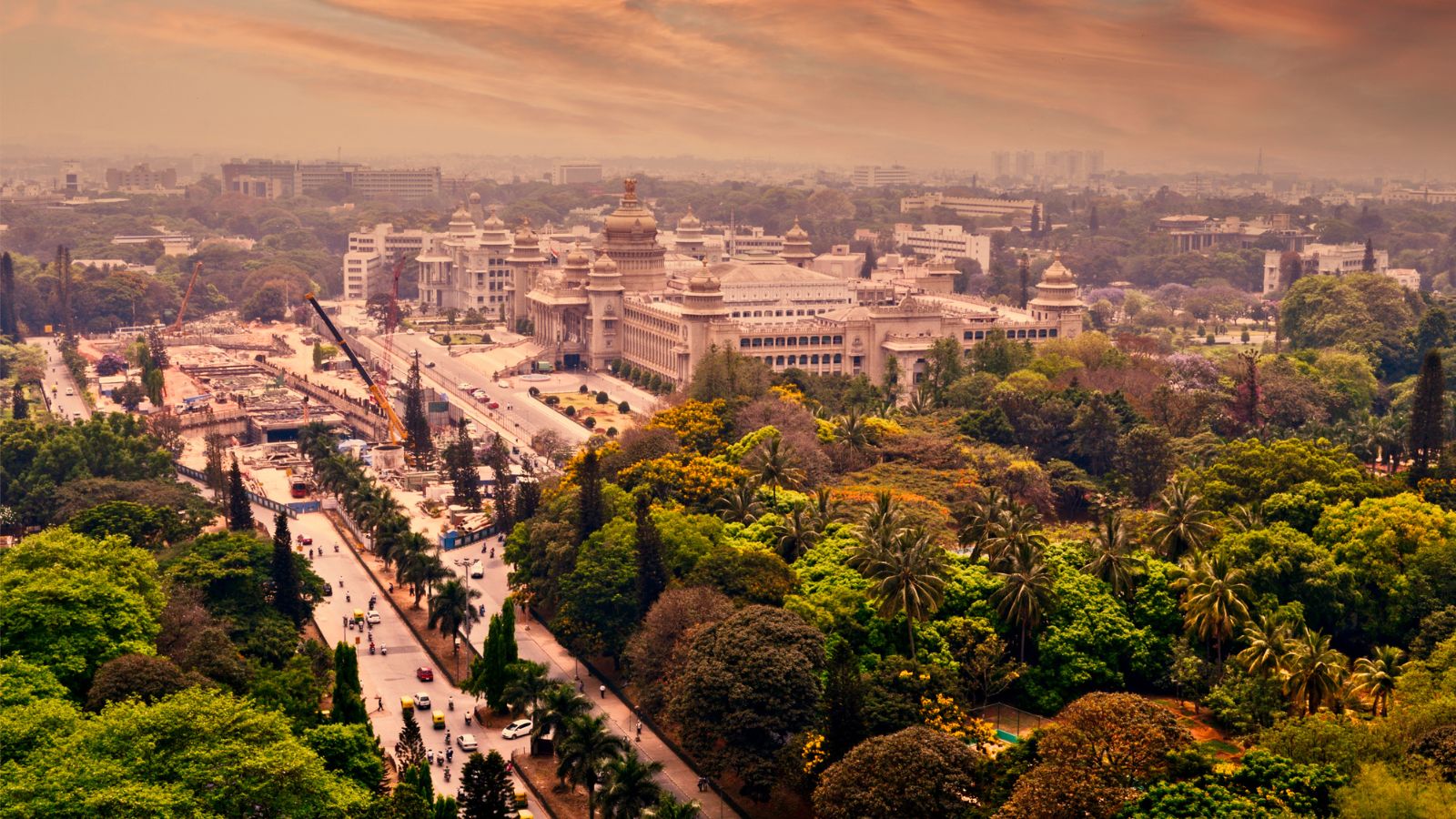
Bengaluru, formerly known as Bangalore, is the capital of the Indian state of Karnataka and one of the fastest-growing metropolitan cities in Asia. Renowned as the Silicon Valley of India, Bengaluru is a global hub for information technology, innovation, education, and entrepreneurship. Beyond its booming tech industry, the city is celebrated for its pleasant climate, lush gardens, vibrant culture, historic landmarks, and diverse culinary scene.
What Is Bengaluru?
Bengaluru is the largest city in Karnataka and serves as its political, economic, and cultural center. Located in southern India on the Deccan Plateau, the city has transformed from a quiet administrative town into one of the world’s leading technology destinations.
Often called the Garden City of India due to its numerous parks and green spaces, Bengaluru is also famous for hosting thousands of startups, multinational corporations, and prestigious educational institutions.
Quick Facts
- State: Karnataka
- Country: India
- Official Language: Kannada
- Nickname: Silicon Valley of India
- Elevation: Approximately 900 meters (2,953 feet)
- Time Zone: Indian Standard Time (IST)
Where Is Bengaluru Located?
Bengaluru is situated in southeastern Karnataka on the Mysore Plateau, about 300 kilometers west of Chennai and 840 kilometers southwest of Hyderabad. Its high elevation contributes to a moderate climate that distinguishes it from many other Indian cities.
The city is well connected to major destinations through highways, railways, and an international airport, making it an important transportation hub in South India.
History of Bengaluru
The history of Bengaluru dates back several centuries. The city was officially founded in 1537 by Kempegowda I, a local chieftain who built a mud fort and laid the foundation for the city’s development.
During the 18th century, Bengaluru came under the rule of Hyder Ali and later Tipu Sultan, who strengthened its military and economic importance. Following the Anglo-Mysore Wars, the British established a military cantonment, leading to rapid urban growth.
After India’s independence in 1947, Bengaluru evolved into a center for public-sector industries, scientific research, and eventually the information technology revolution that defines the city today.
Why Is Bengaluru Called the Silicon Valley of India?
Bengaluru earned its reputation as the Silicon Valley of India because it is home to one of the world’s largest technology ecosystems.
Several factors contributed to its success:
- Presence of leading IT companies
- Highly skilled workforce
- Prestigious engineering colleges
- Startup-friendly environment
- Strong government support
- Modern infrastructure
- International investment
Global technology companies such as Infosys, Wipro, IBM, Microsoft, Google, Amazon, Intel, Oracle, and Accenture have major offices in Bengaluru. The city also hosts thousands of startups working in artificial intelligence, fintech, biotechnology, cybersecurity, and software development.
Top Tourist Attractions in Bengaluru
Bengaluru offers a mix of historical monuments, gardens, museums, and modern entertainment.
Lalbagh Botanical Garden
Spread across more than 240 acres, Lalbagh features rare plants, colorful flower displays, and a famous glasshouse inspired by London’s Crystal Palace.
Cubbon Park
Located in the city center, Cubbon Park provides peaceful walking trails, gardens, and recreational spaces for families and fitness enthusiasts.
Bangalore Palace
Built in the Tudor architectural style, Bangalore Palace showcases elegant interiors, royal artifacts, and beautifully landscaped grounds.
Vidhana Soudha
This magnificent government building is one of Bengaluru’s most recognizable landmarks and an excellent example of Neo-Dravidian architecture.
Bannerghatta National Park
Located on the outskirts of the city, the park includes wildlife safaris, a butterfly park, a zoo, and conservation centers.
Tipu Sultan’s Summer Palace
Constructed in the late 18th century, this historic palace reflects Indo-Islamic architecture and offers insight into Tipu Sultan’s reign.
Best Time to Visit Bengaluru
One of Bengaluru’s greatest advantages is its pleasant weather throughout the year.
October to February
This is considered the best time to visit, with cool temperatures and ideal sightseeing conditions.
March to May
Summers remain relatively comfortable compared to many Indian cities, although afternoons can be warm.
June to September
The monsoon season brings refreshing rainfall that enhances the city’s greenery.
Culture, Language, and Lifestyle
Bengaluru is one of India’s most cosmopolitan cities.
Kannada is the official language, but English, Hindi, Tamil, Telugu, and Malayalam are also widely spoken because people from across India have settled here for work and education.
The city hosts numerous cultural festivals, music concerts, literary events, food festivals, and art exhibitions throughout the year. Traditional Kannada heritage blends seamlessly with modern urban living.
Famous Food in Bengaluru
Food lovers will find plenty to enjoy in Bengaluru.
Popular local dishes include:
- Masala Dosa
- Bisi Bele Bath
- Ragi Mudde
- Idli and Vada
- Mysore Pak
- Akki Roti
- Filter Coffee
The city is equally famous for its cafes, craft breweries, international restaurants, and vibrant street food markets.
Education and Research in Bengaluru
Bengaluru is recognized as one of India’s leading educational centers.
It is home to prestigious institutions such as:
- Indian Institute of Science (IISc)
- Indian Institute of Management Bangalore (IIMB)
- National Institute of Fashion Technology
- Bangalore University
- Christ University
- RV College of Engineering
These institutions attract students and researchers from around the world.
Economy and Major Industries
The economy of Bengaluru extends far beyond information technology.
Major industries include:
- Software development
- Biotechnology
- Aerospace
- Electronics
- Artificial Intelligence
- Financial services
- Manufacturing
- Telecommunications
- Healthcare
- E-commerce
The city contributes significantly to India’s software exports and startup ecosystem.
Transportation in Bengaluru
Getting around Bengaluru has become increasingly convenient.
Major transportation options include:
- Kempegowda International Airport
- Namma Metro
- BMTC public buses
- Indian Railways
- Auto-rickshaws
- Taxi services
- App-based ride-sharing platforms
Although traffic congestion remains a challenge, ongoing metro expansion projects continue to improve urban mobility.
Cost of Living in Bengaluru
Bengaluru offers a wide range of living options suitable for different budgets.
Monthly expenses generally include:
- Rent
- Transportation
- Utilities
- Groceries
- Dining
- Internet
- Entertainment
While housing costs in premium neighborhoods are relatively high, many affordable residential areas are available for students and working professionals.
Pros and Cons of Living in Bengaluru
Advantages
- Pleasant weather
- Excellent career opportunities
- Thriving startup ecosystem
- High-quality educational institutions
- Diverse culture
- Strong healthcare facilities
- Vibrant nightlife and entertainment
Disadvantages
- Heavy traffic congestion
- Rising housing costs
- Water shortages in some areas
- Increasing population density
- Peak-hour commuting delays
Interesting Facts About Bengaluru
Here are some fascinating facts about Bengaluru:
- It is often called the Garden City of India.
- Bengaluru has one of the highest numbers of technology startups in Asia.
- The city enjoys moderate weather throughout most of the year.
- It is among India’s largest software export centers.
- Bengaluru hosts numerous international conferences and technology events annually.
- It has one of the country’s most educated workforces.
Frequently Asked Questions
Is Bengaluru and Bangalore the same city?
Yes. Bangalore was officially renamed Bengaluru in 2014 to reflect its traditional Kannada name.
Why is Bengaluru famous?
The city is famous for its IT industry, startups, educational institutions, pleasant climate, parks, and innovation ecosystem.
Which language is spoken in Bengaluru?
Kannada is the official language, but English and Hindi are widely understood and spoken.
Is Bengaluru a good place to live?
Yes. It offers excellent career opportunities, quality education, modern healthcare, and a vibrant lifestyle, although traffic and housing costs can be challenging.
How many days are enough to explore Bengaluru?
Three to five days are usually enough to visit the city’s major attractions, gardens, museums, temples, and nearby destinations.
Conclusion
Bengaluru is much more than India’s technology capital. It is a city where history meets innovation, tradition blends with modernity, and opportunities abound for professionals, students, entrepreneurs, and travelers alike. From iconic landmarks and beautiful parks to world-class educational institutions and thriving industries, Bengaluru continues to shape India’s future while preserving its rich cultural heritage.