

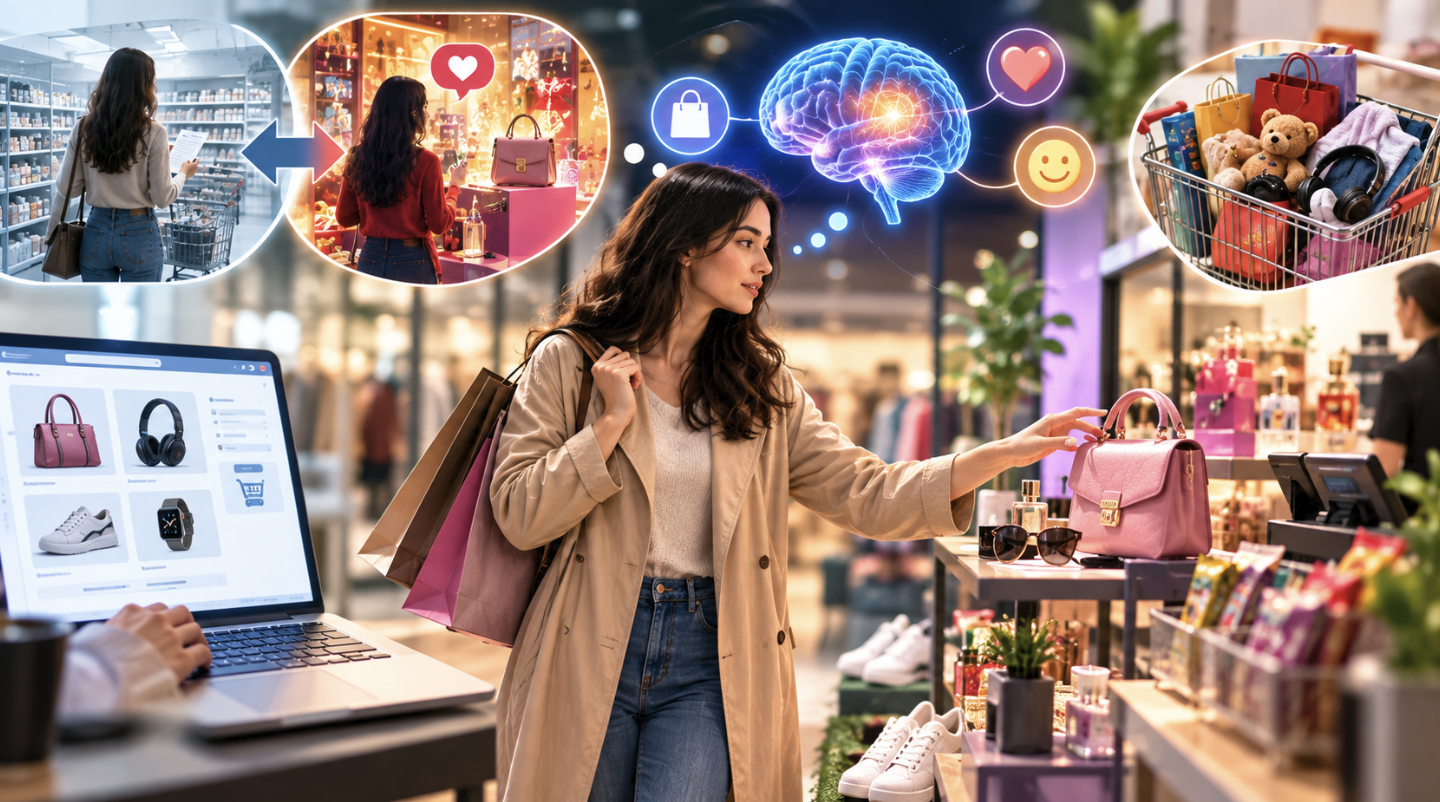
Walking into a store for a single item and leaving with a cart full of unplanned purchases happens to nearly everyone occasionally, and this experience isn’t simply a matter of weak willpower. Retailers invest substantial research and design effort into understanding exactly what triggers impulse purchasing, then deliberately structure stores, websites, and marketing specifically to activate those psychological triggers as consistently and effectively as possible.
Understanding the psychology behind impulse buying, along with the specific tactics retailers employ to exploit it, offers practical insight for anyone wanting to make more intentional purchasing decisions without eliminating spontaneous shopping entirely.
What Actually Happens Psychologically During an Impulse Purchase
Impulse buying typically involves a rapid decision-making process that bypasses the more deliberate evaluation people apply to planned purchases, driven largely by emotional response rather than careful consideration of need, value, or budget impact. Neuroscience research has linked this pattern to the brain’s reward system, where the anticipation of acquiring something new triggers dopamine release, creating a pleasurable sensation that occurs before the actual purchase, sometimes even before the decision to buy has been fully, consciously made.
This emotional, reward-driven process explains why impulse purchases often feel satisfying in the moment yet frequently lead to regret once that initial dopamine response fades and rational evaluation catches up with the decision already made. Understanding this timing gap, between the emotional trigger and the delayed rational assessment, helps explain why simply “trying harder” to resist impulse purchases often proves less effective than addressing the actual psychological and environmental
triggers involved.
The Basic Psychological Sequence Behind Impulse Purchases
- An external trigger, whether visual, emotional, or situational, activates desire
- The brain’s reward system generates a pleasurable anticipatory response
- A rapid decision to purchase occurs before extensive rational evaluation happens
- Post-purchase, rational assessment sometimes produces regret once emotion subsides
Store Layout Decisions Designed to Maximize Unplanned Purchases
Physical retail stores are rarely arranged randomly; layout decisions reflect deliberate research into how shoppers move through a space and where attention naturally focuses. Placing high-margin, impulse-friendly items near checkout counters exploits a moment when shoppers have already committed mentally to purchasing something, making additional small purchases feel like a minor extension of a decision already made rather than a new, separate decision requiring fresh deliberation.
Essential, frequently purchased items typically get positioned at the back of a store, deliberately requiring shoppers to walk past numerous other product displays and potential temptations along the way. Grocery stores in particular have refined this approach extensively, placing bakery and floral displays near entrances to trigger positive sensory associations before a shopper even reaches the actual items on their planned list.
- High-margin impulse items get positioned strategically near checkout counters
- Essential items placed at the back require passing numerous additional displays
- Sensory triggers near entrances create positive associations before deliberate shopping begins
- These layout decisions reflect extensive, deliberate research rather than arbitrary arrangement
How Online Retail Has Adapted These Tactics Digitally
E-commerce platforms have translated physical store psychology into digital equivalents, using techniques like prominently displayed “customers also bought” recommendations, countdown timers suggesting limited availability, and one-click purchasing that removes the natural pause a more deliberate checkout process might otherwise provide. Each of these digital tactics targets the same underlying psychological triggers that physical retail has long exploited, simply adapted for a screen-based shopping environment.
Personalized advertising adds another layer unique to digital retail, using browsing history and purchase data to surface products specifically calibrated to an individual’s demonstrated interests and vulnerabilities, creating a considerably more targeted trigger than the generalized approach physical stores must necessarily rely upon for their broader, undifferentiated customer base walking through any given day.
- Digital recommendation systems mirror physical store product placement strategies
- Artificial urgency through countdown timers pressures faster, less deliberate decisions
- One-click purchasing removes natural pauses that might otherwise interrupt impulse decisions
- Personalized advertising targets individual psychological triggers with unprecedented precision
A Concrete Example Showing These Tactics Working Together
Consider someone browsing a shopping app during a brief break, without any specific purchase in mind. A notification arrives highlighting a flash sale on an item similar to something they’d previously viewed weeks earlier, creating both a sense of urgency and a feeling that the algorithm somehow understands their preferences personally. Tapping through reveals a countdown timer showing the sale ending within the hour, alongside a note that only a few units remain in their size.
The combination of personalized targeting, artificial scarcity, and time pressure, deployed simultaneously rather than in isolation, proves considerably more effective than any single tactic alone would likely achieve. The purchase completes within minutes of the original notification, driven by a carefully orchestrated sequence of psychological triggers rather than any genuine, pre-existing need for the item that prompted the entire interaction in the first place.
The Role of Scarcity and Urgency in Overriding Deliberation
Scarcity messaging, whether genuine or fabricated, exploits a well-documented psychological principle called loss aversion, where the fear of missing an opportunity weighs more heavily in decision-making than the equivalent potential gain from waiting and deliberating further. Retailers have learned that even vague scarcity claims, “selling fast” or “limited stock,” trigger this response effectively without requiring verifiably accurate inventory information behind the claim.
Time-limited offers work through a related but distinct mechanism, creating pressure to decide quickly before careful, rational evaluation can fully occur. This urgency deliberately short-circuits the kind of comparison shopping or reflection that might otherwise lead someone to conclude a purchase isn’t necessary or represents poor value relative to alternatives they haven’t had adequate time to properly consider.
- Scarcity messaging exploits loss aversion regardless of whether the claims are accurate
- Vague scarcity language proves effective without requiring verifiable, accurate inventory data
- Time pressure deliberately prevents careful comparison and rational reflection
- These tactics work specifically by short-circuiting deliberate decision-making processes
Emotional States That Increase Vulnerability to Impulse Purchasing
Research consistently links certain emotional states to increased impulse buying susceptibility, including stress, boredom, sadness, and even positive excitement following a good event, suggesting emotional intensity generally, regardless of whether it’s positive or negative, tends to reduce the deliberate, rational
evaluation that might otherwise prevent an unplanned purchase. Shopping during these heightened emotional states, sometimes described informally as retail therapy, can provide short-term mood improvement even while contributing to longer-term financial regret.
Retailers have increasingly recognized and targeted these emotional patterns through timing-based marketing, such as increased advertising during evening hours when willpower and rational deliberation are often more depleted following a full day’s accumulated decision-making, a phenomenon researchers call decision fatigue that leaves people more susceptible to impulse triggers later in the day compared to earlier, less depleted periods.
- Multiple emotional states, both positive and negative, increase impulse buying susceptibility
- Shopping during emotional intensity can provide but temporary mood improvement
- Retailers strategically time marketing around periods of increased decision fatigue
- Evening hours often see more effective impulse marketing due to accumulated daily fatigue
How Retailers Use Sensory Design to Amplify Impulse Triggers
Beyond layout and digital tactics, retailers invest considerable effort into sensory design elements specifically calibrated to influence purchasing behavior below the level of conscious awareness. Background music tempo has been shown in research to affect shopping pace, with slower music generally associated with more time spent browsing and correspondingly higher spending, while carefully controlled lighting and even ambient scent, particularly in certain retail categories, have demonstrated measurable effects on mood and purchasing likelihood.
Color psychology also plays a deliberate role, with warmer tones sometimes used specifically to create urgency in clearance or sale sections, while cooler, calmer tones appear more frequently in areas retailers want shoppers to browse longer without feeling rushed toward a quick decision. These sensory elements work together, often without shoppers consciously noticing any individual component, to create an overall environment that gently but persistently nudges behavior in directions favorable to increased spending.
- Background music tempo measurably affects shopping pace and corresponding spending levels
- Ambient scent and lighting design influence mood and purchasing likelihood in certain contexts
- Color psychology gets deliberately applied to create urgency or encourage extended browsing
- These sensory elements combine to influence behavior below conscious shopper awareness
How Age and Cultural Background Influence Impulse Buying Patterns
Research examining impulse buying across different demographic groups has found meaningful variation in both frequency and triggers, with younger shoppers generally reporting higher rates of impulse purchasing, particularly through mobile and social commerce channels that didn’t exist for previous generations during their own formative shopping years. This generational difference likely reflects both greater comfort with digital payment methods removing friction from the purchase process, and growing
up within a media environment saturated with considerably more sophisticated, personalized marketing than earlier generations encountered.
Cultural attitudes toward saving, debt, and consumption also shape impulse buying patterns considerably, with research suggesting cultures placing stronger collective emphasis on financial caution and delayed gratification generally showing somewhat lower rates of impulse purchasing, though individual variation within any cultural context remains substantial and shouldn’t be overstated as a deterministic predictor of any specific person’s actual behavior.
- Younger shoppers generally report higher impulse purchasing rates through digital commerce channels
- Greater digital payment comfort and pervasive personalized marketing contribute to this generational pattern
- Cultural attitudes toward saving and consumption meaningfully shape impulse buying tendencies
- Individual variation within any demographic or cultural group remains substantial regardless of broader patterns
Practical Strategies for More Intentional Purchasing Decisions
Building in a deliberate waiting period before completing non-essential purchases, sometimes called a cooling-off rule, interrupts the rapid emotional-to-purchase pipeline that impulse buying relies upon, allowing rational evaluation time to catch up with the initial emotional trigger before money actually changes hands. Removing saved payment information from shopping apps and websites adds friction that similarly interrupts one-click purchasing’s deliberate design.
Shopping with a specific list and intention, rather than browsing without a clear purpose, reduces exposure to the environmental triggers retailers have carefully designed to activate impulse responses. Recognizing personal emotional patterns, noticing when stress, boredom, or fatigue tends to precede unplanned purchasing, allows for more targeted intervention, such as choosing a different activity entirely during those specific vulnerable moments rather than browsing shopping apps or walking through stores during those particular emotional states.
- Deliberate waiting periods interrupt the rapid emotional-to-purchase decision pipeline
- Removing saved payment information adds helpful friction to one-click purchasing
- Shopping with specific lists reduces exposure to environmental impulse triggers
- Recognizing personal emotional patterns allows more targeted, effective intervention strategies
Final Thoughts
Impulse buying reflects genuine, well-documented psychological patterns that retailers have studied extensively and deliberately designed their environments, both physical and digital, to exploit effectively. Understanding these specific mechanisms, rather than attributing impulse purchases purely to personal weakness or poor discipline, offers a more accurate and useful foundation for anyone wanting to align their actual spending more closely with their genuine priorities and values.
Frequently Asked Questions
1. Is impulse buying always a negative financial behavior?
Not necessarily; occasional small impulse purchases within a reasonable budget can provide enjoyment without meaningful financial harm, though frequent or large impulse purchases can create real problems over time.
2. Do online retailers really personalize impulse triggers for individual shoppers?
Yes, sophisticated tracking and recommendation algorithms allow considerably more individually targeted marketing than physical stores could historically achieve for their broader, undifferentiated customer base.
3. Can removing saved payment information reduce online impulse purchases?
Many people report this simple friction meaningfully reduces impulse purchasing, since the extra steps required provide a brief pause that allows more deliberate reconsideration before completing a purchase.
4. Why do people sometimes feel regret immediately after an impulse purchase?
This regret often occurs once the initial dopamine-driven emotional response fades and more rational evaluation catches up with a decision that was made before that deliberate evaluation had fully occurred.
5. Are certain people more naturally susceptible to impulse buying than others?
Individual differences in impulsivity, financial stress levels, and emotional regulation do influence susceptibility, though situational and environmental triggers affect nearly everyone to some meaningful degree regardless of personality.
6. Do subscription services use similar psychological tactics as retail impulse triggers?
Yes, many subscription models specifically use free trial periods and low initial commitment to bypass the deliberate evaluation a larger upfront purchase decision would typically receive from a cautious consumer.
7. Can budgeting apps help reduce impulse purchasing behavior?
Many users report that visibility into spending patterns through budgeting tools helps interrupt automatic purchasing habits, though effectiveness depends considerably on consistent, engagement with the tracking process itself.
8. Do loyalty programs and reward points influence impulse buying behavior?
Yes, the anticipation of earning rewards can trigger similar psychological mechanisms as other impulse triggers, sometimes encouraging purchases specifically to reach a points threshold rather than underlying need.
9. Is impulse buying more common for certain product categories than others?
Research suggests lower-priced, easily justified items like snacks or small accessories see higher impulse purchase rates than major purchases, though online shopping has expanded impulse buying into higher-value categories too.