

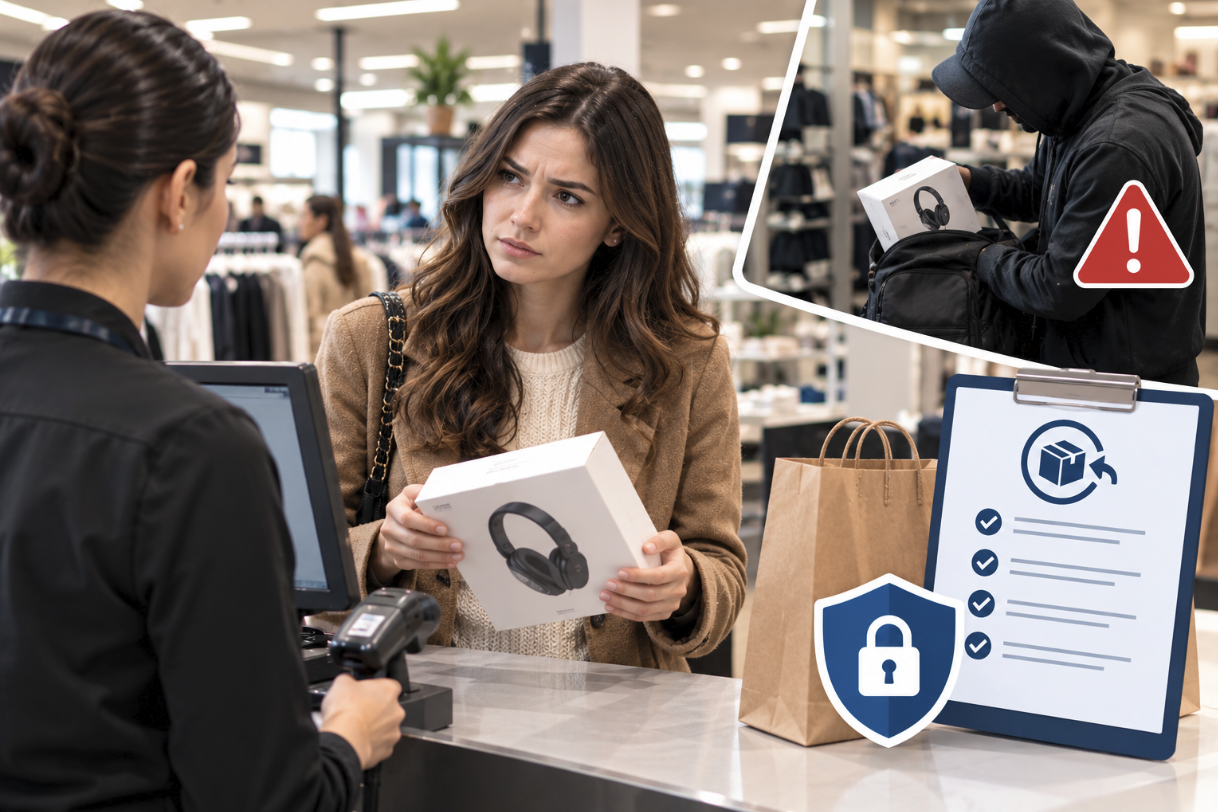
A generous return policy used to be a simple competitive advantage, a way for a retailer to signal confidence in its products and reduce the friction of buying something that might not work out.
That calculation has shifted. Return fraud, from wardrobing a dress for a single event before returning it to receipt fraud involving stolen or forged proof of purchase, has grown into a cost that retailers can no longer treat as a rounding error.
In response, chains from Target to Best Buy have rewritten their return policies, adding time limits, receipt requirements, restocking fees, and third-party verification tools that would have seemed unusually strict just a few years ago.
The result is a return experience that looks quite different from the no-questions-asked model many shoppers grew up expecting.
What Counts as Return Fraud
Return fraud covers a range of behaviors, some clearly deliberate and others closer to a gray area of consumer behavior that retailers have simply decided to crack down on. Wardrobing, the practice of buying an item, using it once, and returning it as if new, is common with formalwear, costumes, and electronics bought for a single event or trip.
Receipt fraud involves using a forged, altered, or stolen receipt to return an item the person never purchased, sometimes paired with theft from the sales floor itself. Price arbitrage, where a shopper buys a discounted item and returns it at a different location that has not yet marked down the price, exploits inconsistencies across a retailer’s own store network.
Organized retail crime rings have also learned to exploit return policies at scale, buying or stealing merchandise in bulk and then returning it for cash or gift cards through a network of stores, sometimes using stolen identification to spread transactions across multiple locations and avoid detection. Retail trade associations that track loss prevention data have identified organized fraud rings as a growing share of total return fraud losses, distinct from the more common individual cases of wardrobing or receipt misuse that make up the bulk of incidents by volume.
- Wardrobing: Buying an item for temporary use, such as a dress for one event, then returning it as if it were never worn.
- Receipt fraud: Using a stolen, forged, or mismatched receipt to return merchandise the person did not purchase from that transaction.
- Price arbitrage: Returning a discounted item at a store location where it has not yet been marked down, pocketing the price difference.
- Organized retail crime: Coordinated theft and return schemes that move stolen merchandise through multiple stores to generate cash or gift cards.
The Financial Weight of Returns
Retail returns carry costs well beyond the fraudulent share, which is part of why policies have tightened even for honest shoppers. Every returned item requires processing labor, inspection, and often repackaging before it can be resold, and a large share of returned merchandise, especially clothing that has been tried on or electronics that have been opened, cannot be resold as new at all. Retail industry data collected by the National Retail Federation has consistently shown that returned merchandise represents a substantial percentage of total sales, with online purchases carrying a notably higher return rate than in-store purchases because shoppers cannot try on or inspect an item before buying.
The rise of buy-online-return-in-store options, while convenient for shoppers, has added complexity to this equation, since a return processed at a physical store may involve merchandise that was never sold through that location’s own inventory system. Retailers have invested in reverse logistics, the process of routing returned goods to liquidation channels, secondary markets, or donation programs, as a way to recover some value from items that cannot go back on a regular shelf. Even with these systems in place, a sizable share of returned merchandise ends up discarded entirely, adding an environmental cost to the financial one.
- Processing labor: Every return requires staff time to inspect, sort, and decide whether an item can be resold, repackaged, or discarded.
- Resale devaluation: Opened electronics and tried-on clothing frequently cannot be sold as new, cutting into the margin a retailer expected to earn.
- Reverse logistics costs: Routing returned goods to liquidation channels or secondary markets adds a distinct layer of shipping and handling expense.
- Environmental waste: A large portion of returned merchandise, especially low-value items, is discarded rather than resold or donated.
Some retailers have started publishing sustainability reports that address returned merchandise directly, acknowledging the environmental toll of shipping items back and forth and, in some cases, committing to donate or recycle a higher share of returns rather than sending them to a landfill. Liquidation marketplaces such as those run by B-Stock have grown into a substantial secondary industry built entirely around reselling returned and overstock merchandise to bargain-focused buyers, giving retailers at least a partial financial recovery on goods that cannot go back on their own shelves.
Third-Party Verification Services Enter the Picture
To manage both fraud and the sheer volume of returns, many large retailers have turned to third-party verification companies that screen return transactions in real time. Appriss Retail, one of the more prominent companies in this space, provides software that flags suspicious return patterns, such as a customer who returns items at an unusually high rate or without an original receipt across multiple locations. When a transaction is flagged, a shopper might be asked for identification, told a return will be processed differently, or in more extreme cases, informed that the retailer will no longer accept returns from their account going forward.
Best Buy and other major electronics retailers have used similar systems for years, given the higher resale challenges associated with opened electronics and the temptation for fraud involving expensive individual items. The use of these systems has drawn some criticism from shoppers who feel unfairly flagged for a pattern of return behavior explained by ordinary circumstances, such as a family that frequently buys gifts and processes returns after holidays. Retailers using these tools generally maintain that the systems are calibrated to catch clear outliers rather than typical return behavior, though the lack of transparency around how flagging decisions are made remains a point of frustration for consumers caught in the process.
- Real-time transaction screening: Software analyzes return patterns across a retailer’s entire network, not just a single store location.
- Return frequency flags: Customers with an unusually high volume of returns relative to purchases may be flagged for closer review.
- Account-level restrictions: Some retailers will limit or deny future returns from a customer account identified as high risk.
- Cross-retailer data sharing: Certain verification services pool data across multiple retail clients, meaning a flag at one chain can affect standing at another.
Retailers Rewriting Their Return Windows
Return windows themselves have shortened across much of the retail sector, moving away from the extended or unlimited return policies that some big-box chains once used as a marketing differentiator. Target has adjusted its policies on certain categories, adding shorter windows for electronics compared with general merchandise.
Best Buy operates a tiered system where loyalty program members receive a longer return window than non-members, incentivizing account creation while still limiting general return flexibility. Costco remains a notable exception, maintaining one of the more generous return policies in retail as part of its broader membership value proposition, though even Costco has added specific carve-outs for electronics purchased more than a set number of days earlier.
Clothing retailers have layered restocking fees or made returns free only within a shorter window, after which a fee applies or the item cannot be returned at all. Some apparel companies now offer store credit rather than a cash refund for items returned outside a specified period, encouraging continued spending with the retailer rather than a full cash recovery for the shopper. These layered approaches
let retailers maintain some flexibility for ordinary buyer’s remorse while discouraging the pattern of frequent returns that drives up processing costs.
- Shortened windows for electronics: High-theft and high-fraud categories like electronics often carry tighter return deadlines than general merchandise.
- Loyalty-based flexibility: Rewards program members frequently receive longer return windows as an incentive to join and stay enrolled.
- Store credit instead of cash: Returns processed after a standard window sometimes convert to store credit rather than a full refund to the original payment method.
- Restocking fees: A percentage-based fee deducted from a refund helps offset processing and resale costs on opened or used merchandise.
Online Retailers Face a Different Set of Problems
E-commerce companies confront a version of return fraud that looks different from what a physical store deals with, since a shopper can claim an item never arrived, arrived damaged, or was not what was pictured, all without a store employee present to verify the claim in person.
Amazon has built extensive systems to detect patterns associated with these claims, including tracking whether a customer account files an unusually high rate of damage or non-arrival reports compared with typical buyers. Clothing and furniture retailers selling primarily online face a related issue sometimes called bracketing, where a shopper orders multiple sizes or colors of the same item with the explicit intention of returning everything except the one that fits.
Bracketing has become common enough that some retailers have begun charging return shipping fees specifically to discourage the practice, reversing years of free-return marketing that was meant to reduce the hesitation shoppers feel about buying clothing without trying it on first. Zara and other fast-fashion retailers have introduced return fees in some markets, a notable shift for an industry that built its online growth partly on the promise of easy, free returns. Whether this trend spreads further will likely depend on how much return-shipping costs continue to climb and how competitors respond to a retailer that breaks from the free-return norm.
- Bracketing: Ordering multiple sizes or variations of the same item with the intent to keep only one and return the rest.
- False damage claims: Reporting a functioning item as damaged or defective to receive a replacement or refund without returning the original.
- Non-arrival fraud: Falsely claiming a package never arrived despite delivery confirmation, seeking a replacement or refund for an item already received.
- Return shipping fees: A growing number of online retailers now charge for return shipping specifically to offset the cost of high return volumes.
Impact on Everyday Shoppers
For most shoppers who are not attempting anything close to fraud, these tightened policies still change the calculus of a purchase. Buying an item with the intention of returning it if it does not work out has become a riskier bet than it once was, since a missing receipt or a return processed outside a shortened window can now result in a denial rather than an automatic refund. Shoppers who buy frequently from a single retailer have an incentive to keep digital receipts organized, since apps that store purchase history have become a practical defense against the paperwork problems that can trigger a denied return.
Holiday shopping season adds another layer of complexity, since many retailers extend return deadlines specifically for gifts purchased in November and December, recognizing that a gift recipient may not open or use an item until well after a standard thirty-day window would have expired. Knowing these seasonal exceptions has become part of savvy holiday shopping, especially for anyone buying gifts they suspect might not fit or might already be owned by the recipient.
Shoppers who move frequently between different retailers for the same category of purchase, such as buying electronics from several chains over the course of a year, may not realize that a flag at one store can sometimes carry weight at another if both retailers use the same third-party verification service.
This cross-retailer effect is rarely disclosed clearly at the point of sale, leaving many consumers unaware that their return history is being tracked in a way that follows them beyond a single store’s own records. Consumer advocacy groups have called for clearer disclosure of these practices, arguing that shoppers deserve to know when their purchasing behavior is being shared with a third party rather than staying within a single retailer’s internal system.
Family households present a recurring source of false positives in these systems, since a household that buys gifts for several children, processes seasonal returns, and shops frequently at big-box retailers can rack up a return history that looks unusual to an algorithm even though every individual transaction has an ordinary explanation.
Shoppers who find themselves denied a return unexpectedly are generally advised to contact customer service directly and ask for a manual review, since a human representative can sometimes override an automated flag once the circumstances are explained.
Final Thoughts
The tightening of return policies reflects a retail industry recalibrating after years of treating generous returns as a low-cost way to win customer loyalty. Fraud, whether from organized crime rings or the more common practice of wardrobing, has pushed retailers toward verification tools, shorter windows, and account-level restrictions that would have seemed excessive a decade ago.
For shoppers who buy and use items as intended, these changes mostly show up as extra friction, a receipt to keep or an account to register, rather than a real barrier to a fair return.
The broader shift suggests that the era of no-questions-asked returns is fading, replaced by a more data-driven approach that treats every return as a transaction worth scrutinizing. Shoppers who keep receipts organized and stay within posted return windows will generally continue to find the process straightforward, even as the system grows more cautious.
Frequently Asked Questions
Why have return policies gotten so much stricter in the last few years?
Retailers have responded to a combination of rising fraud losses, high processing costs for the sheer volume of returns generated by online shopping, and improved data tools that make it easier to identify and restrict problematic return behavior.
Can a store legally refuse to accept a return?
Yes, in most jurisdictions retailers are not legally required to accept returns at all unless a product is defective, and stated store policy generally governs what a customer can expect for a working, unwanted item.
What is wardrobing and why is it considered fraud?
Wardrobing refers to buying an item, using it for a single purpose such as an event, and then returning it as though new, which retailers treat as a form of fraud because it extracts value from a product without paying for it.
Do return verification services share data between different retailers?
Some third-party verification companies do pool data across multiple retail clients, meaning a customer flagged for suspicious return activity at one chain can face closer scrutiny at another store using the same service.
Are holiday return policies different from the rest of the year?
Most major retailers extend their standard return window for purchases made in November and December, giving gift recipients more time to return an item after the holidays than a typical thirty-day policy would allow.
What can shoppers do to avoid return problems?
Keeping digital or paper receipts, registering purchases with a retailer’s loyalty account, and returning items within the standard window whenever possible are the most reliable ways to avoid a denied or restricted return.