

Phone-free schools have moved from a fringe idea to a mainstream policy in many parts of the world, and the change touches nearly every family with children. Parents, teachers, and students are all asking whether restricting phones during the school day improves learning, behavior, and wellbeing, or simply shifts problems elsewhere.
In this article we will explore why bans are spreading, how different policies work, what schools report, where critics disagree, and how families can respond in practical, balanced ways.
School phone bans have moved from rare to routine
A decade ago, most schools treated phones as a nuisance to be managed through classroom rules and the occasional confiscation. Today, many school systems in different countries have adopted formal limits, and some national or regional authorities have issued guidance or requirements for schools to follow. The details vary by place, so readers should check what their own school district, education department, or local authority requires, since rules change and differ between countries and even between schools in the same town.
Several developments paved the way. Smartphones became nearly universal among older children, and the apps on them became more engaging, with endless feeds, group chats, and constant alerts. Teachers began reporting that students arrived at class distracted by something that had happened on a screen during the break. Principals found that conflicts which started online often spilled into corridors by the next period.
Another factor is that the question now has a public audience. Parent groups, school boards, and news coverage have all taken up the debate, and the idea of a phone-free day has proved easy to explain and to publicize. Politicians and education officials like policies that are simple to describe and visible to voters. This does not make the idea wrong, but it helps explain why adoption has been rapid.
It is worth noting that earlier waves of technology also prompted bans. Schools once restricted pagers, portable music players, and even certain kinds of calculators, and then adjusted the rules when devices became useful tools. The history suggests that school policy tends to swing between restriction and acceptance as tools mature and as communities learn what works. The current wave may settle into a more nuanced middle position over time.
Timing of the rule matters for how it is received. Schools that introduce a policy at the start of a year, with a clear explanation, tend to meet less resistance than those that announce a crackdown in the middle of a term after an incident. A gradual rollout, such as beginning with younger year groups, can also give staff time to learn what works. Whatever the schedule, families usually respond better when they hear the reasons before they hear the penalties.
Concerns about attention and wellbeing drive the push
The main argument for restriction is about attention. Teachers describe the difficulty of holding a class’s focus when a device that offers instant entertainment sits in each pocket. Even a phone that stays silent can draw a student’s thoughts, because many people feel an urge to check it. Educators note that sustained concentration is a skill that needs practice, and that frequent interruptions make that practice harder.
The second argument concerns social life. Supporters of bans say that when breaks are spent scrolling, students talk less, play less, and have fewer chances to practice face-to-face skills such as starting a conversation, handling disagreement, and reading expressions. Lunchtimes and playgrounds, they argue, are an important training ground for friendships. Many teachers report that when phones disappear for a day, the noise level rises, and they mean this as praise.
A third argument concerns wellbeing. Researchers and commentators have debated for years whether heavy social media use is linked to anxiety, poor sleep, and low mood among young people, and the findings are contested and complex. Some analysts point to worrying patterns, while others stress that the evidence is mixed and that causes are hard to separate. A careful reading is that phones may harm some students more than others, and that school rules address only one part of a larger picture.
Bullying and image sharing form a fourth concern. Messages, photos, and recordings can spread within minutes, and a single incident can follow a child from school to home. Schools that remove phones during the day gain a measure of control over what happens on their premises, although they cannot control what students do afterward. For many principals, reducing opportunities for harm during school hours is reason enough to act.
Sleep and routine come into the picture too. Health bodies commonly advise limiting screen use before bedtime, because light and stimulation can interfere with rest. A school ban does not touch evenings, but it can open a wider family conversation about when devices should be put away. Tired students struggle to learn, so any shift toward better sleep habits could support the aims of the policy.
Teachers also raise a quieter point about boredom. Moments of idleness, such as waiting in a queue or sitting on a bus, once let children daydream, observe, or start a chat with a neighbor. A phone fills every gap, and some educators believe that losing these pauses affects creativity and patience. This is a reasonable hypothesis rather than a proven fact, but it explains why many staff value even short phone-free stretches.
Not every concern is about the school day itself. Some parents worry that without a phone at school, children miss out on the group chats where plans and jokes are shared. Schools can ease this by encouraging clubs, sports, and lunchtime activities that give students reasons to talk in person. Over time, these shared activities can build friendships that do not depend on a screen.
Policies range from classroom rules to all-day pouches
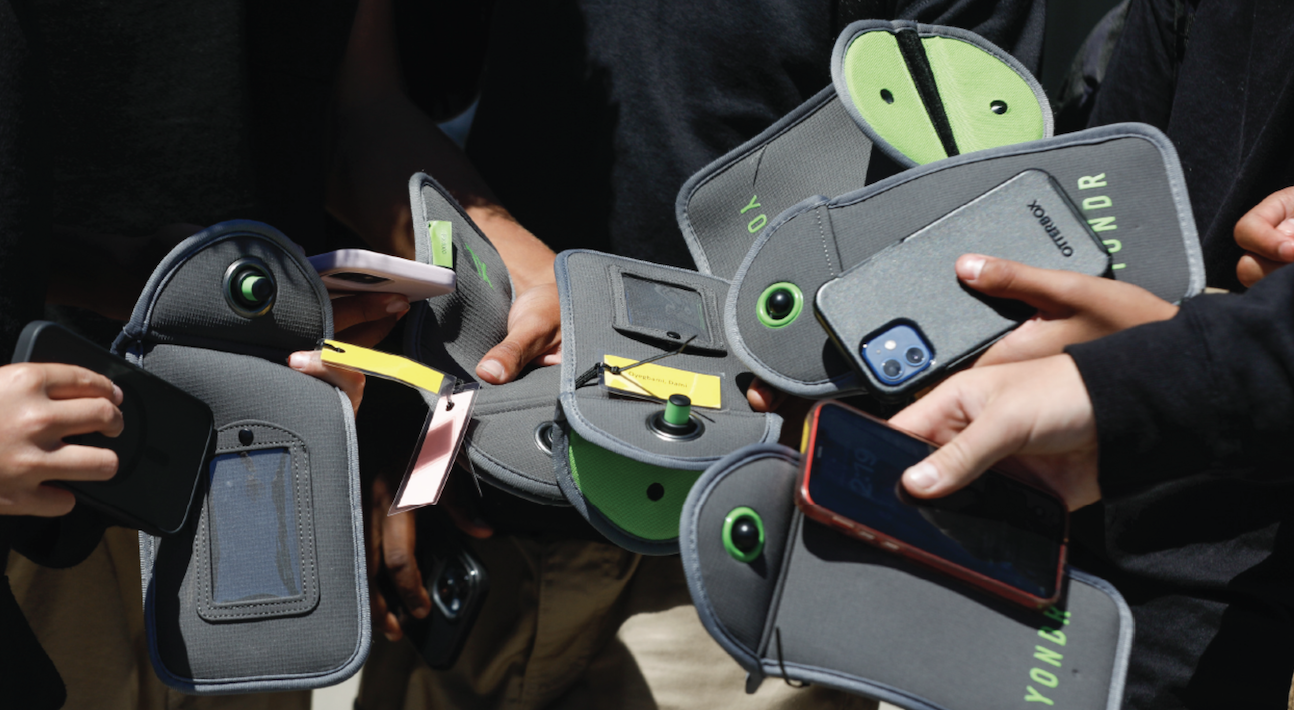
Not all bans are alike, and the label can hide large differences. Some schools ask students to keep phones switched off in bags during lessons while allowing use at breaks. Others require phones to be handed in at the start of the day or sealed in a locked pouch that is opened only at the end. The table below compares common approaches and the trade-offs that schools and families usually weigh.
| Approach | How it works | Common advantage | Common challenge |
| Classroom-only rule | Phones away during lessons, allowed at breaks | Easy to accept, keeps some freedom | Breaks stay screen-heavy and enforcement varies by teacher |
| Off and away all day | Phones switched off and kept in bags or lockers | Clear message, low cost | Students may sneak use, and checking takes time |
| Collected at the door | Phones handed in and stored by staff | Strong compliance | Storage, liability, and queues in the morning |
| Locked pouch | Phones sealed until the end of the day | Hard to bypass, consistent for all | Cost, damaged pouches, and parent worries |
| Approach | How it works | Common advantage | Common challenge |
| Teacher-directed use | Phones allowed only for set learning tasks | Treats phones as tools | Relies on classroom management and can drift |
The best choice depends on the school’s size, age group, and culture. Primary schools often need little more than a rule that phones stay in bags, since younger children carry them less. Secondary schools face stronger pressure, and many of them find that clear, simple, and consistently enforced rules work better than complicated exceptions. A rule that changes from room to room tends to produce arguments and to wear teachers down.
Consistency is the factor that observers mention most. When every adult in the building applies the same rule in the same way, students push back less because the outcome is predictable. When some teachers allow phones and others do not, students learn to test the limits. Schools that succeed usually write the policy down, explain the reasons to families, and train staff on how to respond calmly.
Policies also need to say what happens when a rule is broken. Typical consequences include a warning, handing the device to the office until the end of the day, and a call to a parent for repeated breaches. Fair policies describe these steps in advance, apply them equally, and avoid humiliating students in front of their peers. They also address exceptions for medical needs, such as a phone used to monitor a health condition, and for students with documented learning support needs.
Practical details decide whether a plan survives its first month. Schools need to decide where phones will be kept, who is responsible if one is lost or damaged, and how students will retrieve them at the end of the day. They also need a route for parents to reach a child quickly, usually through a front office that is well staffed at busy times. Writing these points down before launch saves many arguments later.
Early reports from schools describe calmer corridors and mixed academic results
Schools that have introduced bans commonly report changes in atmosphere before they report changes in grades. Staff describe students chatting, playing games, and reading at lunch, and they say that corridors and canteens feel livelier and less isolated. Some teachers say they spend less time chasing devices and more time teaching. These accounts are encouraging, but they are impressions, and impressions can be shaped by the hopes of the adults who describe them.
Evidence on academic results is more cautious. Researchers who have studied restrictions have not reached one simple conclusion, and commentators often note that effects appear larger for some groups than others. A reasonable reading is that limiting phones may help most for students who find distraction hardest to resist, while students who already manage their attention well may see little change. It would be unwise to promise that any single rule will lift test scores for everyone.
Measurement is a challenge for fair reasons. Schools that adopt bans often change other things at the same time, such as timetables, behavior policies, or staff training, which makes it hard to credit the phone rule alone. Communities also differ, so what works in a small rural school may not transfer to a large urban one. Careful observers therefore ask for before-and-after comparisons, honest reporting of problems, and a willingness to adjust.
Behavior records tell another part of the story. Some schools report fewer incidents involving cyberbullying or recorded fights, while others say that conflicts simply move to the walk home or to evening messages. Both claims can be true at once, since a ban changes where and when disputes happen without removing their causes. This is why many educators pair bans with lessons on respectful communication and with clear routes for reporting problems.
It is also worth remembering that the first weeks of any new rule are usually the hardest. Students complain, some parents object, and staff feel the strain of enforcement. After a term or two, the policy often becomes routine, and the loudest objections fade. Schools should therefore review a policy after a fair trial period and avoid judging it on the opening weeks alone.
Parents can ask schools useful questions about evidence. Which problems was the policy meant to address, and how will the school judge whether it has worked? Will results include student and staff views as well as numbers? Schools that can answer these questions in plain terms usually run better policies, and those that cannot may be reacting to pressure rather than planning.
Opponents and skeptics raise safety, equity, and trust questions
Critics of bans start with safety. Some parents want to reach their children quickly in an emergency, and they worry that a ban cuts a vital line. Schools respond that the office can contact students swiftly through established channels, and that a flood of parents messaging their children during an incident can make a crisis harder to manage. Both sides have a point, which is why a clear plan for urgent contact matters so much.
Equity is another concern. Students who rely on a phone for translation, for accessibility features, or for monitoring a health condition need arrangements that respect their needs. A blunt rule can disadvantage those students, or force them to identify themselves in front of peers. Thoughtful policies provide private, documented exceptions and avoid singling anyone out.
Some skeptics argue that bans treat symptoms. They say that students will still spend long hours on devices after school, and that learning to self-regulate is a better long-term goal than being protected by a rule. Others worry about trust, since a policy that treats every student as a likely offender can feel punitive and may damage relationships. Supporters reply that structure helps young people, much as seat belts and sunscreen do, and that adults often set limits before skills are fully formed.
There is also a practical objection about workload. Collecting phones, checking bags, and dealing with disputes take time, and teachers already have crowded days. If a policy relies on staff to police it without support, enforcement can become uneven and bitter. Schools that thrive tend to share the work, use simple systems, and give staff backing from leadership when they apply the rules.
A final argument is that technology is part of modern life, and schools should prepare students to use it well. Phones can offer cameras, dictionaries, calculators, and creative tools, and some teachers use them with good results. A ban need not reject all of this, since many policies allow teacher-approved use for specific tasks. The challenge is to avoid both extremes, treating a device as a villain or as a necessity at every moment.
Age is another consideration that often gets lost in headlines. A rule that suits an eleven-year-old, who may carry a phone mainly for contact with home, may feel heavy-handed for a seventeen-year-old preparing for work or further study. Some schools therefore loosen restrictions for the oldest students while keeping a firm line for younger ones. This approach gives teenagers practice in self-management while still protecting classroom time.
Teachers and families carry the daily work of enforcement
Rules succeed or fail in the details of ordinary mornings. Teachers need a simple script for reminding a student about the policy, a clear next step for repeat cases, and confidence that leaders will support them. Calm, brief, and consistent responses work better than lectures, since long confrontations can derail a lesson and give the student an audience. Many experienced teachers recommend speaking privately where possible and focusing on the rule rather than the child.
Parents play a central role. The most common friction comes when a family message arrives during the day and a student feels pressure to reply. Families can reduce this by agreeing in advance that messages will wait until the end of school unless something is urgent, and that urgent matters go through the school office. Parents who also model careful phone habits at home send a consistent message about the policy.
Communication between home and school should be two-way. Schools can explain the reasons for the policy, describe how emergencies are handled, and invite questions before the rule begins. Families can raise concerns about particular students, such as those with medical needs, and ask how exceptions will be managed. When both sides treat the policy as a shared project, disputes tend to be shorter and less heated.
Students deserve a voice as well. Student councils or class discussions can help shape workable rules, and young people often have practical insight into how a policy will be bypassed. Involving them does not mean they can veto the rules, but it can build a sense of fairness. Rules that students help design usually meet less resistance than rules delivered without explanation.
Staff wellbeing deserves attention too. A policy that turns every teacher into a security officer can exhaust people and sour relationships with students. Schools can reduce the burden by using simple storage systems, giving clear guidance on consequences, and sharing duties across the staff team. When leaders visibly back the rule, teachers can apply it calmly instead of feeling left alone with conflicts.
Students still need to learn healthy phone habits

A ban covers hours, but habits last years. Young people will carry devices into adulthood, and they will need to manage notifications, sleep, privacy, and online conduct on their own. Schools and families can therefore teach skills alongside the restrictions, such as spotting persuasive design, protecting personal information, and handling unkind messages. A phone-free day is easier to accept when students also receive tools for the rest of their lives.
Practical habits can be taught step by step. Students can learn to switch off nonessential alerts, to keep the phone out of the bedroom overnight, to set a regular time for homework without the device in reach, and to take breaks from social feeds. Parents can start with one or two changes and add more as they take hold. Small, repeatable steps usually last longer than dramatic resolutions.
Conversation matters more than control. Children who feel able to tell an adult about an upsetting message or an unwanted request are safer than children who fear losing their device as punishment. Families can say clearly that reporting a problem will never lead to automatic confiscation, and schools can publicize who to talk to. If a child seems persistently anxious, withdrawn, or unable to sleep, a doctor or a qualified counselor can offer support.
Adults sometimes forget that they face the same pull. Teachers and parents who reach for their own phones during class or dinner weaken the message of any rule. A fair approach is for adults to follow similar boundaries where possible, for example by keeping devices away at mealtimes and during lessons. Shared norms feel more credible than rules that apply only to the young.
Digital skills can be built into the curriculum without much cost. Lessons can cover how to check whether a claim online is reliable, how to think before sharing an image, and how to use privacy settings. Older students can also practice study techniques that work with focus in mind, such as working in short blocks and then taking a break. These skills help students whether or not their school has a ban.
Finally, keep the goal in view. The aim is not to make young people fear technology but to help them use it with control, kindness, and good sense. Families and schools that talk openly about what works and what does not give children a model for adjusting their habits over time. That flexibility is probably the most valuable lesson any phone policy can teach.
Conclusion
If you are a parent, begin by reading your school’s phone policy and asking how urgent messages are handled. Agree with your child on a plan for the school day, including who to contact in an emergency and what to do if the phone is collected. Check whether any medical or learning needs require an exception, and raise them with the school privately. Most schools welcome these conversations, since they make the policy easier to run.
If you work in a school or sit on a governing body, start with a clear statement of purpose. Decide what problems you hope to reduce, such as classroom distraction, lunchtime isolation, or online conflict, and choose the lightest policy that is likely to work. Write the rules in plain language, train staff, and tell families in advance. Plan to review the results after a term, using simple evidence such as behavior records, staff feedback, and student comments.
If you are a student, try to see the policy as a chance to test how you feel without constant alerts. Notice whether your focus, mood, and friendships change, and talk about what you see with friends and adults. Suggest improvements if something is unfair, using calm and specific examples. Remember that you are building habits that will matter long after school ends.
Whatever your role, keep expectations realistic. A phone ban is a useful tool, not a cure for every school problem, and the evidence on academic gains is still debated. The most dependable results come from consistent rules, honest communication, support for students who need exceptions, and steady teaching of healthy habits. If a child shows lasting distress linked to phones, such as severe anxiety or sleep problems, speak with a doctor or another qualified professional.
A last practical tip is to keep a record of what you notice. Parents can jot down changes in mood, sleep, and talk after school, and teachers can note how lessons feel in the first weeks. These simple notes make later conversations more specific and less emotional. They also help everyone judge whether to keep, adjust, or drop parts of the policy.
Read more about Newstwick