

Nvidia, the company whose chips power much of today’s artificial intelligence boom, posted another enormous quarter on November 17 and, five days earlier, announced that its longtime chief executive had stepped down. Both items matter to anyone with a retirement fund, a tech-heavy portfolio, or just an interest in where the AI economy is heading.
In this article, we will explore the headline numbers, what the business segments mean, how to read an earnings release, the leadership change, and what remains unknown.
The Headline Numbers from the Quarter
Nvidia reported results for its third fiscal quarter of fiscal 2027, a period that ended on October 25, 2026. Companies often use fiscal years that do not match the calendar, so a quarter labeled third quarter of fiscal 2027 can land in the autumn of the prior calendar year. The figures below come from the company’s own investor relations release of November 17, with a few extra details from the outlet TechPowerUp. Everything here is US-reported, and figures are in US dollars.
Revenue and Growth
Revenue came in at $115.8 billion, or more precisely $115,844 million. The company said that figure was up 20 percent from the previous quarter and up 103 percent from the same quarter a year earlier. Those two comparisons answer different questions. The sequential change, from one quarter to the next, shows momentum. The year-over-year change strips out seasonal patterns by comparing the same stretch of two different years.
A 103 percent year-over-year gain means revenue roughly doubled in twelve months. For a company already earning this much, that pace is unusual, and it is the reason the numbers draw so much attention. It is also worth remembering that growth rates shrink mathematically as the base gets bigger, so even a very strong result can show a lower percentage than earlier periods.
Profit Measures
Two profit-related figures were reported. Gross margin, which is the share of revenue left after the direct costs of making and delivering products, was 74.8 percent under GAAP. GAAP stands for Generally Accepted Accounting Principles, the standard rulebook US public companies must follow. TechPowerUp lists a non-GAAP gross margin of 74.9 percent. Non-GAAP figures leave out certain items, such as stock-based pay, that management prefers to exclude.
Diluted earnings per share, which divides profit by the number of shares and counts potential new shares from options and similar instruments, was $2.70 under GAAP. TechPowerUp reports $2.68 on a non-GAAP basis. Notice that here the non-GAAP number is lower than the GAAP one, which is not the usual direction. The sources we reviewed do not explain the gap, so treat it as a reminder to check which version of a number a headline is quoting.
Where the Money Came From
The following table lays out the two segments the company reported, using the figures from the release. Percentages compare with the prior quarter and with a year earlier.
| Segment | Revenue | Versus Prior Quarter | Versus Year Ago |
| Data Center | $107.6 billion | Up 21 percent | Up 110 percent |
| Edge Computing | $8.2 billion | Up 14 percent | Up 42 percent |
| Total | $115.8 billion | Up 20 percent | Up 103 percent |
Adding the two segments, 107.6 plus 8.2, gives 115.8, which matches the reported total. That is a quick sanity check worth doing whenever a release shows segment figures, because it confirms you are reading the whole picture and not a partial slice.
Why Percentages Can Mislead
Percentages are handy, but they hide scale. A 103 percent jump from a small base can be less impressive than a 20 percent rise on a giant one, because the second adds far more dollars. When you see a growth rate in a headline, ask what the starting number was and how many dollars the change represents. The same caution applies to margins: a fall of a few points from a very high level can still leave a business far more profitable than most of its peers.
It also helps to separate demand from supply. Revenue records what was shipped and billed, which depends both on how much customers want and on how much the company can deliver. The sources we reviewed say nothing about supply limits, so we cannot tell which side was the tighter constraint this quarter.
Data Center and Edge Computing Explained
Plain labels like these can hide what the business sells, so it helps to unpack them. The sections below describe each segment in general terms. The product descriptions are general knowledge about how the industry works, and the details may have changed, so check Nvidia’s own materials for current definitions.
Why Data Center Dominates
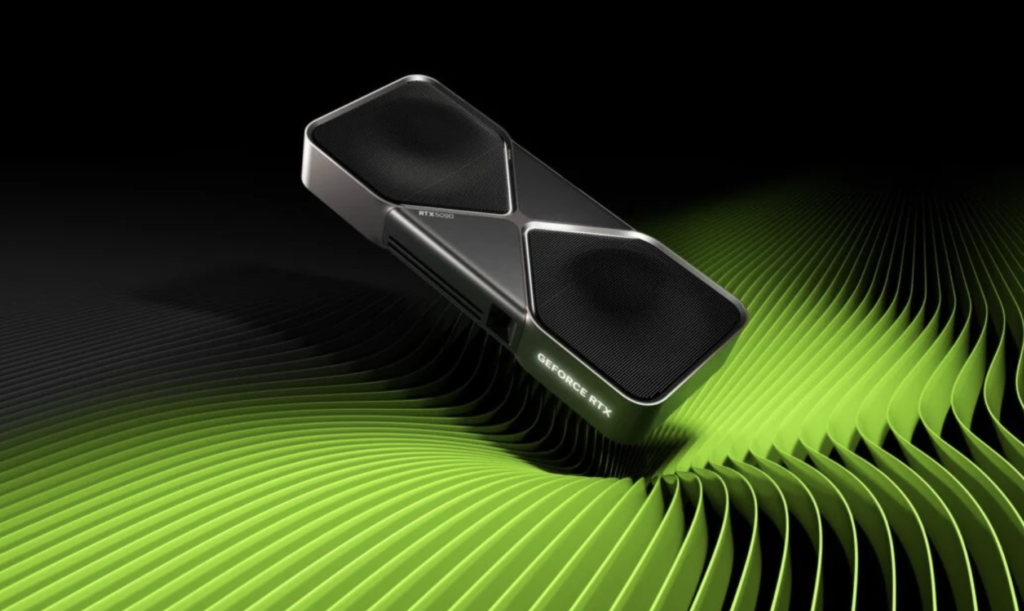
Data Center revenue is money from selling chips, systems and networking gear that go into large computer facilities. These facilities run the training of AI models, which is the long and costly process of teaching a model from huge amounts of data, and inference, which is the everyday work of answering questions once a model is built. Cloud providers, large internet companies and other big buyers are the typical customers in general terms, though the sources we reviewed do not name specific customers.
As a simple illustration, divide Data Center revenue by total revenue. That is $107.6 billion divided by $115.8 billion, which comes to about 93 percent. In other words, roughly 93 cents of every revenue dollar this quarter came from this one segment. The arithmetic is only an illustration of concentration, not a forecast, but it explains why analysts watch Data Center so closely and why news about AI spending tends to move the whole company.
What Edge Computing Covers
Edge Computing, at $8.2 billion, is the smaller segment. The release does not break out a separate gaming figure, so readers who remember older reports with a distinct gaming line will not find one here. In general terms, edge computing means processing data close to where it is created, such as in a laptop, a workstation, a vehicle or a small desktop machine, instead of in a faraway facility.
The segment still grew 14 percent from the prior quarter and 42 percent from a year ago. Those are healthy rates by almost any normal standard, even though they look modest next to the Data Center numbers. The lesson is that a segment can be small relative to the total and still be doing well.
Reading an Earnings Release Step by Step
An earnings release is a company’s scorecard for a quarter, but it is written by the company, so a careful reader needs a method. What follows is a general-purpose routine, offered as general information and not as investment advice. It works for Nvidia or for nearly any public company.
- Step 1. Find revenue first. Revenue is the total sales for the period. It is the cleanest number in the release because it sits at the top of the income statement, before most of the accounting choices that shape profit.
- Step 2. Compare it two ways. Look at the change from the prior quarter and the change from a year ago. If the first is strong and the second is strong, momentum and trend agree. If they disagree, ask whether a seasonal pattern or a one-time event is involved.
- Step 3. Check profit quality. Gross margin tells you how much of each sales dollar survives direct costs. Earnings per share tells you what the profit looks like per share. Always note whether the figure is GAAP or non-GAAP, and do not mix the two within one comparison.
- Step 4. Read the segment split. Ask where the growth came from and how concentrated the business is. In this quarter, the Data Center segment carried the bulk of revenue, which means the company’s fortunes lean heavily on that one area.
- Step 5. Read the outlook. Companies often give guidance, which is management’s own estimate of the next quarter. Markets frequently care more about guidance than about the quarter just finished, because prices tend to look forward.
- Step 6. Note cash returned to owners. Dividends and share buybacks show how management is using its cash. They are not a verdict on the business, but they are a signal about confidence and priorities.
- Step 7. Remember that one quarter is not a trend. A single strong report can be followed by a weaker one. Look at several quarters in a row before drawing a conclusion, and keep in mind that a release is a company-authored document that should be read alongside independent reporting.
Guidance and the Fourth Quarter Outlook
For the next quarter, Nvidia projected revenue of $130.0 billion, give or take 3 percent. The plus or minus 3 percent is a range around the midpoint that signals how much room management leaves for surprises. The company also said it assumed no China Data Center compute revenue in that outlook, meaning it did not count on any sales of that kind into China. The release does not elaborate on why in the portions we reviewed, so we will not guess.
Other guidance items included gross margins of 71.0 to 72.0 percent, which is lower than the 74.8 percent reported for the quarter just ended. Operating expenses were guided to about $11.0 billion on a GAAP basis and $10.7 billion non-GAAP. Operating expenses are the running costs such as research and sales that sit below gross profit. TechPowerUp also reports a tax rate of 16 to 18 percent for the year.
One more detail deserves attention. The company noted that the fourth quarter includes an extra week. Some companies use a 52 or 53-week fiscal year, which means that every so often a quarter holds fourteen weeks instead of thirteen. An extra week can lift revenue in a way that has nothing to do with demand, so when you compare the outlook with the quarter just reported, keep that calendar quirk in mind. The release as we reviewed it does not say how much the extra week adds, and we will not put a number on it.
A Simple Way to Use Guidance
Guidance is an estimate, not a promise. Companies can beat it, meet it or miss it, and the range around it exists for that reason. A reasonable habit is to write down the guided range now and compare it with the actual result when the next report arrives. That habit teaches more about how a company forecasts than any single headline does.
Cash Returns to Shareholders
Nvidia declared a quarterly dividend of $0.25 per share. It is payable on December 23, 2026, to shareholders of record on December 2, 2026. The record date matters because only people who own shares at that date qualify. The next table summarizes the dates and amounts reported.
| Item | Reported Detail |
| Dividend per share | $0.25 |
| Record date | December 2, 2026 |
| Payment date | December 23, 2026 |
| Added to buyback authorization | $150 billion |
| Returned to shareholders in the quarter | $28.1 billion |
| Remaining buyback authorization | About $227.3 billion |
A buyback is when a company repurchases its own shares, which reduces the number outstanding. An authorization is permission from the board to buy up to a certain amount over time, not a requirement to spend it. The $227.3 billion remaining is therefore a ceiling, not a plan with a schedule.
A Conflict in the Sources
The timing of the $150 billion increase is reported differently. TechPowerUp says the board made the addition in September 2026, while the press release text we reviewed does not say when it happened. We cannot settle that from the material available, so we report both. If the timing matters to you, check the company’s filings.
What Dividends Mean for Ordinary Holders
If you own shares directly or through an index fund, you may receive a small portion of this dividend indirectly. Funds handle dividends in their own way, often reinvesting them, so the effect on your account depends on the fund. Tax treatment of dividends varies by country and by account type, and this is general information, so consult a qualified professional or the official tax authority where you live.
Leadership Changes at the Top
On November 12, 2026, Nvidia announced a major leadership change in a news release titled as a CEO transition. Jensen Huang resigned as president, chief executive officer and board member, effective immediately. The announcement said nothing about the reasons, and the company stated no reason in it. We will not speculate about causes here, and readers should be wary of unsourced claims that circulate after any abrupt leadership news.
Interim Leadership
Colette Kress, who had been chief financial officer and an executive vice president, became interim CEO. Interim means temporary: the board said it is searching for a permanent chief executive and is considering both internal and external candidates. The sources we reviewed do not say how long the search will take or who the candidates are.
Kress is quoted in the results release saying, “Vera Rubin is off to an explosive start, our roadmap is on track and our ambition has never been greater.” That is a statement from the company’s own release, so it reads as management’s framing, not an independent assessment. It does tell investors and customers that the stated message is continuity.
A New Chair
The board also named Harvey C. Jones as the company’s first Chair of the Board. A chair leads the board of directors, the group that oversees management on behalf of shareholders. Describing Jones as the first holder of the title makes the creation of the role part of the story, though the announcement we reviewed gives no detail on how the duties differ from before.
The Long Growth Record
Axios reported that annual revenue grew more than 50-fold over the span it described, from roughly $4.28 billion to nearly $215.9 billion in the latest completed fiscal year. Check the arithmetic and it holds up: $215.9 billion divided by $4.28 billion is a little over 50. The sources we reviewed present this as background on the company’s long expansion, and it is a single-outlet figure, so attribute it to Axios when you repeat it.
Practical Steps for Different Readers
Abrupt leadership news raises practical questions for different groups of readers. The table below offers a general what-to-do-when guide. It is general information and not advice, and each row depends on your own situation.
| Who You Are | Reasonable First Move | What Can Wait |
| Shareholder or fund holder | Read the company’s release and later filings | Reacting to rumors |
| Business buyer of Nvidia products | Ask your account contact about support and roadmap | Changing vendors |
| Developer using its software | Follow official announcements and documentation | Rewriting projects |
| Curious general reader | Note the interim CEO and the search for a permanent one | Forming a view on causes |
The common thread is that an interim leader is a bridge, not a final answer. Nothing in the table is urgent, and none of it replaces reading the primary documents yourself. Boards of large companies usually run a structured search that can take months, though the sources we reviewed give no timetable here, so treat any date you see in social posts as a guess.
Why Continuity Messages Matter
When a chief executive leaves suddenly, customers and partners look for signs that plans will hold. The statement in the results release that the roadmap is on track is aimed at exactly that worry. It cannot be tested yet, because a roadmap is proven by products shipping on time over many months. The report that Vera Rubin NVL72 has begun shipping is a first data point, supplied by the company itself, and later quarters will show whether the pace continues.
What Interim Leadership Usually Involves
In general terms, an interim chief executive keeps operations steady, carries out existing plans and avoids sweeping strategy shifts while a permanent choice is made. Kress already knew the financial side of the company well as chief financial officer, and she is the person quoted on the results. That is general knowledge about how such transitions tend to work, not a prediction about what Nvidia will do.
Products Named in the Release
The results release mentioned a list of products, which help show where the company is aiming. The company said Vera Rubin NVL72, a rack-scale system for AI computing, has begun shipping. That is a company statement. The sources we reviewed name no customers for those shipments, so we cannot say who is receiving them.
Other products named included Vera CPUs, which are central processors; Spectrum-X networking, which connects machines in large AI facilities; BlueField-4, a data processing unit that handles networking and security tasks; DGX Spark 64GB, a compact AI computer; RTX Spark laptops; and DLSS 5, a graphics technology used to boost image quality and frame rates in games. These descriptions are general knowledge about product categories and may have changed, so check Nvidia’s pages for official specifications.
Vendor Claims Versus Verified Results
Performance claims for Vera Rubin, such as a tenfold gain in agent throughput, come from a company announcement dated May 31, 2026. They are vendor claims and have not been independently verified. Treat any chip performance number from a manufacturer the way you would treat a car maker’s fuel economy claim before independent testing: useful as a starting point, not a final answer.
The Reported Hugging Face Deal
TechPowerUp says Nvidia also announced an agreement to acquire Hugging Face, a well-known platform where developers share AI models and tools. This comes from a single secondary source, and we could not verify it on the release text we reviewed. Treat it as reported, not confirmed, until a primary document or additional outlets back it up.
Final Thoughts: Open Questions and Data Limits
A good explainer should say what is not known, and several things fall into that category here. The first is the reason for the leadership change: the company gave none in its announcement, and we do not offer one. The second is the identity and timing of the permanent CEO. The third is the market’s reaction. The sources we reviewed do not include stock price moves, analyst estimates or supply constraints, so we say nothing about them.
Several items rest on a single source. The non-GAAP gross margin and non-GAAP earnings per share come from TechPowerUp. The tax rate guidance comes from the same outlet. The Hugging Face agreement comes from that outlet too. The 50-fold revenue growth figure comes from Axios. Meanwhile, the timing of the buyback increase is the clearest conflict, with one outlet saying September and the release text we saw silent on the point.
What to Ignore
Ignore posts that claim to know why the CEO left. Ignore screenshots of numbers with no named source. Ignore claims that a single quarter proves the AI boom will continue or end. None of those is supported by what we reviewed.
What to Do Now
Step 1. If you hold Nvidia shares or a fund that does, read the company’s release and filings on its investor relations page. Step 2. Note the dividend record date of December 2 if you want to receive that payment. Step 3. Watch for the announcement of a permanent CEO and for the next quarterly report. Beyond that, nothing urgent is required of ordinary readers. This is general information, not investment advice.
Frequently Asked Questions
How Much Revenue Did Nvidia Report for the Latest Quarter?
Nvidia reported $115.8 billion for the quarter that ended October 25, 2026, or exactly $115,844 million. The company said that was up 20 percent from the previous quarter and up 103 percent from a year earlier. Data Center made up $107.6 billion of the total, and Edge Computing made up $8.2 billion.
Who Is the Interim CEO of Nvidia Now?
Colette Kress, previously chief financial officer and executive vice president, became interim CEO on November 12, 2026. The board is searching for a permanent chief executive and is considering internal and external candidates. Harvey C. Jones was named the company’s first Chair of the Board in the same announcement.
Did Nvidia Say Why Jensen Huang Resigned?
No. The company’s announcement said he resigned as president, CEO and board member effective immediately, and it gave no reason. Any explanation you see elsewhere is not from the company announcement, so check the source before you trust it.
What Is Nvidia’s Revenue Forecast for the Next Quarter?
The company guided to $130.0 billion, plus or minus 3 percent, for the fourth quarter. That outlook assumes no China Data Center compute revenue, and it includes an extra week in the quarter. Guidance is management’s estimate, so actual results can differ.
When Does the Nvidia Dividend Get Paid?
The $0.25 per share dividend is payable on December 23, 2026, to holders of record on December 2, 2026. Only shareholders on the record date qualify. Tax treatment varies by country, so check with an official tax authority or a qualified professional.