

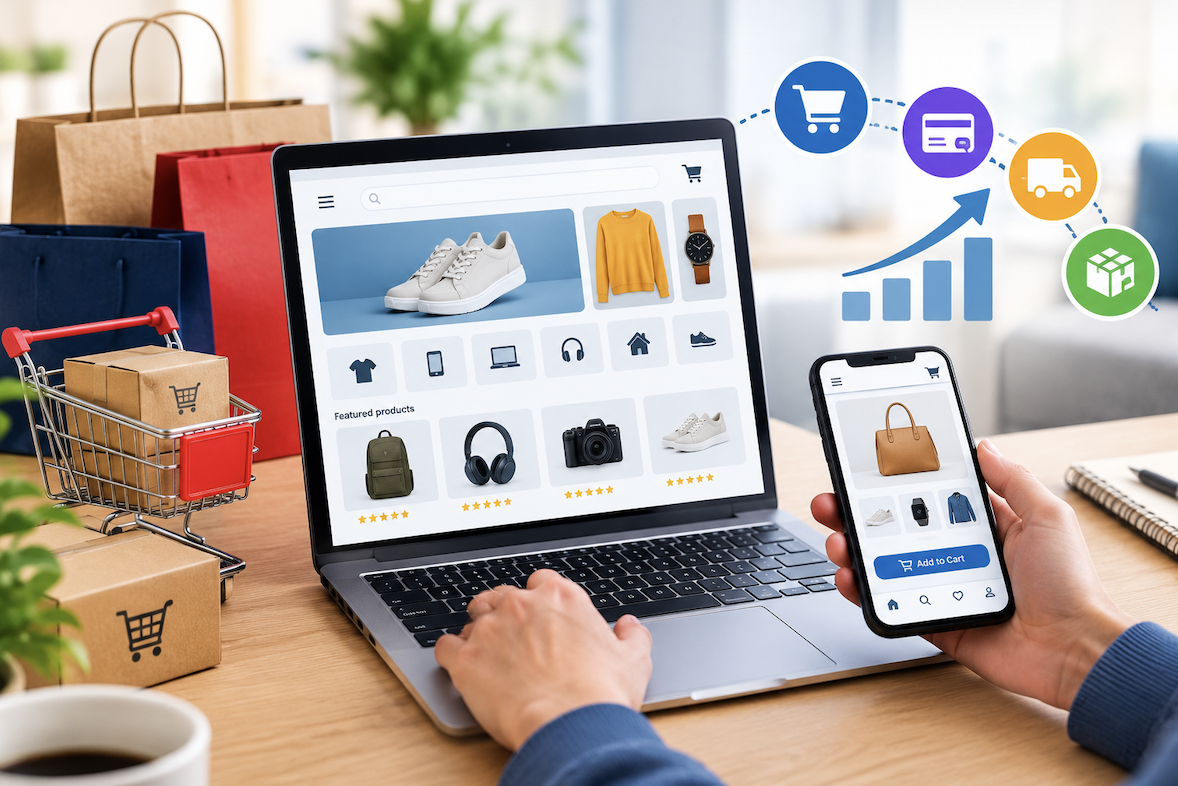
Online shopping has transformed from a novel convenience into the default way many people buy everything from groceries to furniture. What began as simple online storefronts has grown into a sophisticated global industry shaped by mobile technology, changing consumer expectations, and increasingly personalized shopping experiences.
How e-commerce reached this point, and where it continues to head, offers valuable insight for both shoppers and anyone interested in how modern retail actually works.
From Early Online Stores to Modern Marketplaces
Early e-commerce websites were often clunky, slow, and limited in selection compared to physical stores. Trust was also a significant barrier, as many consumers were hesitant to share payment information online during the internet’s earlier years.
Over time, improved website design, secure payment processing, and growing familiarity with online transactions gradually built consumer confidence. Large marketplaces emerged, allowing countless independent sellers to reach customers without needing their own dedicated storefronts.
This transition also coincided with broader improvements in internet infrastructure, as faster connection speeds made image-heavy product pages and video demonstrations practical for the average shopper rather than a frustrating, slow-loading experience.
Milestones That Shaped Modern E-Commerce
- Secure payment gateways that built consumer trust in online transactions
- The rise of large marketplaces connecting independent sellers with broad audiences
- Mobile shopping apps that made purchasing possible from anywhere
- Fast, reliable shipping options that reduced hesitation around online purchases
A Familiar Shopping Journey From Discovery to Delivery
Consider a typical online purchase today. A shopper scrolls through a social media feed and notices a product mentioned by a creator they follow. A quick tap leads to a product page with reviews, several photos, and a countdown for a limited-time discount. After adding the item to a cart, a personalized email arrives the next day gently reminding them about the abandoned purchase.
Once the order is placed, a tracking notification keeps them updated at each shipping stage, and a follow-up email requests a review a few days after delivery.
Every step in this journey, from the initial recommendation to the post-purchase follow-up, has been deliberately designed and refined using data from millions of previous shopping journeys, illustrating just how sophisticated and interconnected modern e-commerce has become behind a seemingly simple purchase.
Mobile Shopping Changed Everything
The widespread adoption of smartphones fundamentally changed how people shop online. Rather than sitting down at a desktop computer, consumers now browse and purchase products throughout the day, often during small pockets of downtime like commuting or waiting in line.
This shift pushed retailers to prioritize mobile-friendly website design and dedicated shopping apps, recognizing that a clunky mobile experience could directly translate into lost sales.
Personalization and the Role of Data
Modern e-commerce relies heavily on data to create personalized shopping experiences. Product recommendations based on browsing history, targeted promotions, and personalized email marketing have become standard practice across most major online retailers.
While this personalization can genuinely improve the shopping experience by surfacing relevant products, it also raises valid questions about data privacy and how much influence algorithms should have over purchasing decisions.
How Personalization Shows Up in Everyday Shopping
- Product recommendations based on browsing and purchase history
- Personalized email campaigns highlighting relevant discounts
- Dynamic pricing that can vary based on demand or user data
- Retargeted advertising following users across different websites
The Growing Importance of Fast, Flexible Shipping
Shipping speed and flexibility have become major competitive factors in e-commerce. Consumers increasingly expect fast delivery options, easy returns, and transparent tracking information throughout the shipping process.
This expectation has pushed retailers to invest heavily in logistics infrastructure, sometimes building extensive warehouse networks specifically designed to reduce delivery times and meet rising consumer expectations around convenience.
Social Commerce and the Blending of Shopping With Content
One of the more significant recent shifts has been the blending of social media and shopping, often called social commerce. Platforms now allow users to discover and purchase products directly within social media apps, blurring the line between entertainment and shopping.
Influencer marketing has become a major driver of this trend, with product recommendations from trusted creators often carrying more influence than traditional advertising for certain audiences, particularly younger consumers.
- Shoppable posts and live shopping events within social media platforms
- Influencer partnerships driving product discovery and purchasing decisions
- User-generated content, like reviews and unboxing videos, influencing buying choices
- Seamless checkout experiences integrated directly into social platforms
Challenges Facing the E-Commerce Industry
Despite its growth, e-commerce faces ongoing challenges, including rising customer acquisition costs, increased competition, and growing consumer concern about data privacy and sustainability. Return rates for online purchases also remain a significant operational challenge for many retailers.
Sustainability has become an increasingly important consideration as well, with packaging waste and shipping emissions drawing greater scrutiny from environmentally conscious consumers and regulators alike.
Rising advertising costs on major platforms have also squeezed profit margins for many online sellers, pushing businesses to focus more heavily on customer retention and repeat purchases rather than relying solely on acquiring new customers through paid advertising.
Handling Returns and Building Customer Loyalty
Returns are an unavoidable part of online retail, and how a business handles them often influences whether a customer returns for future purchases. A frustrating or overly complicated return process can permanently damage customer trust, even if the original product itself was satisfactory.
Retailers that make returns simple, clearly communicated, and reasonably fast tend to build stronger customer loyalty over time, since a smooth return experience reassures customers that future purchases carry lower risk.
This reassurance often encourages larger or more frequent purchases, since customers feel more confident trying new products without fear of a difficult process if something does not work out.
- Clearly display return policies before checkout, not just after purchase
- Offer straightforward, prepaid return shipping labels where feasible
- Process refunds promptly to maintain customer trust
- Use post-purchase follow-up to address issues before they become negative reviews
What the Future of Online Shopping Might Look Like
E-commerce continues to evolve rapidly, with emerging technologies like augmented reality product previews and increasingly sophisticated personalization shaping what shopping might look like in the coming years. The core trend remains consistent, however, toward greater convenience, speed, and relevance for individual shoppers.
Retailers that successfully balance these evolving expectations with genuine trust and transparency are likely to remain competitive as the industry continues its rapid transformation.
The Environmental Side of Online Shopping
As e-commerce has grown, so has scrutiny of its environmental footprint. Fast shipping expectations often mean packages travel through more resource-intensive logistics networks, while packaging waste from individual shipments has become a visible and growing concern for environmentally conscious consumers.
Some retailers have responded by offering slower, consolidated shipping options with a lower environmental impact, using more sustainable packaging materials, or providing transparency about the carbon footprint of different delivery choices.
Consumers increasingly factor these considerations into purchasing decisions, particularly younger shoppers who report placing meaningful weight on a company’s environmental practices when choosing where to shop.
- Consolidated or slower shipping options often carry a lower environmental impact
- Sustainable packaging initiatives are becoming more common among major retailers
- Some platforms now display carbon footprint information for delivery choices
- Consumer demand is gradually pushing the industry toward more sustainable practices
The Role of Customer Reviews and Trust Signals
Trust plays an outsized role in online shopping, since customers cannot physically inspect products before purchasing. Customer reviews, star ratings, and detailed product photos have become essential trust signals that heavily influence purchasing decisions, often carrying more weight than traditional advertising claims.
Businesses that actively encourage genuine customer feedback and respond thoughtfully to both positive and negative reviews tend to build stronger long-term trust than those that ignore or attempt to suppress criticism. Transparency, including honest product descriptions and clear return policies, has become a genuine competitive advantage rather than simply a legal formality.
Trust-Building Elements Shoppers Look For
- Detailed, honest product descriptions and accurate images
- A visible number of genuine customer reviews and ratings
- Clear, fair return and refund policies
- Transparent shipping timelines and costs shown before checkout
Conclusion: Small Businesses Competing in the E-Commerce Space
Large marketplaces dominate headlines, but small businesses continue to carve out meaningful space within e-commerce, often by focusing on niche products, personalized customer service, or strong brand storytelling that larger competitors struggle to replicate authentically.
Building a loyal customer base through genuine engagement, rather than competing purely on price against much larger retailers, has allowed many small e-commerce businesses to thrive despite intense overall market competition.
Platforms that support small sellers with simplified tools for building online stores have also lowered the barrier to entry significantly compared to earlier eras of e-commerce.
- Focusing on a specific niche rather than competing broadly
- Building genuine brand identity and storytelling around products
- Offering personalized customer service that larger competitors may lack
- Leveraging social media to build direct relationships with customers
E-commerce has fundamentally reshaped how people shop, moving far beyond simple online storefronts into a deeply integrated part of everyday consumer behavior. As technology continues advancing, the industry shows no signs of slowing its pace of innovation and change.
Frequently Asked Questions
1. Why do online stores show me products I recently viewed elsewhere?
This is typically the result of retargeted advertising, which uses browsing data and tracking technology to display relevant ads across different websites and platforms.
2. Is social commerce actually effective for businesses?
Yes, many businesses report strong results from social commerce, particularly when paired with authentic influencer partnerships and engaging, shoppable content.
3. Why has fast shipping become such an important factor in online shopping?
Consumer expectations have shifted significantly, with many shoppers now viewing fast, reliable shipping as a baseline requirement rather than a bonus feature.
4. How can I shop online while protecting my personal data?
Reviewing privacy settings, limiting unnecessary data sharing, and shopping primarily through reputable, secure websites are practical ways to reduce unnecessary data exposure.
5. Why do return policies matter so much for online shopping loyalty?
A smooth, hassle-free return process reduces perceived purchase risk, which often encourages customers to buy more frequently and try new products with greater confidence.
6. Are small e-commerce businesses able to compete with large marketplaces?
Yes, many small businesses succeed by focusing on niche products, personalized service, and authentic branding, areas where large marketplaces often struggle to compete directly.