

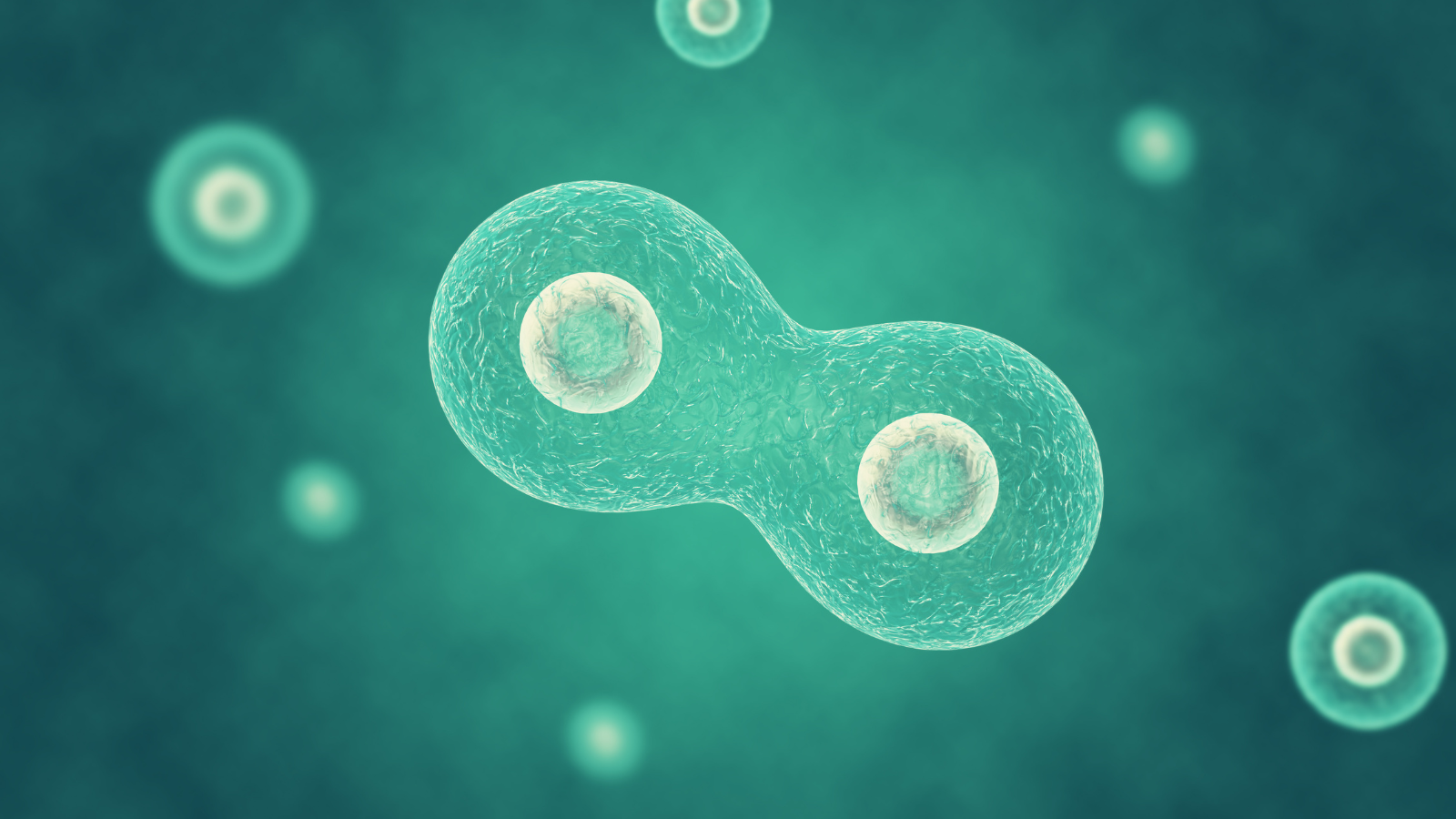
The cell cycle is a series of events that allows a cell to grow, duplicate its DNA, and divide into two genetically identical daughter cells. It is one of the most important biological processes because it enables growth, tissue repair, and reproduction in living organisms. Every new cell formed through the cell cycle carries the same genetic information as the original cell, ensuring normal body function and development. A well-regulated cell cycle is essential for maintaining healthy tissues, while errors in this process can lead to diseases such as cancer.
What Is the Cell Cycle?
The cell cycle is the life cycle of a cell, beginning with its formation and ending when it divides into two new cells. During this process, the cell increases in size, copies its DNA, and prepares for division.
The cell cycle consists of two main parts:
- Interphase, where the cell grows and duplicates its DNA.
- M Phase, where the cell divides through mitosis and cytokinesis.
Most of a cell’s life is spent in interphase, making it the longest stage of the cycle.
Why Is the Cell Cycle Important?
The cell cycle plays a crucial role in the survival of all living organisms. It allows organisms to grow from a single fertilized cell into complex multicellular bodies. It also replaces damaged or dead cells and helps heal injuries.
The cell cycle is important because it:
- Supports growth and development.
- Repairs damaged tissues.
- Replaces old or worn-out cells.
- Ensures accurate DNA replication.
- Maintains genetic stability.
Without a properly functioning cell cycle, normal growth and tissue maintenance would not be possible.
Overview of the Four Main Stages of the Cell Cycle
The cell cycle is divided into four major stages:
G1 Phase (Gap 1)
During this stage, the cell grows larger, carries out normal functions, and produces proteins and organelles needed for DNA replication. The cell also checks whether conditions are favorable for division.
S Phase (Synthesis)
The S phase is when DNA replication occurs. Every chromosome is copied, producing two identical sister chromatids. This ensures each daughter cell receives a complete set of genetic information.
G2 Phase (Gap 2)
In the G2 phase, the cell continues to grow and prepares for mitosis. It synthesizes additional proteins and checks that DNA replication has been completed correctly before division begins.
M Phase (Mitosis and Cytokinesis)
The M phase is the division stage. Mitosis separates duplicated chromosomes into two nuclei, while cytokinesis divides the cytoplasm to form two genetically identical daughter cells.
Mitosis: The Cell Division Process
Mitosis consists of four main stages:
Prophase: Chromosomes condense, and the spindle fibers begin to form.
Metaphase: Chromosomes align along the center of the cell.
Anaphase: Sister chromatids separate and move toward opposite poles.
Telophase: New nuclear membranes form around each set of chromosomes, completing nuclear division.
After mitosis, cytokinesis separates the cell into two independent daughter cells.
Cell Cycle Checkpoints
The cell cycle includes checkpoints that ensure everything is functioning correctly before the cell moves to the next stage.
G1 Checkpoint
This checkpoint verifies that the cell has enough nutrients, has reached the proper size, and contains no significant DNA damage.
G2 Checkpoint
The G2 checkpoint confirms that DNA replication has been completed accurately and that the cell is ready for mitosis.
M Checkpoint
Also called the spindle checkpoint, it ensures chromosomes are correctly attached to spindle fibers before they separate.
These checkpoints reduce the risk of genetic mutations and help maintain healthy cells.
Key Proteins That Regulate the Cell Cycle
Several proteins control the timing and progression of the cell cycle.
Cyclins are proteins whose levels change throughout the cycle. They activate enzymes that move the cell from one stage to the next.
Cyclin-dependent kinases (CDKs) work together with cyclins to regulate cell division.
Tumor suppressor proteins, such as p53, detect DNA damage and stop the cell cycle until repairs are completed. If the damage cannot be repaired, they may trigger programmed cell death to prevent harmful mutations.
Cell Cycle vs. Mitosis
Although the terms are closely related, they are not identical.
The cell cycle includes the entire process of cell growth, DNA replication, and division.
Mitosis is only one phase of the cell cycle that involves the division of the nucleus.
In simple terms, mitosis is a part of the larger cell cycle.
Cell Cycle Disorders and Cancer
When the regulation of the cell cycle fails, cells may begin dividing uncontrollably. Mutations in genes that regulate cyclins, CDKs, or tumor suppressor proteins can disable normal checkpoints.
This uncontrolled cell growth is a hallmark of cancer. Many modern cancer treatments focus on slowing or stopping abnormal cell division by targeting proteins involved in the cell cycle.
Applications of Cell Cycle Research
Scientists study the cell cycle to improve medicine and biotechnology. Research has led to advances in cancer therapy, stem cell treatments, genetic engineering, tissue regeneration, and drug development.
Understanding how cells divide also helps researchers investigate aging, inherited diseases, and developmental disorders.
Conclusion
The cell cycle is a highly organized process that enables cells to grow, replicate their DNA, and divide into two identical daughter cells. Its four stages—G1, S, G2, and M—work together to ensure accurate cell division and maintain genetic stability. Cell cycle checkpoints and regulatory proteins help prevent errors that could lead to disease. Whether studying biology, genetics, or medicine, understanding the cell cycle provides a strong foundation for learning how living organisms grow, repair themselves, and maintain healthy tissues. Its importance extends beyond the classroom, playing a vital role in medical research and the development of life-saving treatments.