

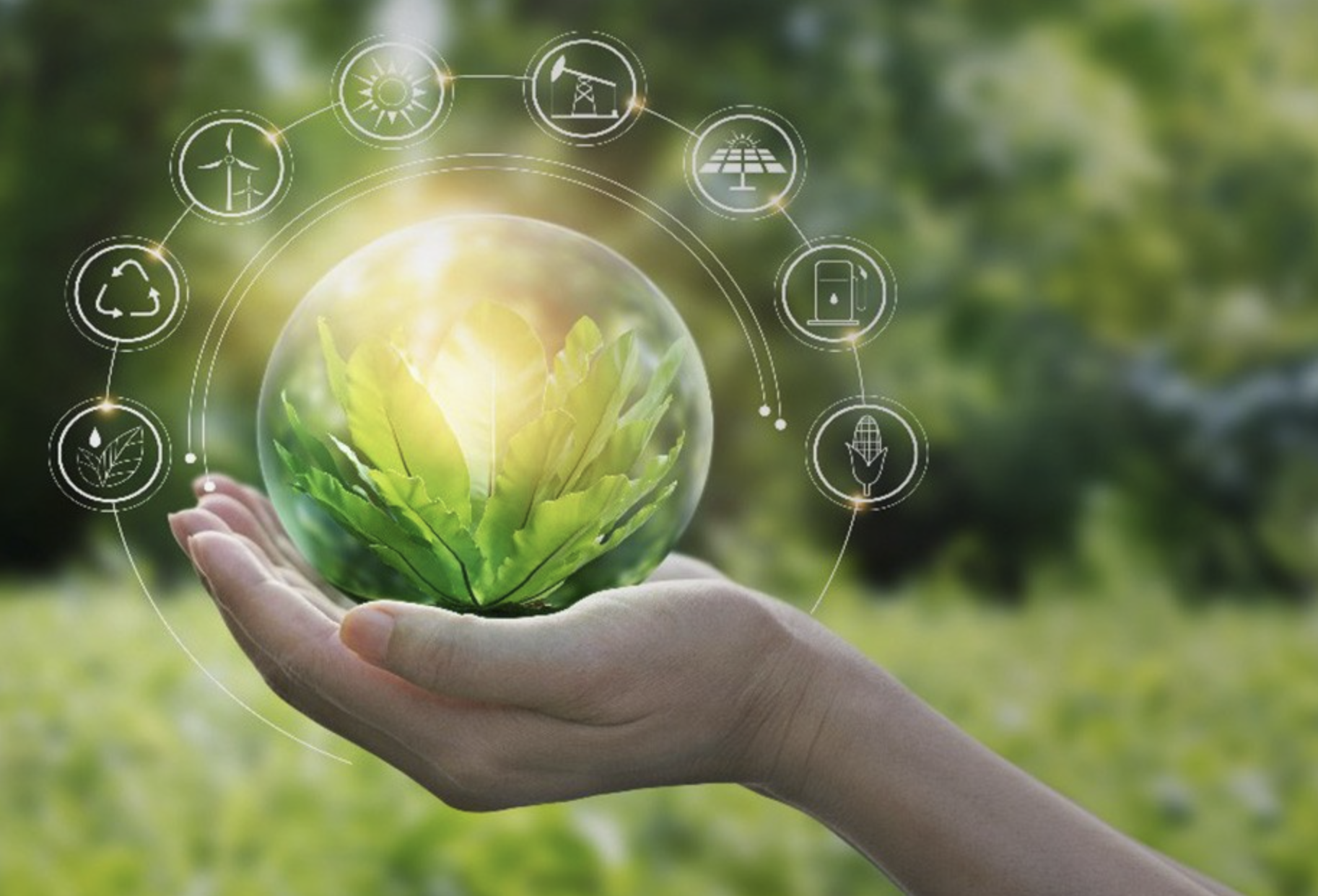
Industries have transformed human life for centuries. Factories, electricity, automobiles, computers, and modern communication systems have changed how people work and live. However, industrial growth has also created serious environmental challenges, including greenhouse gas emissions, air pollution, resource consumption, and increasing pressure on natural ecosystems.
Now, another major transformation is taking place.
The Green Industrial Revolution refers to the shift toward cleaner technologies, renewable energy, efficient production, sustainable materials, and lower-emission industrial processes. Its goal is not simply to produce less pollution. It is about changing how energy is generated, products are manufactured, transportation is powered, and resources are used.
You may already be seeing parts of this transformation around you. Solar panels are becoming more common, electric vehicles are expanding, businesses are investing in energy-efficient equipment, and industries are exploring technologies that can reduce emissions from difficult-to-decarbonize processes.
But what exactly is the Green Industrial Revolution, and why does it matter?
What Is the Green Industrial Revolution?
The Green Industrial Revolution is the transition from traditional, resource-intensive industrial systems toward cleaner, more sustainable technologies and methods of production.
It involves changes across many areas, including:
- Renewable energy
- Electric transportation
- Energy-efficient buildings
- Sustainable manufacturing
- Green hydrogen
- Battery technology
- Recycling and circular production
- Low-carbon industrial processes
- Carbon management
- Smart energy systems
The idea is similar to previous industrial transformations, but with a different objective.
Earlier industrial revolutions focused heavily on increasing production, improving transportation, and expanding access to energy. The shift towards sustainability seeks to advance economic growth and technological innovation while minimizing harm to the environment.
It does not mean abandoning industry. Instead, it means finding cleaner ways to operate it.
Why Is the Green Industrial Revolution Happening?
Several factors are driving the transition toward greener industry.
Climate Change
The burning of fossil fuels releases greenhouse gases into the atmosphere. These emissions contribute to global warming and climate change.
As governments, businesses, and communities seek to reduce emissions, industries are under increasing pressure to adopt cleaner technologies.
Rising Energy Demand
Modern economies require enormous amounts of energy.
Data centers, factories, transportation systems, buildings, and households all depend on reliable energy.
Renewable energy sources such as solar and wind can help diversify energy supplies and reduce dependence on fossil fuels when combined with suitable storage and grid infrastructure.
Technological Progress
Clean technologies have advanced significantly.
Solar power, batteries, electric vehicles, heat pumps, energy management systems, and other technologies are becoming increasingly capable and commercially important.
Innovation can make sustainable choices more practical for businesses and consumers.
Government Policies
Governments around the world are introducing policies designed to encourage cleaner energy and industrial production.
These can include:
- Renewable energy incentives
- Emissions standards
- Clean-energy investments
- Electric vehicle policies
- Energy-efficiency requirements
- Research and development programs
The exact policies differ between countries.
How Renewable Energy Is Changing Industry
Energy is at the center of industrial production.
Traditional industrial systems have relied heavily on coal, oil, and natural gas. The green industrial transition seeks to increase the role of lower-emission energy sources.
Solar and wind power are particularly important because they can generate electricity without directly burning fossil fuels during operation.
Other energy sources, including hydropower and nuclear power, can also play roles in different countries’ efforts to provide reliable low-carbon electricity.
However, replacing conventional energy systems isn’t as simple as installing more solar panels and wind turbines.
Electricity grids need to become more flexible, transmission capacity may need to expand, and energy storage can help manage periods when renewable generation is low.
The Rise of Electric Transportation
Transportation is another major part of the green industrial transition.
Electric vehicles use electric motors instead of conventional internal-combustion engines.
This shift is encouraging changes throughout the automotive industry.
Manufacturers are investing in:
- Electric cars
- Electric buses
- Electric trucks
- Battery manufacturing
- Charging infrastructure
- Software and digital vehicle systems
Electric transportation can reduce emissions from vehicles, particularly when the electricity used to charge them comes from low-carbon sources.
The transition also extends beyond passenger cars. Railways, public transportation, shipping, and aviation are exploring different technologies to reduce their environmental impact.
How Manufacturing Is Becoming More Sustainable
Manufacturing consumes energy and raw materials, so improving industrial efficiency can have a major impact.
Companies are exploring ways to:
- Use less energy
- Reduce material waste
- Reuse resources
- Improve production efficiency
- Replace high-emission materials
- Increase recycling
- Use renewable electricity
Digital technology is also becoming increasingly important.
Sensors, artificial intelligence, automation, and data analytics can help factories monitor equipment and identify opportunities to reduce energy use or material waste.
This combination of digitalization and sustainability is sometimes described as part of the broader development of smart manufacturing.
What Is Green Hydrogen?
Hydrogen is another technology receiving significant attention in the green industrial transition.
Hydrogen can be used as an energy carrier and as an industrial feedstock.
Green hydrogen generally refers to hydrogen produced using electricity from renewable sources through electrolysis, although terminology and production methods can vary.
It could potentially help reduce emissions in industries where direct electrification is difficult.
Potential applications include:
- Steel production
- Chemical manufacturing
- Heavy transportation
- Industrial heating
- Energy storage
However, green hydrogen is still developing, and its production can require significant amounts of clean electricity.
That means it is not a universal replacement for every fossil-fuel application.
The Role of Batteries and Energy Storage
Renewable electricity generation can vary depending on weather and time of day.
Solar panels don’t generate electricity at night, while wind generation changes with wind conditions.
Energy storage can help balance supply and demand.
Lithium-ion batteries are already widely used in electric vehicles and electricity storage. Other technologies are also being developed, including longer-duration storage systems.
Improved energy storage solutions can enhance the flexibility and dependability of renewable power systems.
It can also reduce pressure on electricity networks during periods of high demand.
What Is a Circular Economy?
The traditional industrial model often follows a simple pattern:
Take -> Make -> Use -> Throw Away
A circular economy aims to change this model.
Instead of treating products and materials as disposable, companies can design products so that components and materials remain useful for longer.
Circular strategies include:
- Repairing products
- Reusing components
- Recycling materials
- Refurbishing equipment
- Reducing unnecessary packaging
- Designing products for longer lifespans
For example, a manufacturer might design a product so individual components can be replaced instead of requiring the entire product to be discarded.
This can reduce waste and lower demand for newly extracted resources.
How the Green Industrial Revolution Can Create Jobs
The transition toward cleaner industry can create demand for new skills and occupations.
Growing areas include:
- Renewable energy installation
- Battery manufacturing
- Electrical engineering
- Environmental management
- Energy efficiency
- Sustainable construction
- Recycling
- Clean transportation
- Industrial automation
- Environmental data analysis
At the same time, some traditional industries and jobs may change as technologies and energy systems evolve.
This makes education and workforce training important parts of the transition.
As industries implement new tools, methods, and technologies, workers might require training to acquire updated technical skills.
What Are the Economic Benefits?
The Green Industrial Revolution isn’t only about environmental protection.
It can also create economic opportunities.
Businesses that develop successful clean technologies may gain access to growing markets. Countries that invest in renewable energy, batteries, electric transportation, and other emerging industries can develop new manufacturing capabilities and supply chains.
Energy efficiency can also reduce operating costs over time.
For example, a factory that uses less electricity to produce the same amount of goods may lower its energy expenses while reducing emissions.
However, green technologies can require significant upfront investment. The economic benefits therefore depend on factors such as technology costs, infrastructure, policy, financing, and market conditions.
What Challenges Does the Green Industrial Revolution Face?
The transition isn’t easy.
Several challenges need to be addressed.
High Upfront Costs
New equipment, infrastructure, and technologies can require significant investment.
Small businesses may find these costs particularly difficult to manage without financing or incentives.
Infrastructure Requirements
Electric vehicles need charging networks.
Renewable energy requires suitable electricity grids.
Industrial electrification may require new equipment and stronger connections to the power system.
Building this infrastructure takes time and money.
Critical Mineral Demand
Many clean technologies depend on minerals and metals.
Batteries, electric motors, power systems, and renewable technologies can require materials such as lithium, nickel, copper, graphite, and other minerals.
Responsible mining, recycling, supply-chain diversification, and material efficiency are therefore important parts of the transition.
Unequal Access
Not every country or community has the same financial resources, infrastructure, or access to technology.
A successful global transition needs to consider affordability and access, rather than focusing only on technological progress in wealthy markets.
What Can Businesses Do?
Businesses don’t necessarily need to completely transform their operations overnight.
They can begin with practical steps.
For example, a company can:
- Measure its energy consumption.
- Identify areas where energy is being wasted.
- Improve equipment efficiency.
- Reduce unnecessary material use.
- Consider renewable electricity.
- Reduce waste.
- Improve recycling and reuse.
- Encourage sustainable supply chains.
- Train employees in new technologies.
- Set realistic environmental targets.
The right approach depends on the company’s industry, size, location, and resources.
What Can Individuals Do?
The Green Industrial Revolution is primarily a large-scale economic and technological transformation, but individuals also influence the process through everyday choices.
You can contribute by:
- Using energy efficiently
- Choosing durable products
- Repairing items when practical
- Recycling appropriately
- Using public transportation when possible
- Considering energy-efficient appliances
- Reducing unnecessary consumption
- Learning about sustainable technologies
However, individual action shouldn’t be viewed as the only solution.
Large-scale changes in energy, transportation, manufacturing, infrastructure, and public policy are essential because many environmental impacts are determined by systems that individuals cannot change alone.
What Does the Future of Green Industry Look Like?
The green industrial transition is likely to continue developing over the coming decades.
Future factories may use more renewable electricity, automation, artificial intelligence, advanced robotics, and real-time energy management.
Transportation could become increasingly electrified, while industries that are difficult to electrify may explore hydrogen, sustainable fuels, carbon management, or other technologies.
Buildings may also become more energy efficient through improved insulation, smart controls, heat pumps, and distributed energy systems.
The exact path will vary between countries and industries.
There is no single technology capable of solving every environmental challenge. Instead, the Green Industrial Revolution will likely involve a combination of technologies, policies, infrastructure investments, business decisions, and changes in consumer behavior.
Final Thoughts
The Green Industrial Revolution represents a major shift in how the world produces energy, manufactures goods, moves people and products, and uses natural resources.
Its purpose is not to stop industrial development. Instead, it aims to make economic growth more compatible with environmental sustainability.
Renewable energy, electric vehicles, batteries, green hydrogen, energy-efficient manufacturing, recycling, and digital technologies are all contributing to this transformation.
The transition will not happen instantly. It involves substantial costs, infrastructure challenges, resource requirements, and changes to existing industries. Yet it also creates opportunities for innovation, new businesses, skilled jobs, cleaner energy systems, and more efficient production.
Ultimately, the Green Industrial Revolution matters because the choices made today can influence how economies operate for decades to come. Building cleaner industrial systems is not simply an environmental project. It is also an economic, technological, and social transformation that could shape the next era of global development.
Frequently Asked Questions
1. What is the Green Industrial Revolution in simple terms?
The Green Industrial Revolution is the shift toward cleaner energy, sustainable manufacturing, efficient technologies, and industrial systems designed to reduce environmental impact.
2. Why is the Green Industrial Revolution important?
It matters because industries consume large amounts of energy and resources. Cleaner technologies can help reduce emissions, improve efficiency, create new economic opportunities, and support more sustainable development.
3. What technologies are part of the Green Industrial Revolution?
Important technologies include solar and wind power, batteries, electric vehicles, green hydrogen, energy-efficient equipment, smart grids, recycling technologies, and digital systems for improving industrial efficiency.
4. Can the Green Industrial Revolution create jobs?
Yes. The transition can create jobs in areas such as renewable energy, electrical engineering, battery manufacturing, sustainable construction, recycling, energy management, and clean transportation. It can also change or replace some existing jobs, making retraining important.
5. What is the difference between the Industrial Revolution and the Green Industrial Revolution?
Earlier Industrial Revolutions focused heavily on mechanization, mass production, electricity, and digital technology. The Green Industrial Revolution focuses on applying modern technology to create cleaner, more resource-efficient industrial systems.
6. Can individuals contribute to the Green Industrial Revolution?
Yes. Individuals can support the transition through energy efficiency, responsible consumption, repairing and reusing products, recycling, and choosing lower-emission transportation when practical. However, large-scale industrial and policy changes are also essential.