

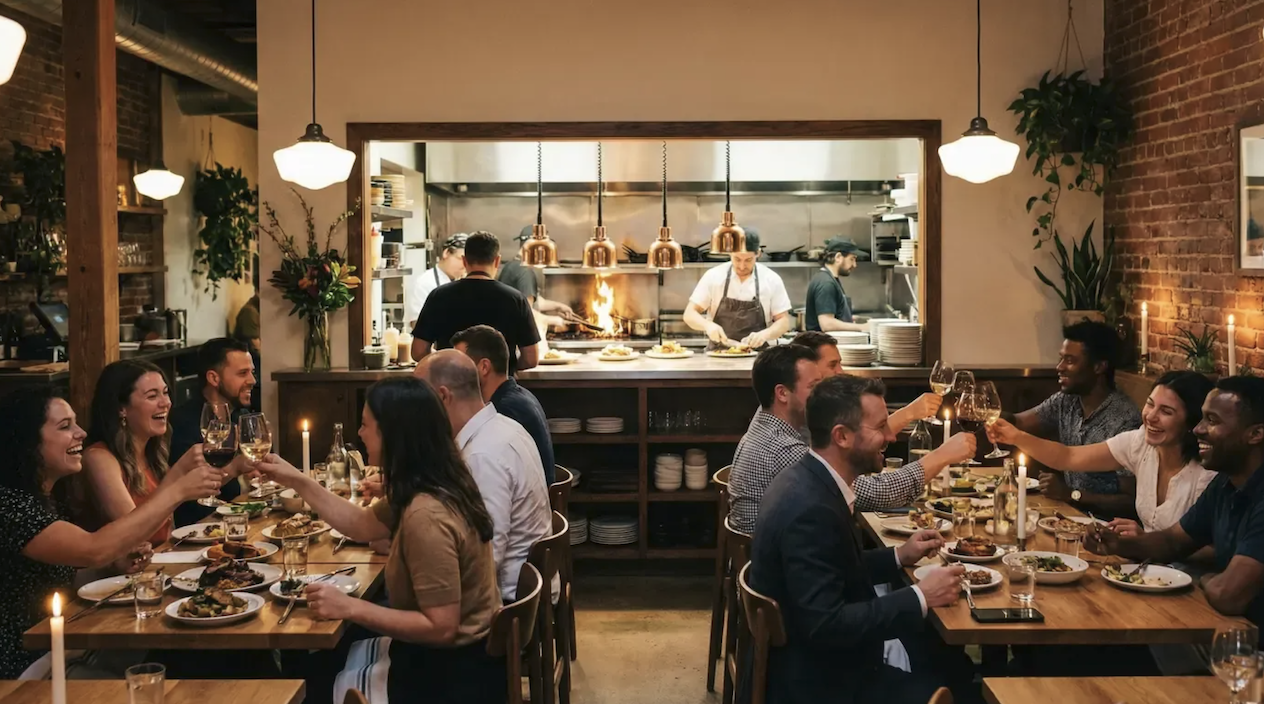
A table set for six, sitting empty on a busy Saturday night while a waitlist of walk-in customers grows by the door, represents one of the more frustrating problems a restaurant owner faces.
No-shows, reservations that simply never arrive without cancellation, cost restaurants real revenue on exactly the nights when lost business is hardest to recover, since a table held for a party that never materializes cannot be resold once the evening’s peak dinner rush has passed.
In response, a growing number of restaurants, especially in the fine dining and popular casual segments, have adopted credit card holds, deposits, and outright no-show fees, changing what was once a simple phone call reservation into a transaction that requires payment information upfront.
Why No-Shows Hit Restaurants Especially Hard
Restaurants operate on notoriously thin profit margins, often in the single digits, which means a handful of empty tables on a single busy night can noticeably affect a location’s monthly bottom line.
Unlike a retail store that can sell the same physical inventory the next day if a customer does not show up to buy it, a restaurant’s inventory is fundamentally perishable in the sense that an unsold seat during Saturday’s dinner rush cannot be resold once that specific time slot has passed.
This makes the timing of a no-show especially costly, since a reservation lost on a slow Tuesday afternoon has a much smaller financial impact than one lost during peak Friday or Saturday evening hours when demand for tables is at its highest.
Popular restaurants that turn away walk-in customers due to a fully booked reservation list feel this pain especially acutely, since every no-show represents not just an empty table but also a turned-away customer who might have filled it, a double loss that does not apply to businesses without a reservation system limiting who can walk through the door in the first place.
Restaurants with a smaller number of tables, common in fine dining establishments with an intimate room count, feel the percentage impact of a single no-show more severely than a larger, higher-volume restaurant with more tables able to absorb an occasional empty seat without threatening the night’s overall revenue.
The problem compounds during holidays and special occasions, when demand for tables spikes and restaurants often turn away far more requests than they can accommodate.
A no-show on Valentine’s Day or New Year’s Eve represents an especially painful loss, since the restaurant likely rejected dozens of other reservation requests for that exact time slot, any one of which would have filled the table that ultimately sat empty.
Staffing costs add another layer to this calculation, since restaurants typically schedule extra servers, kitchen staff, and hosts for anticipated high-volume nights, meaning a wave of unexpected no-shows can leave a restaurant overstaffed relative to the guests it ends up serving, compounding the lost revenue with labor costs that do not scale down simply because fewer diners appeared than expected.
- Thin profit margins: Restaurants typically operate on single-digit profit margins, making even a small number of lost reservations financially significant.
- Perishable table inventory: An empty seat during a specific dinner service cannot be resold later, unlike physical retail inventory.
- Peak-hour concentration: No-shows during the busiest hours of the week cause far more financial damage than a no-show during a slow period.
- Small-room vulnerability: Restaurants with fewer total tables feel the percentage impact of each individual no-show more sharply than larger establishments.
Credit Card Holds and Reservation Deposits
Many restaurants have adopted a system where a credit card is required to secure a reservation, though the card is not charged unless the guest fails to show up or cancels outside a specified window, commonly twenty-four to forty-eight hours before the reservation time. This model, often processed through reservation platforms like Resy, OpenTable, or Tock, gives restaurants a deterrent against casual no-shows without requiring upfront payment from every guest who books a table, striking a balance between protecting revenue and avoiding the friction that a mandatory deposit might introduce for typical reservations.
High-demand restaurants, especially those known for a signature tasting menu or an especially difficult-to-book experience, have gone further by requiring a nonrefundable deposit at the time of booking, sometimes applied toward the final bill and sometimes functioning as a separate fee entirely. This approach shifts the financial risk of a no-show from the restaurant to the guest before the meal ever takes place, and it has become especially common for special events like holiday dinners, prix fixe tasting menus, and reservations during major local events when demand for tables far exceeds available supply.
- Card-on-file holds: A credit card secures a reservation without being charged unless the guest cancels late or fails to show up entirely.
- Nonrefundable deposits: Some high-demand restaurants require payment upfront, applied toward the final bill or charged as a standalone fee.
- Cancellation windows: Most policies define a specific window, often one to two days before the reservation, after which a cancellation still triggers a fee.
- Tiered policies by party size: Larger parties often face stricter deposit requirements, since a no-show involving a bigger group creates a larger revenue loss.
How Reservation Platforms Have Adapted
Resy, OpenTable, and Tock have each built infrastructure specifically designed to help restaurants manage no-show risk, giving restaurant operators tools to set cancellation policies, collect card information, and automatically charge a fee when a guest fails to honor a reservation according to the posted terms.
These platforms have also introduced reputation systems in some markets, tracking a diner’s cancellation and no-show history in a way that can affect their ability to book future reservations at participating restaurants, similar to how a poor rental history might affect a prospective tenant’s ability to secure a future lease.
This data-driven approach has proven controversial among some diners, who argue that legitimate emergencies, from a sudden illness to unexpected traffic, should not permanently affect their standing with a reservation platform used across many different restaurants.
Platform operators have generally responded by building in some flexibility, such as allowing a limited number of forgiven cancellations before a stricter policy applies, though the exact mechanics of these forgiveness policies are not always transparent to the diners whose reservation history is being tracked.
- Automated fee collection: Reservation platforms let restaurants automatically charge a stored card when a no-show or late cancellation occurs.
- Cross-restaurant reputation tracking: Some systems track a diner’s cancellation history across every restaurant using the same platform.
- Policy customization tools: Restaurants can set their own cancellation windows, deposit amounts, and party-size thresholds within the platform’s settings.
- Limited forgiveness allowances: Some platforms permit a small number of penalty-free cancellations before stricter tracking or fees apply to a diner’s account.
Restaurant operators using these platforms have generally welcomed the added control, since manually tracking no-show patterns across hundreds of reservations each month would be impractical without automated software support. Smaller independent restaurants without the resources to build custom reservation systems have benefited quite a bit from this shared infrastructure, gaining access to no-show prevention tools that were previously available mainly to large restaurant groups with dedicated technology budgets.
Balancing Revenue Protection With Customer Goodwill
Restaurant owners weighing whether to adopt stricter no-show policies face a real tradeoff between protecting revenue and preserving the kind of warm, welcoming reputation that keeps regular customers coming back.
A restaurant known for charging aggressive fees at the slightest deviation from a reservation policy risks developing a reputation for being unfriendly or transactional, potentially costing more in lost goodwill and negative reviews than it saves in prevented no-show losses.
Finding the right balance often comes down to a restaurant’s specific market position, since an establishment with a long waitlist and constant demand can afford to enforce strict policies without much risk of losing customers to a competitor, while a newer or less established restaurant may need to prioritize flexibility to build its reputation and regular customer base.
Some restaurants have adopted a middle-ground approach, requiring a card on file for larger parties or peak-time reservations while leaving smaller, off-peak bookings free of any deposit or hold requirement. This tiered approach lets a restaurant target its no-show prevention efforts at the reservations most likely to cause real financial damage, without introducing friction into every single booking regardless of size or timing.
Restaurant consultants advising owners on this balance generally recommend starting with a moderate policy, such as a card-on-file hold without an upfront charge, before escalating to nonrefundable deposits only if no-show rates remain a persistent problem after the initial policy takes effect.
Diner Frustration Over Fees and Deposits
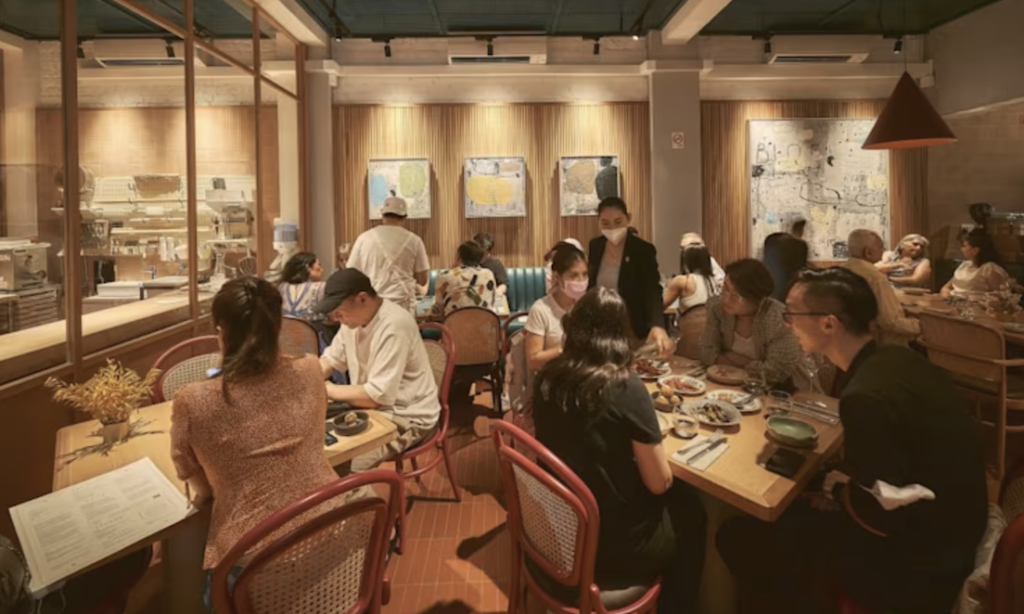
For many diners, the shift toward fees and deposits has introduced friction into what was once a low-stakes phone call or app tap to secure a table. Guests who have experienced a legitimate emergency, only to find themselves charged a no-show fee despite reasonable circumstances, have voiced frustration on social media and review platforms, sometimes prompting a restaurant to reverse a charge as a customer service gesture even when the policy technically permitted it.
This tension between protecting restaurant revenue and maintaining goodwill with regular customers has led some establishments to apply no-show policies inconsistently, reserving strict enforcement for repeat offenders while extending grace to first-time or clearly extenuating circumstances.
Large party reservations have become a notable flashpoint in this debate, since a group of eight or more that cancels or fails to show represents a much larger loss than a single no-show table for two, prompting many restaurants to apply their strictest deposit and cancellation policies specifically to bigger bookings. Diners organizing a group dinner for a birthday or work event have had to adjust their own planning habits in response, confirming attendance with their group further in advance to avoid being caught paying a deposit or fee for guests who ultimately do not attend.
Some restaurants have introduced a middle path for large parties, allowing organizers to adjust the final headcount up to a set point closer to the reservation date without penalty, recognizing that group dinners often see natural fluctuation as people confirm or drop out over the days leading up to an event. This flexibility tends to reduce friction for the organizer while still protecting the restaurant against a scenario where half the group cancels at the last minute with no advance warning at all.
Restaurants that communicate these policies clearly at the time of booking generally report fewer disputes than those that spring a surprise fee on an organizer who was not aware a deposit had been required in the first place.
- Emergency cancellation frustration: Diners with legitimate last-minute emergencies sometimes still face a fee, leading to social media complaints and occasional policy reversals.
- Inconsistent enforcement: Some restaurants apply strict no-show policies only to repeat offenders, extending grace for apparent first-time or unusual circumstances.
- Large party sensitivity: Bigger reservations face stricter deposit requirements given the larger potential revenue loss from a cancellation.
- Advance confirmation habits: Diners organizing group reservations increasingly confirm attendance with their party well ahead of the reservation date.
Industry-Wide Data on the No-Show Problem
Restaurant industry associations and reservation platform companies have published data over the years attempting to quantify how widespread the no-show problem really is, generally finding that a sizable share of reservations, especially those made well in advance, end up as either a no-show or a same-day cancellation that leaves little time to fill the table with another party.
This data has been used both to justify stricter policies among restaurant operators and to push back against overly aggressive fee structures among diner advocacy voices, since both sides can point to statistics supporting their preferred version of a fair policy.
Restaurants operating in cities with an especially competitive dining scene, where popular spots can be booked out weeks in advance, have the strongest incentive to adopt aggressive no-show prevention policies, since the opportunity cost of an empty table is highest in markets with the most demand chasing the fewest available reservations.
Smaller towns and less competitive dining markets have seen slower adoption of fees and deposits, since restaurants in these areas often have more flexibility to fill a table with walk-in traffic even after a reservation falls through.
- Advance booking risk: Reservations made well ahead of the scheduled date show a higher rate of no-shows and late cancellations than same-day bookings.
- Market competitiveness: Cities with high demand for limited restaurant seating have adopted stricter no-show policies faster than less competitive dining markets.
- Walk-in backup availability: Restaurants able to fill empty tables with walk-in traffic have less financial incentive to enforce strict cancellation fees.
- Platform-reported statistics: Data published by reservation platforms has informed both stricter restaurant policies and diner advocacy pushback against fee overreach.
Final Thoughts
Restaurant no-show fees and reservation holds reflect a practical response to a problem that has quietly cost the industry real revenue for years, especially at establishments operating on thin margins with limited seating capacity.
Reservation platforms have built the technical infrastructure to make these policies easier to enforce, while restaurants have had to balance protecting their bottom line against maintaining goodwill with the diners who keep them in business.
For most guests, the practical takeaway is straightforward: reading a restaurant’s cancellation policy before booking and communicating promptly if plans change remains the simplest way to avoid an unwanted fee while still supporting a system that keeps popular restaurants financially sustainable.
As reservation technology continues to evolve, expect these policies to keep spreading beyond fine dining into more mainstream restaurants, especially in cities where demand for a good table shows no sign of slowing down anytime soon.
Read more about Newstwick
Frequently Asked Questions
1. Can a restaurant legally charge a credit card for a no-show without prior notice?
Restaurants must disclose their cancellation and no-show policy at the time of booking, and charging a card without that upfront disclosure would generally violate standard payment processing and consumer protection rules.
2. How far in advance should a reservation be canceled to avoid a fee?
Policies vary by restaurant, but a common standard requires cancellation twenty-four to forty-eight hours before the reservation time to avoid a no-show or late cancellation fee.
3. Do all restaurants require a credit card to book a reservation?
No, card-on-file requirements are more common at high-demand, fine dining, or specialty restaurants, while many casual and mid-range restaurants still accept reservations without requiring payment information upfront.
4. What happens if a diner disputes a no-show charge?
Diners can typically contact the restaurant directly to explain the circumstances, and many restaurants will reverse a charge as a goodwill gesture, though a formal dispute through a credit card issuer is also an option if a resolution cannot be reached directly.
5. Are no-show fees higher for larger reservation parties?
Yes, many restaurants apply stricter deposit and fee policies to larger parties, since a no-show involving a bigger group represents a greater potential revenue loss than a single table for two.
6. Do reservation platforms share no-show history across different restaurants?
Some platforms maintain a diner’s cancellation and no-show history that can affect their standing across multiple restaurants using the same reservation system, though the details of how this information is used vary by platform.