

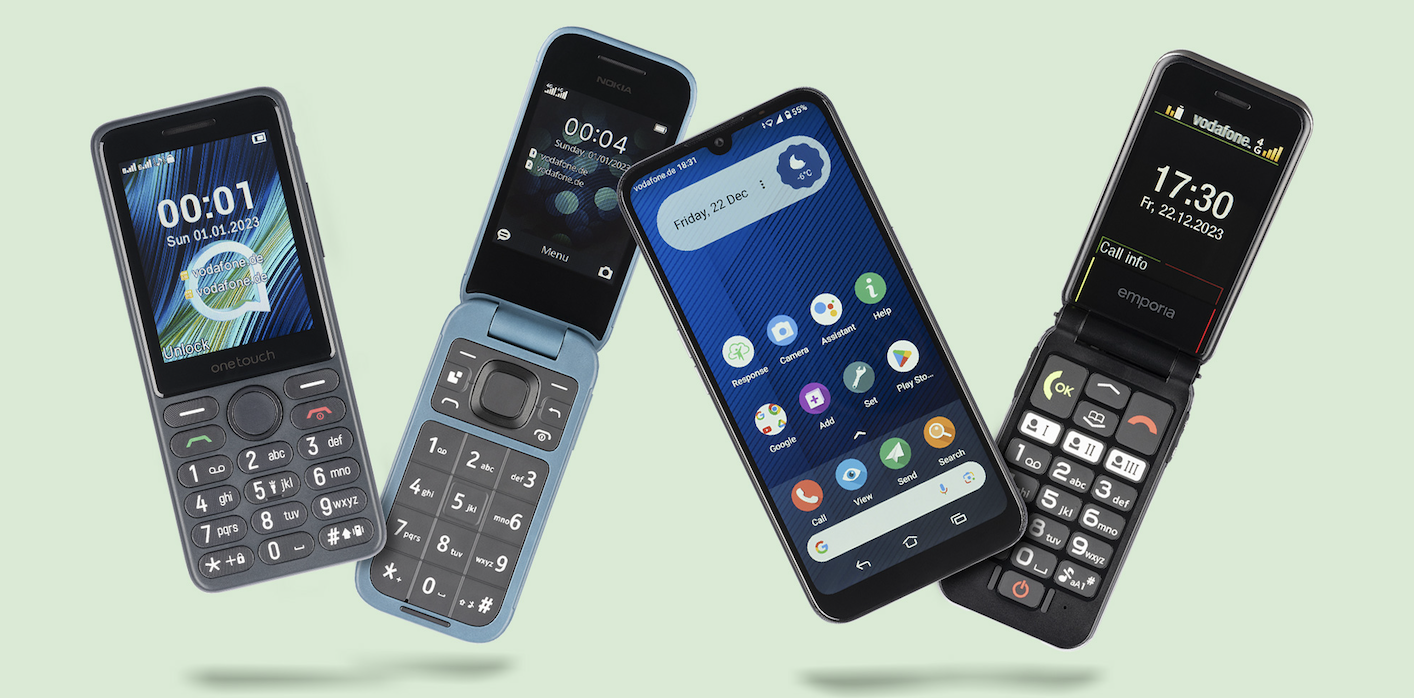
Simple mobile phones that handle calls and texts and little else are returning to ordinary pockets, often as a deliberate choice rather than a budget compromise. The trend matters because almost everyone feels some tension between the convenience of a smartphone and the way it pulls at attention, time and sleep.
In this article we will discuss what a dumbphone is, why people switch, what they gain and lose, what practical problems arise, and how to try a simpler phone without disrupting daily life.
Dumbphones are simple handsets built for calls and texts
The term “dumbphone” is informal and slightly cheeky, and it covers a range of devices. At its core it means a mobile phone that does the telephone basics well: voice calls, text messages, a contact list and perhaps an alarm clock and a basic camera. Some versions add a small browser, a calculator or a music player, but they do not offer the wide world of downloadable apps that defines a smartphone. Fans prefer the term “basic phone” or “minimalist phone”, and the words are used almost interchangeably.
It helps to separate three groups of devices. The first is the classic feature phone, with a number pad, a small screen and long battery life, which has been sold for decades. The second is the newer wave of minimalist devices, which are designed for people who are choosing simplicity on purpose and which may offer a few carefully selected tools such as messaging, maps or music in a stripped-down form. The third is the budget smartphone, which is cheap but still pulls the user into the same app world, so it solves a cost problem rather than an attention problem.
Hardware varies widely by region and maker, and this article deliberately avoids naming models. What matters is the category of features rather than the label on the box. Some basic phones can share a mobile data connection with a laptop, some support messaging apps in a limited form, and some are little more than a phone with a number pad. Readers should read the specification carefully and match it to their own needs instead of assuming that “simple” means the same thing everywhere.
It is also worth saying what a dumbphone is not. It is not a cure for stress, a moral statement, or a sign that someone dislikes technology. Many users keep a laptop, a tablet or a smartphone at home and simply decide that the device in their pocket should be a quieter one. That nuance matters, because it explains why the trend is more about choosing the right tool for the setting than about rejecting modern life.
Another useful way to see the category is by what it asks of you. A smartphone invites you to use it in every spare moment, while a basic phone waits until you have a reason to pick it up. That difference in posture, rather than any single missing feature, is what many owners say they notice first. It is also why a simple phone can feel strange for the first week or two, as the hand keeps reaching for something that is no longer there.
Attention fatigue drives the move away from smartphones
The most common reason people give for switching is a feeling that the smartphone has become too hard to put down. Apps are designed to hold attention, with notifications, endless feeds, rewards for returning and constant small prompts that pull people back. Many users describe picking up the phone for one task and surfacing twenty minutes later with no memory of how they got there. A basic phone removes most of those hooks simply because they no longer exist on the device.
Sleep and evening routines come up often. People who use their phone as an alarm and a bedside companion find that late scrolling cuts into rest, and sleep professionals commonly advise keeping screens out of the hour before bed. A simple phone that cannot scroll is a blunt but effective way to follow that advice. Anyone with persistent sleep problems should speak with a doctor, since many causes are unrelated to screens.
The evidence on phones and wellbeing deserves careful treatment. Many surveys and commentators have suggested that heavy use is linked with distraction, stress or lower mood for some people, but researchers disagree about how strong the effect is and about which direction the link runs. Some people are helped a great deal by reducing use, while others find that their smartphone supports friendships, learning and work. A fair reading is that the effect depends on how the phone is used, by whom and at what stage of life.
Parents and teachers have added to the conversation. Many families discuss whether a first phone for a child should be a basic one, which allows contact and safety calls without exposing the child to social media or endless video. Schools in various places have adopted their own rules, and these differ by country, region and school. Parents who are considering this route can talk with the school, with other parents and with the child, rather than assuming one answer fits every family.
Workplaces are starting to join the discussion in a modest way. Some teams agree that messages sent in the evening do not need an answer until the next morning, and some employers provide a separate work device so that staff can leave it behind at the end of the day. These arrangements address the same underlying problem as a dumbphone, which is the feeling of being permanently on call. They also show that the issue is partly cultural, so a better phone cannot fix everything.
People who switch have very different reasons
There is no single dumbphone user. Some are workers in jobs that demand deep concentration, such as writers, programmers, researchers and tradespeople, who find that constant messages break their focus. Others are people in caring roles or demanding social lives who want to be present with the people around them. A few are simply tired of the cost of upgrading devices, and a basic phone is cheaper to buy, easier to replace and often lasts longer on a single charge.
Privacy is another motive. Smartphones collect large amounts of data through apps, location services and accounts, and some people dislike that arrangement. A basic phone limits what can be collected, although it does not make a person invisible, since call records and location through the network still exist. Readers who are concerned about privacy should treat a simple phone as one useful step rather than a complete solution.
Age plays a role as well, though not in the way people often assume. Older adults have used simple phones for years, and many continue to value large buttons and clear sound. Young adults who grew up with smartphones form a visible part of the recent trend, and some say they feel relief at being less reachable. Observers note that social media has helped spread the idea, which is a small irony, since people often learn about the minimalist approach from the very apps they want to use less.
Then there are those who do not fully switch. A common pattern is to carry a basic phone on weekends, holidays and evenings and to keep a smartphone for work or travel. Others keep the smartphone at home as a shared device, like a small computer, and take only the simple phone when they go out. These hybrid arrangements are practical because they keep the benefits of both tools while limiting the time spent in the more demanding one.
Features worth keeping and features worth losing
The sensible way to approach a switch is to sort your phone use into categories. Start by looking at the screen-time or usage report that most smartphones provide and note which apps you open most. Then ask which of those uses are essential, which are useful but replaceable and which are habits you would be glad to lose. This exercise often shows that a handful of tools carry the real weight, and that the rest is filler.
The table below compares common functions and how they tend to fare on a basic phone. It is a general guide, and the details depend on the device and on where you live. Use it to spot the rows that matter most to your own routine.
| Function | On a basic phone | How people cope |
| Calls and texts | Works well and reliably | Nothing needed |
| Maps and navigation | Often limited or absent | Paper maps, printed directions, a dedicated navigation device or a car system |
| Banking and payments | Usually needs an app or a card reader | Cards, card readers, branch visits, online banking at home |
| Two-factor codes | Text codes work, app codes do not | Switch to text or hardware keys where offered |
| Photos | Basic camera or none | Separate camera, or use a tablet or smartphone at home |
| Music and podcasts | Varies by device | Separate player, radio, downloaded files |
| Ride booking and parking | Often depends on apps | Phone a taxi firm, use pay machines, plan ahead |
Features worth keeping are usually the ones that support safety, money and getting around. Reliable calls, working emergency access and a clear way to receive security codes top the list. Navigation matters for people who drive or travel a lot, and a dedicated device or a printed route can fill the gap. Alarms, calendars and basic reminders are also useful, and many simple phones include them.
Features worth losing are mainly those built to compete for attention: social media feeds, short video, news alerts, shopping prompts and games. Removing them from your pocket does not remove them from your life, since you can still use them on a computer at set times. The difference is that they become something you choose to visit rather than something that follows you around. Many people report that this shift in default behavior matters more than any willpower.
Everyday tasks that become harder without apps
The biggest obstacle is not the phone itself but the world built around smartphones. Many services now assume that you can scan a code, open an app or approve a request on a screen. Examples include restaurant menus shown through a code, parking payments, transport tickets, event entry, workplace systems and the apps used by schools or clubs. Some places still offer alternatives, but not all do, and the alternatives can be slower or less convenient.
Banking deserves special attention. Many banks and payment services are built around apps for security and approval, and in some countries it is difficult to carry out certain transactions without one. Before switching, check with your bank about how you can approve payments, receive codes and reach support without a smartphone. Ask also about card readers, text codes, telephone banking and in-person services, since options vary widely between institutions and countries.
Work can be a second obstacle. Employers may expect staff to use messaging tools or two-factor apps on their own device, and some jobs require quick replies through a platform that a basic phone cannot run. If your work depends on this, discuss it openly with your employer, who may provide a work device or allow you to use a computer for those tools. A quiet, honest conversation early usually works better than failing to respond and having to explain afterward.
Social life changes too. Group chats, photo sharing and event invitations often live in apps, and a person without them can feel left out or become a source of minor irritation for friends. Many users solve this by telling friends and family in advance, agreeing that calls and texts are the way to reach them, and accepting that they may miss some casual updates. Most people find that close friends adapt quickly, while loose connections may fade a little, which is a real trade-off to consider.
Accessibility and safety are further points of caution. People with certain disabilities, for example, may rely on screen readers, captioning, magnification or voice control that are far better developed on smartphones. Those who live alone, travel late or have medical conditions may also value location sharing and emergency features that basic phones lack or handle poorly. If any of this applies to you, it is reasonable to keep the smartphone and focus on changing how you use it.
Costs, compatibility and network questions
A basic phone is often cheaper to buy than a smartphone, but the total picture is more varied. Some minimalist devices are priced like mid-range products because they are made in small volumes, while the simplest feature phones cost little. Running costs can be lower if you use a small plan with limited data, although the savings depend on the carrier and on whether you keep a smartphone as well. Rather than comparing headline prices, add up the purchase cost, the monthly plan and the cost of any replacement tools such as a separate camera or navigation device.
Network compatibility is the most important technical check. Mobile networks change over time, and in some countries older network generations have been or are being switched off, so a very old or imported handset may stop working or lose emergency calling. Rules and timetables differ by country and by carrier, so ask your provider whether a particular phone will work and whether it supports voice calls over current networks. Confirm that emergency calls work, and that you know the local emergency number.
Other questions include whether the phone can use your existing SIM card, whether it supports a modern connection standard for calls, and how long the maker will supply repairs or replacements. Battery replacement is easier on some devices than others, and a long battery life is a major advantage of basic handsets. If you travel abroad, check that the phone supports the networks of the countries you visit.
Used devices can be a bargain but need care. Test the buttons, screen, speaker and battery, check that it is not locked to another carrier, and make sure all your data is erased from any phone you hand on. For your old smartphone, back up photos and contacts before you stop using it, and consider storing it safely rather than selling it right away, in case you decide the switch is not for you. That small precaution costs nothing and makes the experiment far less stressful.
Hype, nostalgia and what is likely to last
Like many lifestyle trends, the dumbphone movement mixes real need with fashion. Some of its appeal is nostalgia for an earlier era of simpler gadgets, and some is a status signal, since being less reachable can look like a privilege. Media coverage tends to focus on dramatic stories of people who abandon smartphones entirely, which gives an inflated picture of how many make the full change. The more typical story is quieter, with people who carry a simple phone some of the time or who cut back on apps without giving up the smartphone.
There are also arguments against the trend. Critics note that a basic phone can be inconvenient or even a disadvantage for people who rely on apps for work, accessibility or caring duties. Some users depend on their smartphone for reading text aloud, enlarging print, translating, or staying connected to support networks, and for them the device is an enabling tool rather than a distraction. It is therefore unfair to suggest that everyone would be better off with a simpler phone.
Others point out that the problem lies partly in how apps are designed and that individuals cannot solve it alone by buying a different device. They argue that better design, clearer rules for companies and stronger default settings would help more people than a personal retreat. This is a reasonable view, and it can sit alongside the personal approach, since changing your own habits does not prevent society from improving the tools. In practice, many people do both.
Businesses are responding in small ways. Some manufacturers have introduced simple devices with a short list of carefully chosen tools, and some service providers still keep telephone and text options available for customers who cannot use apps. Whether those options will remain widely available is uncertain, and readers should not assume that every service will accommodate them forever. This uncertainty is one more reason to check the services you depend on before making a change.
What looks lasting is the underlying idea that attention is worth protecting and that devices should be chosen on purpose. Smartphones will remain central to daily life because so many services depend on them, so the likely outcome is a stable minority who use simple phones, many more who use them part of the time and a large majority who adjust their smartphone settings. The trend is best seen as part of a wider movement toward healthier technology habits rather than as a mass return to old devices.
A gradual switch is easier than a sudden one
Because the practical obstacles are real, a step-by-step approach is safer than a dramatic farewell to your smartphone. Begin by using your smartphone differently for a couple of weeks: turn off all notifications except calls and messages from people, remove social media and news apps, set the screen to grayscale and keep the phone out of the bedroom. Many people find that these changes alone reduce the urge to check, and they provide a trial run of life with fewer apps. If your habits do not change, that is useful information about whether a different device is needed.
The second step is to try a basic phone for a short, defined period such as a weekend or a week. Use your existing SIM card if the phone allows it, tell friends and family what you are doing, and keep your smartphone switched off at home in a drawer in case you need it. Note what goes wrong, such as a missing map, a payment problem or a message you could not read. Write those problems down, because they become your list of workarounds.
The third step is to solve each problem on the list. A printed route or a dedicated navigation device handles directions, a separate small camera handles photos, and a card with a reader or a call to the bank handles money. Some problems, like a workplace tool, require a conversation with an employer or a school. Do this before the full switch rather than after, so that you are not forced back by a single missing tool.
The fourth step is to decide on the long-term arrangement. Some people go fully basic, some keep a smartphone for specific tasks at home or at work, and some use the simple phone only for certain times. There is no virtue in a stricter arrangement than your life can support, and there is no shame in returning to a smartphone if it serves you better. A decision that you can maintain is worth more than an ambitious one that collapses after a month.
Conclusion: Which option should you choose?
Start with the reason you are considering the change, because it points toward the right choice. If your main problem is endless scrolling, begin with stricter settings on your smartphone or a time-limited trial of a basic phone. If your main problem is that you cannot be unreachable at night or on weekends, a second simple phone for those times may be enough. If your concern is cost or battery life, a basic phone could suit you well, provided you check compatibility and the tasks you need.
Consider your obligations next. If you depend on a smartphone for banking, work tools, health monitoring, accessibility features or caring responsibilities, keep it, and use the other strategies to reduce its pull. If you are choosing a first phone for a child, think about what the child needs to do, discuss the decision with them and review it as they grow. In any case, make sure that emergency calling works and that someone you trust knows how to reach you.
Finally, decide how you will judge success after a month. Useful questions include whether you sleep better, whether you feel less rushed, whether you miss anything important and whether the practical problems are manageable. If the answers are positive, continue and refine the arrangement. If they are not, adjust or return to the smartphone, and treat the experiment as a useful lesson rather than a failure.