

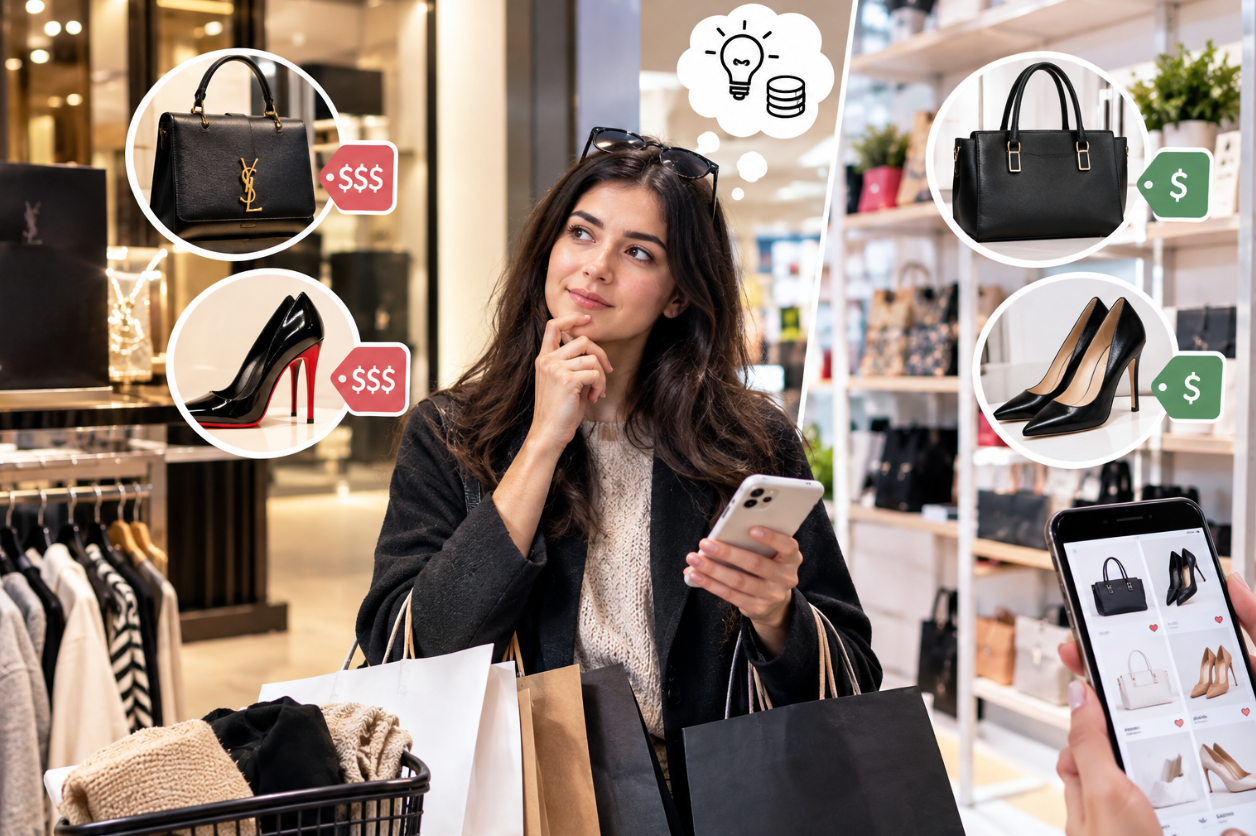
A few years ago, buying a knockoff version of a designer product was something people did quietly, if they admitted to it at all. Now entire social media accounts exist solely to hunt down and broadcast cheaper look-alikes of expensive skincare, handbags, furniture, and clothing, and the people who find the best matches are treated as minor celebrities rather than bargain hunters hiding a secret.
This open embrace of substitutes, now known as dupe culture, has flipped a long-standing social script: finding a convincing alternative to a costly item is no longer embarrassing, it is a skill worth showing off.
The shift reflects a broader renegotiation of what status really signals in a culture now intensely focused on visible consumption. When a viral video can prove that a ten-dollar serum performs almost identically to a sixty-dollar one, the premium brand loses some of its ability to claim quality as its exclusive selling point, and shoppers start asking a pointed question about every expensive purchase: what, exactly, am I paying extra for here?
The movement has grown large enough to influence retail strategy, media coverage, and even how new products get launched, with some companies now anticipating dupe comparisons before a single review has been published.
What began as a scattered habit among thrifty shoppers has become a recognized force reshaping how an entire generation relates to price, branding, and the idea of paying more simply because a label says to.
From Secret Shame To Shared Strategy
Dupe shopping is not new. Discount retailers have sold inspired-by fragrances and lookalike handbags for decades. What changed is the social framing around admitting to it. A generation raised on comparison-shopping browser extensions, side-by-side ingredient lists, and transparent unboxing videos has grown skeptical of the idea that price alone signals quality, and that skepticism has turned dupe hunting into a public, almost competitive hobby rather than a private compromise.
Creators who specialize in finding dupes have built large followings by treating the search itself as entertainment. A video comparing a luxury candle to a drugstore version, complete with side-by-side burn tests, routinely draws more engagement than a straightforward review of the luxury product alone, because the comparison format gives viewers something tangible to weigh rather than a simple recommendation to trust blindly. The entertainment value and the practical value reinforce each other, which is part of why the format has proven so durable compared to other shopping content trends that tend to fade within a single season.
- Ingredient-matching tools: Browser extensions and apps that scan a product’s listed ingredients and flag cheaper items with a near-identical formula.
- Side-by-side video reviews: Short-form content comparing texture, performance, and packaging between an original and its alternative.
- Community-sourced spreadsheets: Crowdsourced documents listing verified dupes across categories, shared and updated by thousands of contributors.
- Retailer-curated dupe sections: Some stores now market their own products explicitly as alternatives to named luxury items, a positioning that would have been unusual even five years ago.
Why Price Transparency Changed Consumer Trust
A large driver behind dupe culture is the sheer amount of manufacturing and ingredient information now available to an ordinary shopper. Supply chain transparency tools, ingredient databases, and factory sourcing leaks have made it easier than ever to learn that two products sold at wildly different price points were made in the same facility, with nearly identical formulations, under different labels.
Once that information becomes common knowledge within a product category, the premium brand’s pricing starts to look less like a reflection of quality and more like a reflection of marketing spend, packaging design, and brand positioning. Shoppers who once assumed a higher price meant better performance have grown far more willing to test that assumption directly, armed with comparison content created by people who have already done the legwork.
The Role Of Honest Reviewers
A specific category of content creator has emerged around this shift: reviewers who explicitly state they receive no sponsorship from either the original brand or the dupe maker, positioning their independence as the entire value of their recommendation. This has created a visible split in the influencer economy between sponsored promotion and dupe-hunting content that markets itself on being unsponsored, a distinction audiences have learned to notice and reward with higher trust.
Categories Where Dupe Hunting Is Most Intense
Not all product categories attract the same level of dupe scrutiny. The practice concentrates most heavily where a product’s core function can be isolated and tested relatively cleanly, and where the original’s price premium is widely perceived as driven more by branding than by manufacturing complexity.
- Skincare and cosmetics: Ingredient lists are publicly disclosed by regulation in most markets, making formulation comparisons straightforward for anyone willing to look.
- Fast fashion accessories: Items like sunglasses, bags, and jewelry are easy to visually compare and often manufactured in overlapping facilities.
- Home fragrance: Candles and diffusers invite direct sensory comparison, and scent notes are often disclosed or easily guessed.
- Furniture and home decor: A booming category for dupe content as flat-pack retailers release near-identical designs to viral designer pieces within weeks.
Categories that resist easy dupe comparison tend to involve complex engineering, proprietary technology, or craftsmanship that is harder to replicate convincingly, which is part of why electronics and fine jewelry have seen comparatively less dupe culture activity than beauty and home goods.
Who Is Driving The Dupe Economy
Dupe culture spans income levels in a way that surprises some retail analysts, who initially assumed it would be driven purely by budget-conscious shoppers. The reality is more layered.
- Budget-conscious shoppers: Buyers who simply cannot afford the original and see a close match as the only realistic option.
- Value-maximizing shoppers: Buyers who can afford the original but choose not to pay a markup once a credible alternative has been identified.
- Collectors and trend-chasers: Shoppers who want to try a trending look or product category without committing fully, using a dupe to sample the trend cheaply.
- Younger shoppers raised online: A demographic that grew up comparison-shopping by default and sees brand loyalty as something to be earned rather than assumed.
This range matters because it signals that dupe culture is not simply a symptom of economic hardship; it reflects a broader change in how shoppers across income brackets evaluate whether a price premium is justified before they hand over their money.
How Brands Are Responding To Being Duped
Original brands have taken notice, and their responses vary widely, from ignoring the trend entirely to engaging with it directly, sometimes awkwardly. A few luxury and premium brands have issued cease-and-desist letters against companies marketing products explicitly as dupes of a named original, arguing the comparison itself damages brand positioning even when no trademarked logo or design is copied.
Other brands have taken the opposite approach, leaning into the comparison by publicly highlighting formulation differences, sourcing standards, or manufacturing practices that justify their price, essentially arguing their case directly to the same audience that would otherwise be persuaded by a dupe video. A smaller group has gone further still, releasing lower-priced secondary lines explicitly designed to compete with the dupes cutting into their market share.
- Legal pushback: Cease-and-desist letters sent to companies that market products by name as alternatives to a specific luxury item.
- Transparency campaigns: Brands publishing detailed sourcing and ingredient information to justify a price gap directly to skeptical shoppers.
- Secondary product lines: Lower-cost offshoots designed to capture budget-conscious customers without diluting the primary brand’s premium image.
- Influencer partnerships: Paying creators to produce content that proactively debunks or contextualizes popular dupe comparisons.
Quality Gaps That Still Matter
Dupe culture’s enthusiasm sometimes outpaces the reality of what a cheaper alternative can really deliver, and a counter-movement of disappointed buyers has emerged to document where the gap between original and dupe remains real rather than imagined. Formulation differences in skincare can affect how a product performs on different skin types even when the listed ingredients look similar on paper, since concentration levels, inactive ingredients, and manufacturing processes are rarely disclosed in full.
Durability is another frequent gap. A dupe handbag or furniture piece might look identical in photos but use lower-grade materials that wear out within months, a trade-off some buyers accept knowingly and others discover only after the product has already started to fail. Reviewers within the dupe community have become more careful about distinguishing between a true dupe, meaning a product that performs comparably, and a mere look-alike, meaning a product that only resembles the original visually without matching its function.
Sorting Signal From Hype
The most trusted voices in the space have started applying a more rigorous standard before calling something a true dupe, often requiring side-by-side testing over weeks rather than a single use, which has raised the credibility bar for the entire content category and pushed out some of the earlier, less careful comparisons that helped fuel initial skepticism toward the whole trend.
Audiences have also grown more literate in spotting sponsored dupe content dressed up as an independent find, pressuring creators to disclose partnerships more consistently than they did when the format was new and less scrutinized.
What Retailers Are Learning From The Trend
Retail analysts tracking dupe culture note that it has started to reshape how products get marketed from the very beginning, rather than only after a dupe comparison goes viral. Some brands now design and price new product lines with the expectation that comparison content will happen regardless, building in transparency about sourcing or ingredients preemptively rather than reacting defensively once a dupe video gains traction.
- Preemptive transparency: Publishing sourcing and cost breakdowns at launch rather than waiting for public comparison pressure.
- Mid-tier product positioning: Releasing products deliberately priced between budget dupes and full luxury originals to capture value-focused shoppers.
- Community engagement: Responding directly to dupe comparison videos rather than ignoring them, sometimes turning a potential threat into free marketing.
- Ingredient and material disclosure: Making formulation or construction details easier to find, reducing the mystery that previously made dupe hunting feel necessary.
Social Media Formats That Fuel The Trend
The specific content formats that dominate dupe culture are not accidental; they are shaped by what performs well on short-form video platforms, where a quick visual comparison outperforms a lengthy written review almost every time. A split-screen format showing two products side by side, often with a price overlay in the corner of the screen, has become the signature visual language of the entire movement.
Common formats include haul-style dupe reveals, where creators showcase a batch of recently found alternatives framed as a discovery rather than a traditional advertisement, and price-reveal cliffhangers that build suspense around the cost difference before disclosing it, a device borrowed from broader shopping content trends.
Grocery store and drugstore sweep videos, where creators film themselves scanning aisles specifically for overlooked alternatives to trending luxury items, have also become a recognizable staple, alongside community correction videos where creators or viewers push back publicly on a claimed dupe that did not hold up under closer testing.
This format ecosystem has effectively turned dupe hunting into its own content genre with recognizable conventions, repeat creators, and an audience that returns specifically for the comparison format rather than for any single product category.
Economic Pressure As A Background Force
It would be a mistake to treat dupe culture purely as a social media phenomenon detached from household finances. Rising costs for housing, groceries, and everyday essentials over recent years have left many shoppers with less discretionary income for discretionary purchases like beauty, fashion, and home goods, even among households that would once have paid full price without a second thought.
- Shrinking discretionary budgets: Households reallocating spending away from premium brands toward near-identical alternatives to protect their overall monthly budget.
- Delayed big purchases: Buyers substituting smaller dupe purchases for larger planned splurges they have decided to postpone indefinitely.
- Reduced brand loyalty among younger earners: A cohort entering the workforce during a period of high costs showing less willingness to pay a premium purely for a logo.
- Increased price sensitivity across income tiers: Even higher earners reporting more scrutiny of whether an expensive item is worth its price relative to a comparable option.
This economic backdrop gives dupe culture staying power beyond a passing social media trend, since the financial incentive to question price premiums is unlikely to disappear even if the specific content formats driving the trend eventually evolve into something new. Household budgeting habits formed during a period of elevated prices tend to persist well after inflation cools, which suggests the comparison instinct behind dupe hunting could outlast the current wave of viral content built around it.
Final Thoughts
The next phase of this trend will likely be shaped by how brands and shoppers settle into a new equilibrium, one where price premiums are expected to be justified openly rather than assumed.
Dupe culture reflects a shopper base that has grown far more skeptical of price as a stand-in for quality, armed with tools and communities that make verifying that skepticism easier than ever before.
Brands that once relied on mystery and prestige now face an audience willing and able to ask hard questions about what a price premium truly buys.
The trend is unlikely to fade, since the underlying behavior driving it, informed comparison shopping, has become a permanent feature of how products get discovered, evaluated, and ultimately chosen by a public no longer willing to take a price tag at face value.
Frequently Asked Questions
1. What counts as a dupe versus a counterfeit?
A dupe is a legally distinct product that closely resembles or performs similarly to a more expensive original without using its trademarked branding, logos, or protected packaging. A counterfeit illegally copies those protected elements and misrepresents itself as the original, which is a separate issue entirely from dupe culture and treated very differently under consumer protection and trademark law in most countries.
2. Why has dupe culture become socially acceptable so quickly?
A combination of economic pressure, wider access to ingredient and sourcing information, and social media formats built around comparison content has normalized the practice, turning what was once a private compromise into a publicly celebrated skill. The social reward structure flipped: finding a great match now earns praise and attention rather than quiet judgment from peers.
3. Are dupes always lower quality than the original?
Not always. In some categories, especially skincare with simple, well-documented formulations, a dupe can perform nearly identically. In categories involving complex manufacturing, like leather goods or furniture, quality gaps tend to be more noticeable and more likely to surface over time, especially with repeated use or exposure to weather and wear.
4. How do content creators find reliable dupes?
Many rely on ingredient-matching databases, direct side-by-side testing, and community-sourced research shared across forums and social platforms, cross-referencing claims before publishing a recommendation to their audience. The most credible creators also disclose when a comparison was inconclusive rather than forcing a verdict just to satisfy audience demand for a clean answer.
5. Is dupe culture hurting luxury brands financially?
The effect varies by category and brand. Some luxury brands report limited financial impact since their core customers value exclusivity over price, while mass-premium brands in categories like skincare and fashion report feeling more direct competitive pressure from credible alternatives that chip away at the mid-tier of their customer base specifically.
6. Will dupe culture change how new products are priced going forward?
Many retail analysts expect pricing strategies to account more directly for comparison content going forward, with brands building transparency and value justification into their launch strategy rather than treating dupe comparisons as an unexpected threat to manage after the fact. Some have already begun releasing cost breakdowns alongside new product launches as a preemptive counter to the inevitable comparison videos.