

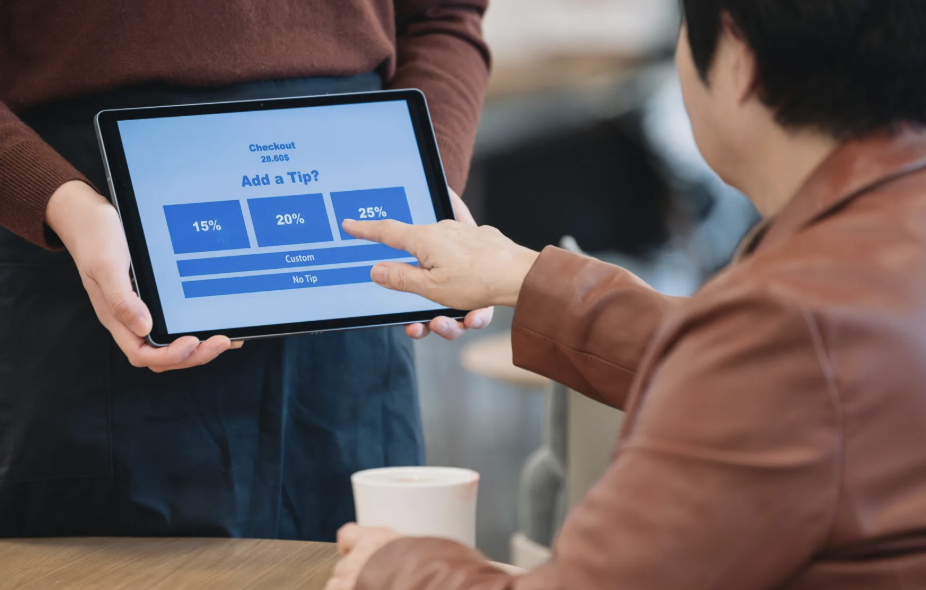
Walk into a coffee shop, a car wash, or a self-checkout lane today and there is a decent chance a tablet will spin toward you and ask for a tip before you have even received anything. This moment, repeated dozens of times a week across an expanding range of businesses, has produced a backlash now widely described as tipping fatigue. Shoppers are not rejecting the idea of tipping itself; they are rejecting the sense that tipping has become a default demand built into the checkout process rather than a voluntary reward for service.
The frustration is less about the money, though that matters too, and more about the feeling of being cornered into a decision in front of a cashier, with a screen displaying preset percentages that start at fifteen or eighteen and climb from there. What used to be a private, considered choice has turned into a public, timed one, and consumers are starting to push back in ways that are reshaping how businesses think about pricing and payment design.
The scale of the shift is easy to underestimate because it happened through dozens of small software updates rather than one visible policy change. No single company announced that tipping would now apply to drive-through windows, vending-style kiosks, or takeout counters. Instead, a wave of point-of-sale vendors quietly rolled the feature into their standard checkout flow, and the custom spread business by business, often without a deliberate decision from the owner at all.
The Expansion Of Tipping Beyond Restaurants
Tipping in the United States and several other countries has historically clustered around a narrow set of services: sit-down restaurants, hair salons, taxis, and hotel staff. Point-of-sale software changed that geography almost overnight. Once a vendor like a payment processor built a tip prompt into its standard checkout flow, any business using that system inherited the option, whether or not tipping had ever been customary for that type of transaction.
Bakeries, dog groomers, auto shops, and retail counters that never previously solicited tips began doing so simply because the technology made it the path of least resistance for the business owner. Turning the prompt off often requires a deliberate setting change that many small business owners never make, either because they assume customers expect it or because the extra revenue, however awkward to ask for, is hard to turn down voluntarily.
- Quick-service cafes: Counter staff now face tip screens even for drip coffee poured in under a minute.
- Self-checkout kiosks: Some grocery and convenience chains have tested tip prompts despite no staff member performing a service at all.
- Takeout and delivery pickup: Customers picking up their own order are still shown a tip screen as if full table service had occurred.
- Service add-ons: Car washes, mobile repair services, and equipment rentals now frequently include a tip step bundled into the payment flow.
Why Digital Checkout Screens Changed The Math
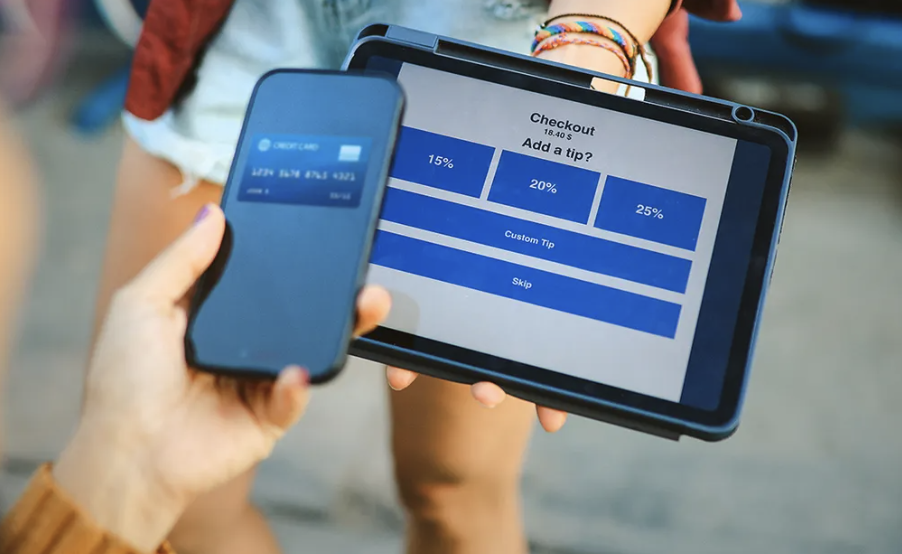
The shift from a paper tip line to a digital prompt did more than change the format; it changed the psychology of the decision. A paper receipt let a customer calculate a tip privately, often after they had left the counter, with time to think. A tablet screen asks for an answer immediately, while a staff member is often standing nearby watching the screen turn, which collapses the time available to think and replaces it with social pressure.
Default percentages compound the effect. Behavioral pricing research has shown that people are far more likely to select whatever option is presented first or made visually largest, even when a smaller or custom amount would better reflect their real experience. A screen that opens with eighteen, twenty, and twenty-five percent as the only visible choices nudges customers toward a higher baseline than they might have chosen on their own, and the option to leave no tip or select a lower amount is frequently buried behind an extra tap.
The Role Of Social Observation
Most tip prompts appear on a screen the customer must physically rotate or hand back to an employee, meaning the choice is rarely truly private. Customers report feeling watched during the selection, even when the employee is looking elsewhere, and that perceived observation is enough to push many people toward a tip they would not have otherwise chosen to leave.
Some payment terminals compound this by playing a short chime or displaying a thank-you message only after a tip percentage is selected, reinforcing the sense that skipping the prompt breaks an unspoken social script in front of a stranger holding the card reader.
Social Pressure Built Into The Interface
Interface design plays a bigger role in this trend than most shoppers realize. The order in which options appear, the size of the buttons, and the presence or absence of a visible zero-tip option all shape outcomes in measurable ways. Payment processors have, in effect, built persuasion architecture into a transaction that used to be governed by informal social norms rather than software defaults.
- Anchoring percentages: Starting the options at a higher baseline shifts the average tip upward regardless of service quality.
- Hidden no-tip paths: Burying the “no tip” option behind a secondary screen or smaller text discourages its use.
- Public screen rotation: Turning the device toward the customer in front of staff adds a layer of social accountability to a financial decision.
- Pre-filled custom fields: Some systems default the custom tip field to a dollar amount rather than leaving it blank, nudging higher totals.
- Speed pressure: A countdown or waiting cashier discourages customers from pausing to calculate what they truly intend to give.
Generational Divides In Tipping Tolerance
Not every age group reacts to the new wave of tip prompts the same way. Older consumers, who grew up with a clearer, narrower sense of when tipping applied, tend to express the sharpest frustration at being asked for gratuity in settings they consider self-service. Younger consumers, who have spent more of their shopping lives inside app-based and kiosk-driven checkout systems, report less surprise at the prompts but equally strong fatigue from their sheer frequency.
- Older shoppers: Frequently describe the prompts as a break from established social norms around when a tip is appropriate.
- Younger shoppers: Tend to accept the prompts as a normal part of digital checkout but report higher cumulative frustration from volume.
- Frequent app users: Customers who order through delivery and ride-hailing apps encounter tip prompts so often that many describe becoming numb to them, tapping through without real consideration.
- Infrequent in-person shoppers: Those who shop mostly online and only occasionally visit physical counters report the strongest irritation, since each prompt feels unfamiliar rather than routine.
This divide matters for businesses trying to calibrate their checkout design, since a prompt calibrated for a younger, app-native customer base may land very differently with an older clientele accustomed to a narrower definition of tipping.
Consumer Backlash And Its Early Signs
Surveys conducted by several market research firms over the past two years show a clear erosion in willingness to tip for counter service and quick transactions, even as willingness to tip for traditional table service has stayed comparatively steady. Social media has amplified the frustration, with short videos mocking tip screens at unlikely businesses racking up millions of views and prompting public conversations about where a reasonable line should sit.
A growing share of consumers now report selecting the custom amount option specifically to enter zero, a small act of resistance against the preset percentages they feel were chosen to maximize revenue rather than reflect fair compensation. Others have begun avoiding businesses altogether that they perceive as tipping aggressively for self-service transactions, voting with their feet rather than confronting staff directly over an uncomfortable screen interaction.
A Shift In What Counts As Fair
Part of the backlash stems from a redefinition happening in real time about what tipping is supposed to reward. Traditionally, a tip compensated for a server’s direct, personalized labor during an extended interaction. Many of the new prompts appear for transactions with no comparable labor involved, which strikes consumers as an attempt to offload wage responsibility from the employer onto the customer under the guise of gratitude.
Retailers Caught Between Wages And Optics
Business owners did not necessarily set out to create this friction. In many cases, tipping prompts arrived bundled with a point-of-sale system upgrade, and turning them off required navigating settings menus that were not designed to be intuitive. Some owners firmly believe the prompts help supplement wages for workers who might otherwise earn less, especially in industries where margins are thin and raises are hard to fund directly.
- Thin-margin operators: Small cafes and shops often rely on tips to keep worker pay competitive without raising menu prices outright.
- Franchise standardization: Chains frequently inherit default settings from corporate point-of-sale contracts rather than choosing them locally.
- Fear of customer backlash either way: Removing a tip option can upset staff expecting the income, while keeping it risks upsetting customers.
- Limited technical control: Some franchise owners report they cannot adjust default percentages without corporate approval.
This bind leaves many businesses stuck between two forms of customer frustration: annoyance at being asked to tip for minimal service, or annoyance at feeling a worker was shortchanged if the prompt disappears entirely. Neither outcome resolves the underlying tension, which is ultimately about compensation structure rather than interface design.
Guilt Tipping And Its Hidden Costs
Researchers studying consumer psychology have coined the term guilt tipping to describe the specific discomfort shoppers feel when declining a prompt in front of a worker, even for a transaction where tipping was never previously expected.
This guilt produces a quiet, cumulative financial drain: a customer who tips an extra few dollars multiple times a week across a growing list of businesses can end up spending a sizable sum annually on tips they never budgeted for and would not have chosen to give under less pressured circumstances.
The emotional cost compounds the financial one. Repeated exposure to tip prompts across unrelated transactions has left many consumers reporting a kind of decision fatigue specific to checkout moments, where every purchase now carries an extra layer of negotiation that did not exist a decade ago. That fatigue is a major driver of the broader backlash, because it turns an occasional judgment call into a near-constant one.
Alternatives Businesses Are Testing

A small but growing number of businesses have started experimenting with approaches designed to reduce friction while still supporting worker pay, responding directly to the backlash rather than ignoring it.
- Service charges built into pricing: Some restaurants have replaced tipping entirely with a modest built-in service fee disclosed upfront on the menu.
- Lower default percentages: A handful of chains have quietly reduced their starting suggested tip from twenty percent to a more modest range.
- Opt-in rather than opt-out design: Newer point-of-sale updates let customers tap a clearly visible “no thanks” button with the same visual weight as the percentage options.
- Transparent wage disclosures: A few businesses now post signage explaining exactly how tips are distributed among staff, aiming to rebuild trust in the system.
- Removing prompts for self-service: Some self-checkout and kiosk operators have dropped tip screens altogether after customer complaints made the practice a reputational liability.
Early results from businesses that have simplified or removed aggressive tip prompts suggest customer satisfaction scores improve, even when total tip revenue dips slightly, which indicates owners may be trading a small amount of short-term income for a longer-term improvement in how customers perceive the brand. A few owners who made the switch report that the goodwill shows up in repeat visits rather than in the tip line itself, which is harder to measure on a weekly sales report but tends to matter more over a full year of operation.
Measuring The Real Scale Of The Shift
Quantifying tipping fatigue precisely is difficult, since most payment processors treat their tip data as proprietary and few release detailed breakdowns by industry. Still, a handful of patterns show up consistently across the surveys and point-of-sale reports that have been made public over the past two years.
- Average suggested percentages have risen: Several widely used payment platforms have incrementally raised their default starting percentage, pushing the typical baseline higher than it was five years earlier.
- Zero-tip selections have increased in quick-service settings: Multiple reports note a rising share of customers actively choosing the no-tip option at counters, cafes, and kiosks.
- Complaint volume has grown on review platforms: Mentions of tip prompts in negative reviews for quick-service businesses have climbed, often citing the prompt itself rather than service quality.
- Average total tip amounts in full-service dining have stayed roughly flat: Suggesting the backlash is concentrated in newly tipped categories rather than traditional ones.
Taken together, these threads point to a market correction in progress: tipping is not disappearing, but its boundaries are being renegotiated in real time by consumers who feel the custom expanded faster than their willingness to pay for it did.
Why Transparency Changes The Response
Businesses that explain upfront how a tip will be used, whether pooled among staff or distributed individually, tend to see less resistance than those that simply present a prompt without context. The difference suggests much of the backlash is rooted in uncertainty rather than outright opposition to the idea of tipping for service workers.
Final Thoughts
Tipping fatigue is less a rejection of generosity and more a reaction to automation quietly expanding a social custom into a default financial demand. Checkout software turned a private, considered gesture into a timed, observed one, and shoppers have noticed the shift even when they cannot always articulate exactly what changed.
Businesses that respond with transparency and restraint, rather than maximizing every prompt for extra revenue, are likely to earn more durable customer goodwill than those that keep pushing percentages higher while trust keeps eroding in the background.
The businesses that adjust early, lowering defaults and explaining where the money goes, stand the best chance of keeping loyal customers who might otherwise quietly walk away to a competitor with a calmer checkout screen.
Frequently Asked Questions
1. What exactly is tipping fatigue?
Tipping fatigue describes the growing frustration and decision exhaustion consumers feel from being repeatedly prompted to tip across an expanding range of businesses and transaction types, many of which never traditionally involved tipping at all.
2. Why are tip screens appearing at businesses that never asked for tips before?
Most of the expansion traces back to point-of-sale software that bundles a default tip prompt into its checkout flow. Business owners inherit the feature automatically unless they take deliberate steps to disable it, which many never do.
3. Does declining a tip prompt affect how I am treated as a customer?
In most cases, no, since the prompt usually appears after the transaction has already been processed or the service has already been provided. The discomfort is almost entirely social rather than tied to any real consequence.
4. Are default tip percentages designed to influence what I choose?
Yes. Behavioral research on default options and anchoring shows that the percentages and layout displayed on a screen measurably shift what customers select, typically toward a higher amount than they would choose without a preset prompt in front of them.
5. Is tipping fatigue changing how much people tip overall?
Survey data suggests willingness to tip for quick-service and self-checkout transactions has declined, while tipping for traditional, extended service like restaurant dining has remained comparatively stable, pointing to a narrowing rather than a wholesale rejection of tipping culture.
6. What can businesses do to reduce tipping fatigue among their customers?
Options include lowering default percentages, making a no-tip choice equally visible, disclosing exactly how tips are distributed, and limiting prompts to transactions where a worker has performed a clear, personalized service.