

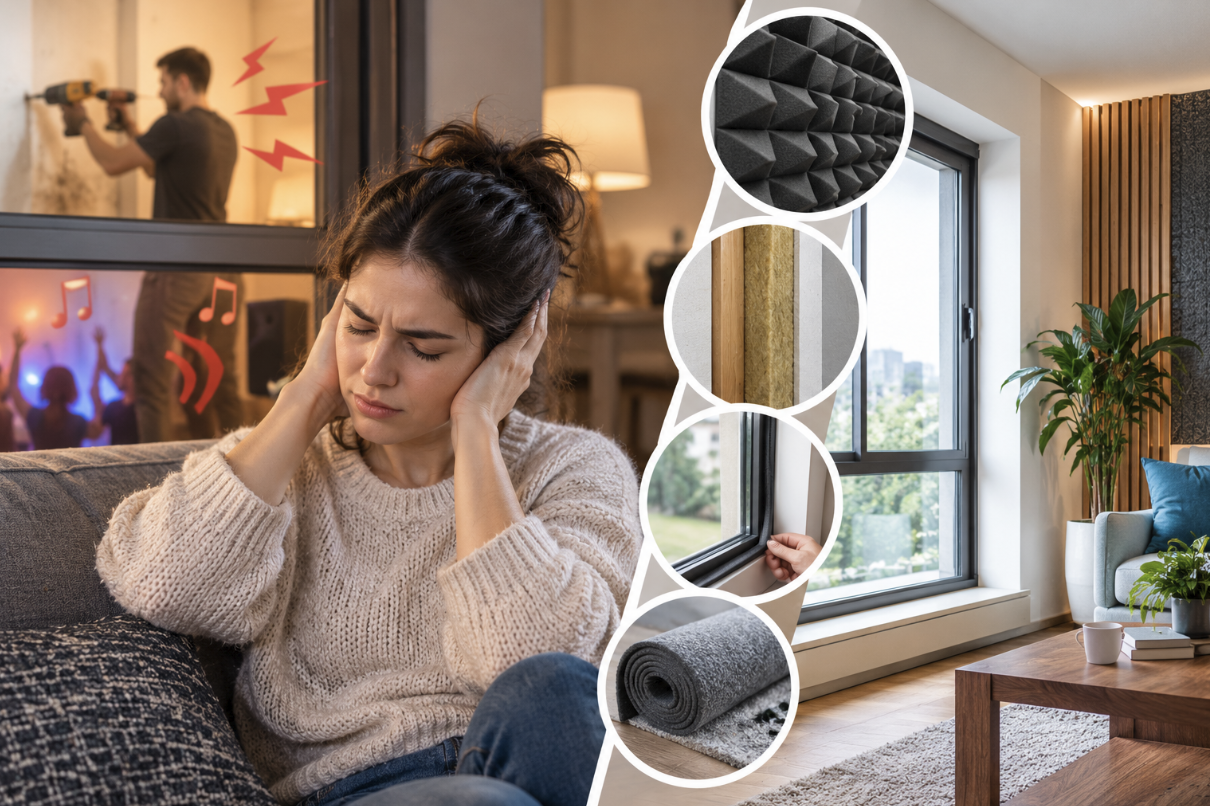
A neighbor’s late-night television, a roommate’s footsteps overhead, or a busy street just outside a bedroom window can turn a home into a source of constant low-level stress rather than a place of rest.
Noise complaints to city services and property managers have climbed in many urban areas as denser housing, thinner construction materials, and more people working from home have combined to make unwanted sound a daily irritant rather than an occasional nuisance.
In response, a home soundproofing industry that once catered mostly to musicians and recording studios has expanded into ordinary households, offering everything from acoustic panels to window inserts designed for renters who cannot make permanent changes to a leased apartment.
Why Noise Has Become a Bigger Problem
Several overlapping trends have pushed noise complaints upward over the past decade. Urban infill construction has added more multi-unit buildings in cities that once had lower density, often built with cost-driven materials that provide less sound insulation than older construction methods that relied on thicker plaster walls and solid wood floors.
Remote and hybrid work arrangements have also placed more people at home during daytime hours when neighborhood noise, from construction to delivery trucks to a neighbor’s home gym, would once have gone unnoticed by someone away at an office.
Short-term rentals booked through platforms like Airbnb have introduced a new category of noise complaint entirely, with permanent residents in a building sometimes finding themselves living next to a rotating cast of vacationers unfamiliar with a building’s normal expectations around quiet hours. Cities including New York and Los Angeles have fielded a steady stream of 311 service complaints tied to short-term rental noise, prompting some municipalities to tighten regulations specifically targeting party houses and disruptive short-term guests.
The combination of denser housing, more people home during the day, and a rotating population of short-term renters has created conditions where noise conflicts are more frequent than they were a generation ago.
- Thinner construction materials: Modern building methods often prioritize cost and speed over the sound insulation found in older construction.
- More daytime occupancy: Remote work has increased the number of hours people spend at home, raising exposure to daytime neighborhood noise.
- Short-term rental turnover: Rotating vacationers unfamiliar with a building’s norms contribute to a rise in noise complaints in some cities.
- Denser urban infill: Adding more housing units to existing neighborhoods has placed more people in closer proximity than before.
Legal Options for Noise Complaints
Most cities enforce noise ordinances that set decibel limits or designate quiet hours, typically overnight, during which excessive sound can result in a citation or fine if reported and verified. Enforcement varies widely by jurisdiction, since some cities dispatch code enforcement officers with sound meters to measure a complaint objectively, while others rely on officer discretion or leave enforcement almost entirely to civil disputes between neighbors or tenants and landlords.
Renters facing a persistent noise problem generally have more limited legal options than homeowners, since a lease agreement’s quiet enjoyment clause provides some protection but rarely offers a fast or reliable remedy against a noisy neighbor in an adjacent unit.
Homeowners associations and condominium boards have become another layer of noise regulation in many communities, with bylaws that can address everything from hard-surface flooring requirements intended to reduce impact noise transmission to specific rules about hours for home renovation work. Disputes that reach this level sometimes escalate into formal mediation or even legal action between neighbors, especially in dense condominium buildings where one owner’s flooring choice can directly affect the unit below.
This patchwork of city ordinances, lease terms, and building-specific rules means the practical remedy available to someone dealing with noise depends heavily on where they live and what type of housing they occupy.
- City noise ordinances: Most set decibel limits or designated quiet hours, typically enforced through code enforcement or police response to a complaint.
- Lease quiet enjoyment clauses: Standard in most rental agreements, though enforcement usually requires the tenant to document and report the issue themselves.
- HOA and condo bylaws: Many buildings require hard-surface flooring to include an underlayment specifically to limit impact noise reaching the unit below.
- Mediation and legal escalation: Persistent disputes between neighbors sometimes require formal mediation or small claims court when informal complaints fail to resolve the problem.
Documentation plays a central role in nearly every one of these enforcement paths, since a single complaint without supporting evidence rarely results in real action from a landlord, homeowners association, or city agency. Keeping a log of dates, times, and the nature of a disturbance, along with audio or video recordings where legally permitted, gives a resident far more leverage when escalating a complaint than a verbal report alone.
Some tenants have found success working with a building manager to install a shared noise monitoring device in a common area, which can provide objective data in disputes where one neighbor’s account of events conflicts directly with another’s.
Acoustic Panels and DIY Soundproofing Products
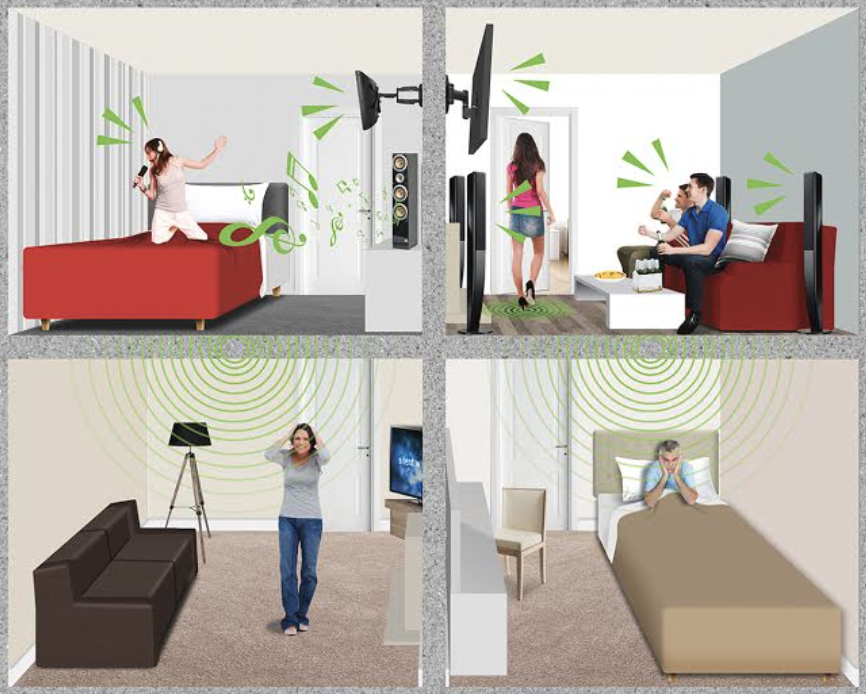
The consumer soundproofing market has grown to serve renters and homeowners who want to reduce noise without the cost of a full construction project. Acoustic foam panels, often marketed toward home studio builders, have found a broader audience among people simply trying to dampen echo and reduce sound transmission through a shared wall.
These panels work best at absorbing sound within a room rather than blocking sound from passing through a wall entirely, a distinction that many first-time buyers do not grasp until after a purchase fails to solve a problem involving a neighbor’s noise coming through a shared surface.
Products designed specifically for blocking rather than absorbing sound, such as mass-loaded vinyl and dense soundproofing curtains, address the more common renter complaint of noise passing between units rather than an echo problem within a single room. Door sweeps and weatherstripping, originally designed for energy efficiency, have found a second market among people trying to reduce sound leaking under and around doors, a relatively inexpensive fix that addresses one of the most common gaps in an apartment’s sound barrier.
Window inserts, which fit inside an existing window frame without permanent modification, have become popular among renters living near busy streets who cannot replace windows themselves but want real noise reduction from traffic and street activity outside.
- Acoustic foam panels: Best suited for reducing echo and reverberation within a room rather than blocking sound from an adjacent space.
- Mass-loaded vinyl: A dense material designed to block sound transmission through walls, floors, or ceilings more effectively than foam panels.
- Door sweeps and weatherstripping: Inexpensive fixes that address one of the most common gaps allowing sound to leak between rooms or units.
- Window inserts: Renter-friendly inserts that fit inside an existing window frame to reduce noise from traffic without permanent modification.
- Soundproofing curtains: Heavy, layered curtains that block and absorb sound simultaneously, useful for windows and open doorways alike.
Renter-Friendly Solutions Versus Permanent Fixes
Renters face a distinct constraint that homeowners do not: most soundproofing solutions that involve drilling, adhesive, or structural modification are off the table without a landlord’s explicit permission, and many lease agreements prohibit these changes outright. This has driven demand for products specifically marketed as removable or temporary, including tension-mounted curtain rods, adhesive-backed acoustic panels designed to peel off without damaging paint, and area rugs with thick padding that reduce impact noise transmitting to the unit below without any permanent installation at all.
Homeowners have more latitude to pursue permanent fixes, including adding insulation within wall cavities during a renovation, upgrading to solid-core interior doors that block more sound than hollow doors, and installing engineered flooring with an integrated underlayment designed specifically to reduce impact noise.
These structural changes cost far more than consumer soundproofing products but address the underlying sound transmission problem more effectively than surface-level fixes, making them a worthwhile investment for a homeowner planning to stay in a property for years rather than a renter who might move again within a lease term or two.
- Removable acoustic panels: Adhesive-backed panels designed to peel off without damaging paint give renters a temporary soundproofing option.
- Thick area rugs and padding: A simple and renter-friendly way to reduce impact noise transmitting to a unit below.
- Solid-core doors: A permanent upgrade available to homeowners that blocks much more sound than a standard hollow-core door.
- Engineered flooring underlayment: Installed during a renovation, this addresses impact noise at its source rather than masking it after the fact.
Professional Soundproofing and When It Makes Sense
For noise problems that consumer products cannot resolve, professional soundproofing contractors offer services ranging from adding resilient channels behind drywall to installing double-layer wall assemblies designed to interrupt sound transmission between units. This level of intervention typically makes financial sense only for homeowners dealing with a persistent, serious noise problem, such as a shared wall with a home theater setup on the other side, or for people building a dedicated home studio or music practice space where sound isolation is central to the room’s purpose.
Contractors specializing in acoustic treatment generally begin with an assessment of where sound is entering a space, since a room with strong overall wall construction but a single weak point, such as an electrical outlet or a poorly sealed window, can undermine an otherwise solid soundproofing effort. This diagnostic step is often overlooked by homeowners attempting a do-it-yourself approach, who may invest in expensive materials applied to the wrong surface while leaving the real source of sound leakage unaddressed.
Professional contractors bring the acoustic knowledge to identify these gaps accurately, which can save money in the long run compared with a trial-and-error approach using consumer products alone.
- Sound source assessment: A proper acoustic evaluation identifies the specific weak points in a room before recommending any materials or construction changes.
- Resilient channel installation: Metal channels installed behind drywall decouple the wall surface from the framing, reducing sound transmission between rooms.
- Double-layer wall assemblies: Adding a second layer of drywall with a damping compound between layers can substantially cut sound passing through a shared wall.
- Cost versus benefit: Professional treatment makes the most financial sense for serious, persistent noise problems rather than everyday apartment living situations.
Home studio builders and musicians remain among the most common clients for full acoustic treatment, since their needs go beyond simply reducing an annoying noise and instead require real isolation to prevent sound from disturbing neighbors during recording or practice sessions at any hour. For this group, the cost of professional treatment is often justified by the alternative, which might mean renting external studio space indefinitely or facing repeated noise complaints from neighbors in a shared building.
Homeowners without this specific need are usually better served starting with lower-cost consumer products and only escalating to a professional consultation if those measures fail to resolve a persistent problem.
Smart Home Tools for Monitoring and Managing Noise
A newer category of smart home devices has entered the noise conversation, offering residents a way to monitor sound levels in their own space and, in some cases, document disturbances for a future complaint or dispute.
Decibel-monitoring apps paired with a smartphone’s built-in microphone can provide a rough estimate of ambient noise levels, useful for a resident trying to establish whether a neighbor’s noise really exceeds a city’s legal threshold before filing a formal complaint. Dedicated noise monitoring devices, some marketed specifically to parents and building managers, offer more precise and continuous measurement than a smartphone app, along with alert features that notify a resident when sound crosses a set threshold.
White noise machines and sound masking devices offer a complementary approach, addressing the problem from the listener’s side rather than trying to reduce the noise at its source.
Rather than blocking or absorbing unwanted sound, these devices generate a steady background sound that makes intermittent noises, such as footsteps or a distant conversation, less noticeable and less disruptive to sleep or concentration. This approach has grown popular among renters who cannot modify their unit at all, offering a low-cost, portable solution that requires no installation and can move with a person from one apartment to the next.
- Decibel-monitoring apps: Smartphone apps offer a rough estimate of ambient sound levels, useful for informal documentation before a formal complaint.
- Dedicated noise monitors: Standalone devices provide more precise, continuous measurement than a phone app, with alerts when noise crosses a threshold.
- White noise machines: Generate steady background sound that masks intermittent disturbances rather than addressing the noise source directly.
- Portable and renter-friendly: Sound masking devices require no installation and can move easily between apartments during a lease term.
Parents of young children have become one of the more consistent customer groups for white noise machines and sound masking devices, using them to help a baby or toddler sleep through household noise or a sibling’s activity in another room.
This use case predates the broader noise-complaint conversation but has grown alongside it, with manufacturers now marketing combined products that serve both purposes, offering nursery-friendly designs alongside app connectivity aimed at adults managing a noisy living situation of their own.
Final Thoughts
The rise of home soundproofing reflects a practical response to housing conditions that have made unwanted noise a more frequent part of daily life, from thinner apartment walls to a growing population working from home during hours once spent at an office.
Products once aimed narrowly at musicians and recording studios have found a much wider audience among ordinary renters and homeowners looking for relief from a noisy neighbor or a busy street. The right solution depends heavily on whether someone rents or owns, how long they plan to stay in a space, and how serious the underlying noise problem really is.
The range of options now available, from a fifteen-dollar door sweep to a full professional acoustic treatment, gives people more control over their home’s sound environment than they had a decade ago.
Frequently Asked Questions
1. Can renters legally install soundproofing without a landlord’s permission?
Most leases restrict permanent modifications, so renters typically need to stick with removable options like curtains, rugs, and adhesive panels unless a landlord explicitly approves a more permanent change.
2. What is the difference between soundproofing and sound absorption?
Soundproofing blocks sound from passing through a barrier like a wall or door, while sound absorption reduces echo and reverberation within a room; many products address only one of these two distinct problems.
3. How effective are window inserts at reducing outside noise?
Window inserts can noticeably reduce noise from traffic and street activity by adding an extra sealed air gap, though they will not fully eliminate sound the way a full window replacement designed for acoustic performance might.
4. Do city noise ordinances apply to daytime noise as well as nighttime?
Most ordinances focus primarily on nighttime quiet hours, though some cities also regulate excessive daytime noise from construction, machinery, or amplified sound in residential areas.
5. Is professional soundproofing worth the cost for an average apartment?
For most renters dealing with typical apartment noise, consumer products offer a better cost-to-benefit ratio; professional soundproofing tends to make more sense for homeowners with a persistent, serious noise problem or a dedicated studio project.
6. What is the fastest and cheapest way to reduce noise in a rented apartment?
Sealing gaps around doors and windows with weatherstripping, adding thick rugs, and hanging heavy curtains typically deliver a real improvement for a modest cost without requiring any permanent changes to the unit.