

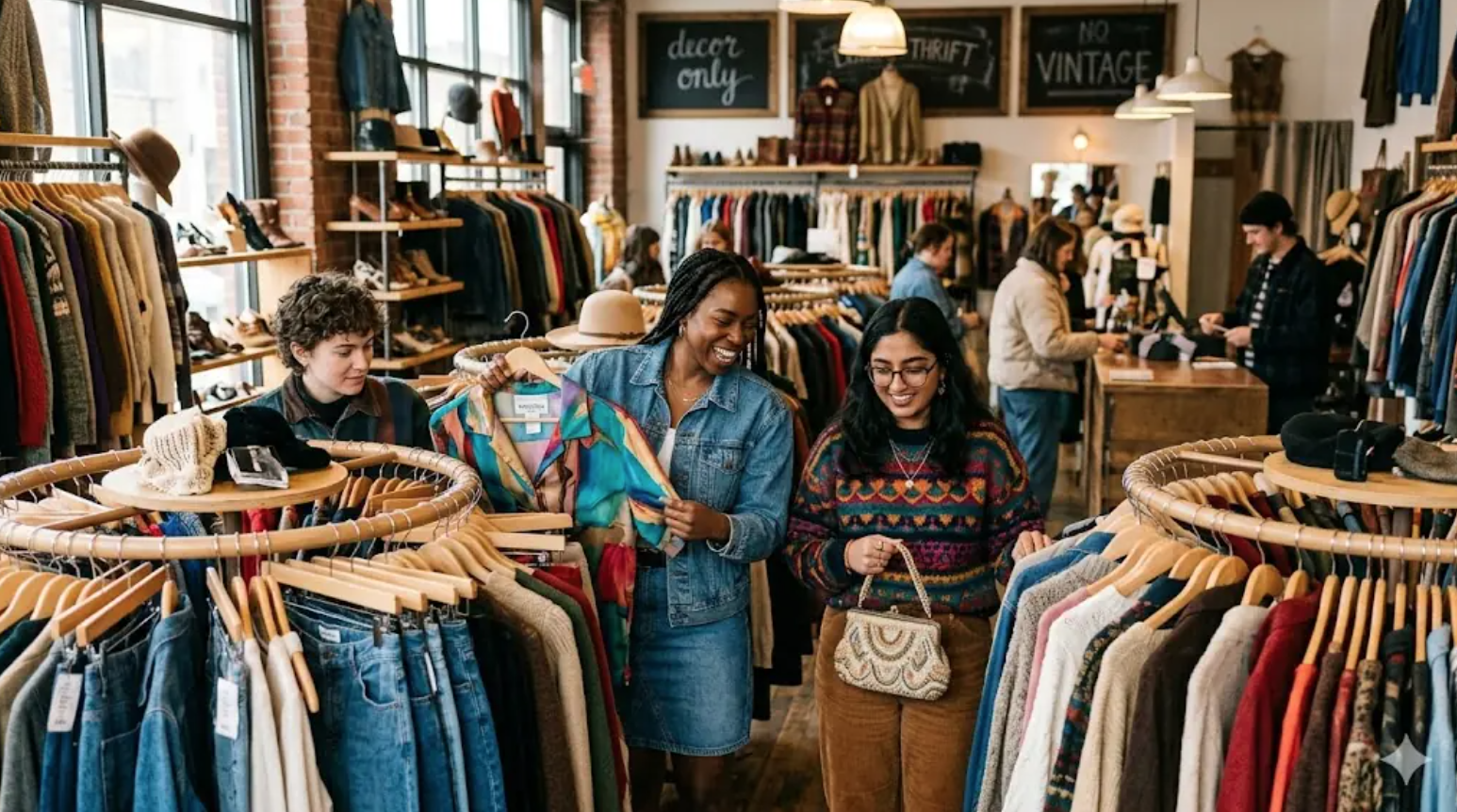
When Jordan Lee needed an interview outfit last year, the first place they checked was not a department store but ThredUp, where a barely worn blazer cost a fraction of retail and arrived within days. “I used to think secondhand meant thrift store digging for hours,” Lee said. “Now it’s an app, a search bar, and a filter for my size.”
That shift from rummaging to browsing is central to why resale shopping has moved from a niche budget tactic to a mainstream retail category, with platforms like Poshmark, Depop, The RealReal, and Vinted turning what used to be a weekend errand into a routine part of how people shop.
From Stigma to Selling Point
Secondhand shopping once carried a quiet stigma, associated with financial necessity rather than choice. That framing has largely inverted. Buying used items now signals savvy consumerism, environmental awareness, and even taste, especially among younger shoppers who treat resale platforms as a primary shopping destination rather than a fallback option.
Fashion resale in particular has benefited from this shift, with vintage and pre-owned designer pieces gaining cultural cachet that mass-produced new items often lack. Owning something with history, rather than something identical to what thousands of other shoppers bought new, has become a selling point rather than a compromise. Stylists and fashion editors increasingly cite resale finds when discussing their own wardrobes publicly, a visibility shift that would have been unusual even a decade earlier, when secondhand shopping was rarely mentioned outside of thrift-specific circles.
Fashion historians point out that this is not the first time secondhand goods have carried social cachet, noting that vintage shopping has periodically enjoyed cultural moments of prestige throughout the twentieth century, usually tied to specific subcultures rather than the broad mainstream audience
resale platforms now reach. What distinguishes the current wave is scale: a curated vintage boutique once served a small, geographically limited customer base, while a resale app can connect a single seller’s closet to buyers anywhere with an internet connection.
The language around the category has shifted alongside the behavior. Marketing copy across resale platforms now favors words like curated, vintage, and pre-loved rather than used or secondhand, a rebranding effort that reflects and reinforces the category’s improved cultural standing.
Social media has reinforced the shift further. Outfit videos built entirely around secondhand and thrifted pieces routinely perform well, with creators treating a well-priced resale find as a badge of styling skill rather than a budget compromise. That framing has trickled down into everyday shopping conversation, where mentioning a great deal found secondhand now reads as a flex among friends rather than something to downplay.
Platforms Driving the Shift
A handful of marketplaces have built the infrastructure that made large-scale resale practical, each targeting a slightly different segment of the market.
- Peer-to-peer apps: platforms like Poshmark, Depop, and Vinted let individual sellers list directly from their closets, often with social features like following and commenting that resemble traditional social media.
- Curated consignment services: companies such as The RealReal authenticate and photograph luxury goods professionally, charging a commission in exchange for trust and quality assurance.
- Retailer-run resale programs: brands including Patagonia, REI, and Levi’s now operate their own secondhand storefronts, capturing resale value that would otherwise go entirely to third-party platforms.
- Rental-adjacent hybrids: services blending rental and resale models let customers try items before committing to a purchase, blurring the line between owning and borrowing.
Each model solves a slightly different problem for shoppers, and many consumers now use several platforms simultaneously depending on what they are buying, treating a peer-to-peer app as suitable for casual basics while reserving a curated consignment service for higher-value purchases where verified condition and authenticity matter more.
Newer entrants continue to test additional variations on these core models, including platforms built specifically around a single category, such as children’s clothing or specific sneaker brands, where deep category expertise can command a loyal, repeat customer base that a general marketplace struggles to replicate with the same depth of specialized knowledge and pricing accuracy.
Investors have taken notice of this specialization trend, funding a wave of niche resale startups over the past several years on the theory that a smaller, deeply engaged customer base focused on a single category can be more valuable per user than a broader, more generic marketplace competing on price and selection alone. Whether that theory holds up over a full economic cycle remains an open question, since niche platforms tend to carry thinner margins for error if buyer demand in their specific
category softens, a risk that becomes more visible during broader spending pullbacks than during the steady growth years that funded much of this recent wave of niche resale investment.
Economic Motivations Behind the Boom
Rising prices across nearly every retail category have made resale shopping a practical response to tightening budgets, not just an ethical preference. A well-maintained secondhand item frequently costs a fraction of its new equivalent while delivering comparable function, and inflation-weary shoppers have taken notice.
- Price relief: secondhand goods routinely list well below original retail price, offering real savings on everything from furniture to formalwear.
- Access to premium brands: resale makes higher-end products reachable for shoppers who could never justify the new-retail price point.
- Selling as supplemental income: many consumers now treat their own closets as a revenue source, listing unused items to offset spending elsewhere.
- Reduced impulse-purchase regret: knowing an item can be resold later lowers the perceived risk of trying something new.
This last point has become a distinct selling strategy in its own right, with some shoppers openly describing a new purchase’s resale potential as part of their buying decision, effectively treating clothing and accessories the way collectors once treated limited-edition goods. Some brands have started actively courting this mindset, highlighting a product’s durability and resale track record directly in marketing copy, an approach that would have seemed counterintuitive to a traditional retailer more interested in repeat new-item purchases than in supporting a thriving secondary market for its own goods.
Sustainability Messaging and Its Limits
Environmental concerns are frequently cited as a driver of resale growth, and the fashion industry’s well-documented waste problem gives that framing real weight. Buying used items reduces demand for new manufacturing and keeps garments out of landfills longer, both real environmental benefits that resale platforms lean into heavily in their marketing.
That said, sustainability advocates caution against treating resale as a complete solution. The convenience and affordability of resale platforms can also encourage more overall consumption, since shoppers may buy and sell more frequently simply because the transaction feels lower stakes. A garment that gets resold five times still required the same manufacturing footprint to produce, and rapid turnover does not eliminate the environmental cost of the original production.
Some environmental researchers have started tracking a phenomenon they describe informally as closet churn, where the ease of reselling encourages shoppers to treat clothing as more disposable rather than less, buying with the expectation of quick resale rather than long-term use. That pattern complicates the straightforward narrative that resale is an unambiguous environmental win.
Shipping also complicates the environmental accounting in ways that rarely make it into marketing materials. Each resale transaction typically involves its own packaging and transportation footprint, sometimes crossing the country for a single garment, and researchers who study lifecycle emissions caution that these logistics costs need to be weighed against the manufacturing emissions avoided before declaring any individual transaction a clear net environmental benefit.
Retailers Adapting to a New Competitor
Traditional retailers initially treated resale platforms as competition eating into new-item sales. Many have since shifted strategy, recognizing that customers who shop secondhand often remain loyal to the same brands over time, just through a different purchasing channel.
- Trade-in programs: brands increasingly offer store credit for returned used items, which they then resell directly, capturing margin that would otherwise flow to a third party.
- Authenticated resale partnerships: some retailers partner with platforms like ThredUp’s resale-as-a-service offering to run their own branded secondhand storefronts without building the infrastructure themselves.
- Marketing collaboration: cross-promotion between new and resale channels helps retailers stay connected to budget-conscious shoppers without discounting new inventory directly.
A growing number of brands now display a resale option directly on the same product page as a new item, letting shoppers choose between the two without leaving the retailer’s own website, a design choice aimed at keeping the entire transaction, new or used, within the brand’s ecosystem. Retail analysts describe this integration as a defensive move as much as an offensive one, since a customer who can find a used version of a product on the brand’s own site has less reason to search a third-party marketplace, keeping the entire relationship, and the associated data on customer preferences, under the retailer’s own roof.
Authentication and the Trust Problem
Scaling resale to a mainstream audience required solving a problem that thrift stores never fully addressed: trust. Buyers need confidence that a listed item is authentic, accurately described, and in the condition promised, especially for higher-value goods like designer handbags or electronics.
- Third-party authentication services: dedicated verification companies inspect items before they ship, reducing counterfeit risk for luxury resale transactions.
- Seller rating systems: reputation scores and review histories help buyers gauge reliability before completing a purchase from an individual seller.
- Buyer protection policies: return windows and money-back guarantees, increasingly standard across major platforms, reduce the perceived risk of buying unseen used goods.
- Photo and condition standards: platforms have introduced stricter listing requirements, including multiple angles and close-ups of flaws, to reduce disputes after sale.
Some platforms have gone further, incorporating artificial intelligence tools trained to detect counterfeit patterns in submitted photos, adding an automated layer of screening before an item ever reaches a human authenticator, which has helped reduce both fraud rates and the time it takes to list a verified item for sale.
Dispute resolution has also grown more standardized across the industry. Where an early resale marketplace might have left a buyer and seller to negotiate a refund privately, most major platforms now operate structured mediation processes with clear timelines, required documentation, and defined outcomes, closer in spirit to the buyer protection systems built by large general marketplaces than to the informal norms of early peer-to-peer resale.
Generational Patterns in Resale Adoption
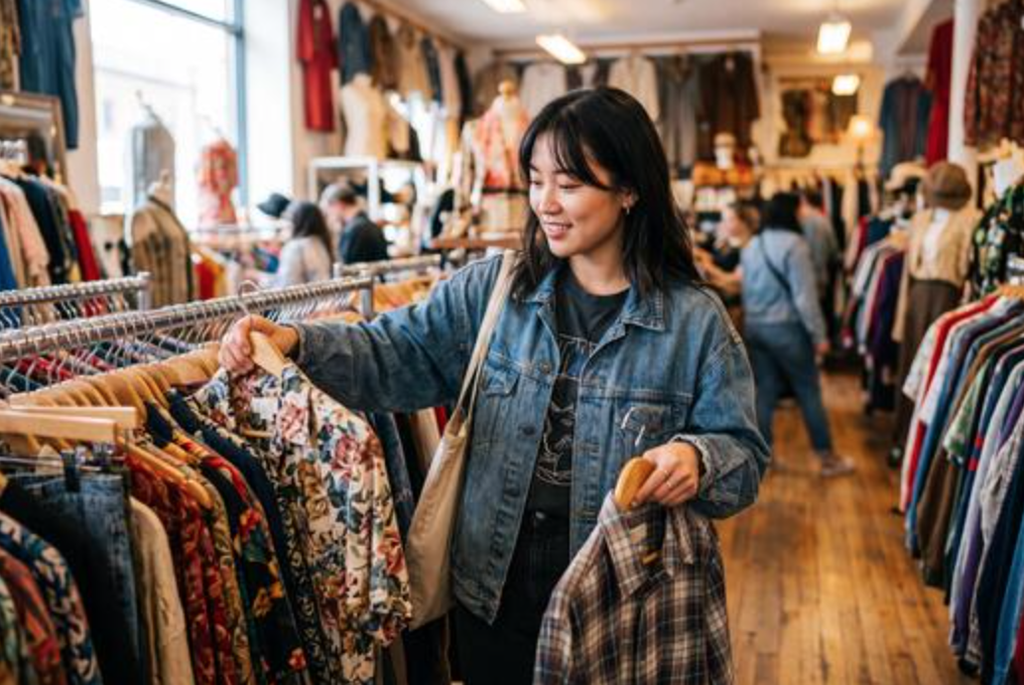
Younger shoppers, especially those who came of age with resale apps already established, treat secondhand purchasing as a default option rather than a deliberate ethical choice. Surveys of shopping habits across age groups consistently show younger consumers more willing to buy used clothing, electronics, and furniture than older generations, who sometimes retain lingering associations between secondhand goods and financial hardship.
- Digital-native comfort: younger shoppers navigate resale apps as fluently as new-retail sites, treating the interface differences as minor rather than a barrier.
- Identity expression: vintage and one-of-a-kind resale finds allow for personal style differentiation that mass-market new retail struggles to offer at scale.
- Values alignment: environmental and anti-consumerist values, common among younger shoppers, map naturally onto resale as a lower-impact alternative to buying new.
Older shoppers are gradually closing the gap as well, especially as platforms improve their search filters and sizing accuracy, two friction points that previously discouraged less digitally fluent shoppers from treating resale as a reliable primary shopping channel.
Technology Tools Reshaping the Shopping Experience
The technical infrastructure behind resale has advanced well beyond a simple listings page, and much of the category’s recent growth traces directly to tools that made buying and selling used goods faster and less error-prone than it was even a few years earlier.
- Visual search functionality: shoppers can photograph an item they like and find similar secondhand listings instantly, removing the need to guess at brand names or search terms.
- Automated pricing suggestions: sellers listing an item receive data-informed price recommendations based on comparable recent sales, reducing the guesswork that once made pricing a barrier to listing.
- Size and fit prediction tools: some platforms now use a buyer’s past purchase history to flag whether a listed item is likely to fit, addressing one of the biggest sources of resale returns.
- Integrated shipping and label generation: built-in shipping tools that generate labels and calculate costs automatically have removed much of the logistical friction that once made selling feel like a chore reserved for dedicated hobbyists.
Payment infrastructure has matured alongside these features as well, with escrow-style systems that hold a buyer’s payment until the item arrives as described, reducing fraud risk on both sides of a transaction between strangers. Combined, these tools have turned what used to require real effort and risk tolerance into a shopping experience that increasingly resembles buying something new, a shift that has done as much to drive mainstream adoption as any cultural or environmental argument for secondhand goods.
Final Thoughts
Resale marketplaces have moved secondhand shopping from the margins of retail into its mainstream, driven by a combination of financial pressure, environmental awareness, and improved trust infrastructure that earlier thrift models never offered at scale. The trend has reshaped how both consumers and retailers think about ownership, turning what was once a one-way transaction into an ongoing cycle where items retain value long after their first buyer moves on.
As platforms continue refining authentication and convenience, resale looks less like an alternative to traditional retail and more like a permanent, parallel channel that mainstream shopping habits have fully absorbed.
Frequently Asked Questions
Is resale shopping cheaper than buying new?
In most cases, yes, especially for categories like designer clothing, furniture, and electronics where new-retail markups are steep. Savings vary by category and condition, and heavily discounted new sales can sometimes rival resale prices, but on average secondhand remains the lower-cost option.
How do resale platforms make money?
Most charge a commission on completed sales, ranging from a flat percentage to tiered structures based on sale price, and some also offer optional paid promotion for sellers wanting more visibility. A few platforms charge buyers a service or shipping fee on top of the seller’s commission.
Are luxury items on resale platforms guaranteed authentic?
Platforms with dedicated authentication services, such as The RealReal, physically inspect items before listing them for sale, offering stronger guarantees than peer-to-peer marketplaces without formal verification. Buyers on unverified platforms should exercise more caution and rely on seller reputation and return policies.
Does buying secondhand really reduce environmental impact?
It generally reduces demand for new manufacturing and extends the usable life of existing goods, both recognized environmental benefits. It is not a complete offset for overconsumption, since frequent buying and reselling can still encourage a higher volume of transactions overall.
Can anyone sell on these platforms, or do you need special approval?
Most peer-to-peer platforms allow any user to list items with minimal barriers to entry, while consignment-style services typically require submitting items for review and acceptance before listing. Requirements and fees vary widely between platforms.
Why are traditional retailers launching their own resale programs?
Retailers want to capture the resale value and customer loyalty that would otherwise flow entirely to third-party platforms, while also appealing to budget-conscious and environmentally minded shoppers without discounting their new inventory. It also lets brands maintain a relationship with customers across the full lifecycle of a product.