

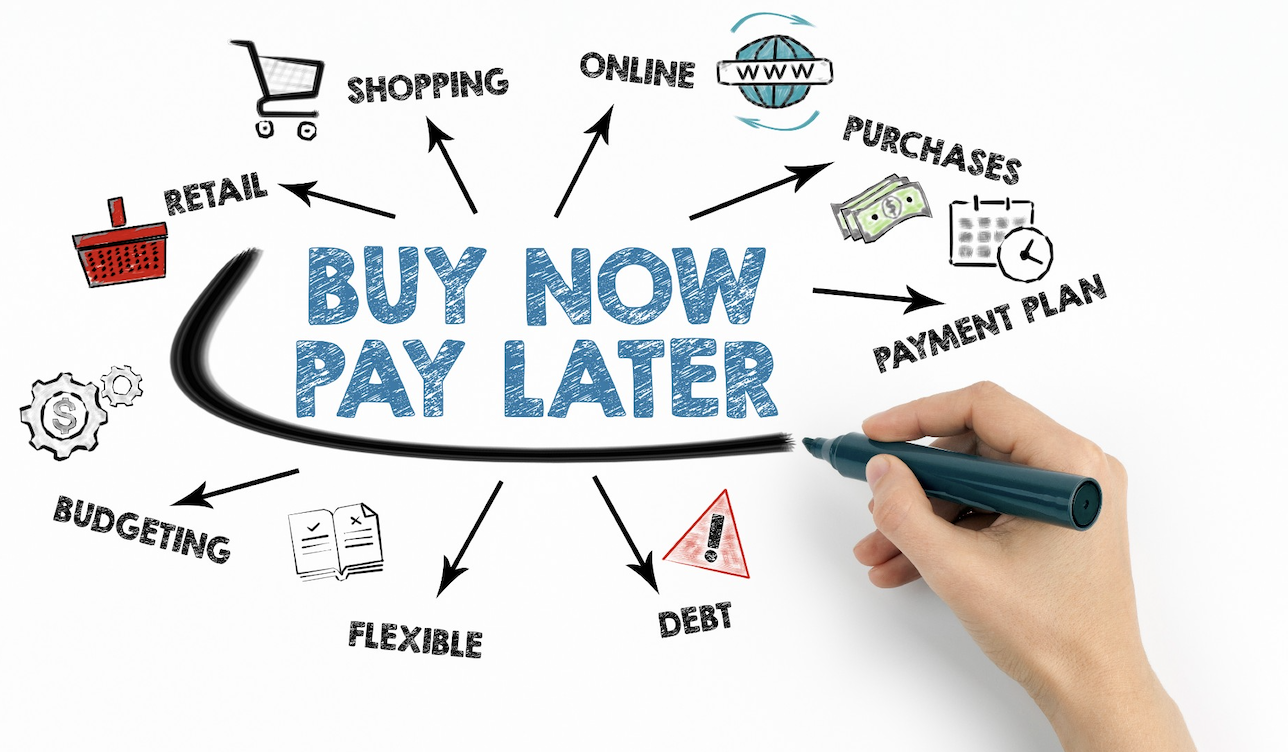
A Klarna checkout button now shows up next to sneakers, concert tickets, plane tickets, and even grocery delivery orders, offering to split a fifty-dollar purchase into four interest-free payments of twelve dollars and fifty cents. It feels harmless, almost like a budgeting tool.
But financial counselors are increasingly flagging a troubling pattern: shoppers stacking multiple buy now, pay later loans across Klarna, Afterpay, and Affirm all at once, often without realizing how many payments they’ve committed to until several come due the same week. What was marketed as a smarter, friendlier alternative to credit cards has become, for a growing number of everyday consumers, a quieter, harder-to-track form of debt.
How Buy Now, Pay Later Took Over Checkout
BNPL’s rise tracks closely with the growth of e-commerce and a generation of shoppers, especially younger consumers, who grew up wary of credit card debt after watching family members struggle through the 2008 financial crisis. Companies like Klarna, Afterpay, and Affirm positioned themselves as the anti-credit-card: no interest if paid on time, simple installment structures, and integration directly at checkout so approval takes seconds rather than the weeks a traditional credit application might require.
Retailers embraced BNPL aggressively because it demonstrably increases average order value and conversion rates. Offering a “four payments of $25” option instead of “$100 today” measurably reduces cart abandonment, giving merchants a clear financial incentive to promote these options prominently at checkout.
- Seamless checkout integration: BNPL options appear directly at the point of purchase, often pre-selected or prominently displayed above traditional payment methods.
- No traditional credit check: Approval is typically instant and doesn’t always involve the hard credit inquiries associated with credit cards.
- Interest-free short-term structure: Standard plans split purchases into four payments over six weeks, avoiding interest if payments are made on time.
- Retailer partnerships: Major retailers including Target, Walmart, and Amazon have integrated BNPL options directly into their checkout systems.
The combination of psychological ease and retailer promotion turned what started as a niche payment option into a mainstream checkout expectation across nearly every major online retailer within just a few years.
The pandemic accelerated adoption further, as online shopping surged and shoppers facing income uncertainty gravitated toward payment methods that spread cost over time without the compounding interest anxiety associated with credit cards. Klarna in particular expanded aggressively during this period, striking high-profile partnerships and marketing campaigns that positioned the service as a lifestyle brand rather than simply a lending product, complete with celebrity-adjacent advertising that blurred the line between fintech and fashion marketing.
Who Uses BNPL and Why It’s Growing
Usage skews heavily toward younger consumers, especially Gen Z and younger millennials, many of whom have limited credit history and view BNPL as more accessible than traditional credit cards. Surveys from financial research firms consistently show BNPL usage concentrated among shoppers who describe themselves as budget-conscious, ironically the same group most vulnerable to the debt stacking that concerns regulators.
Lower-income households have also adopted BNPL at notable rates, often using it for essential purchases like groceries, gas, and utility bills rather than the discretionary fashion and electronics purchases the services were originally marketed around. This shift toward using installment loans for necessities is one of the clearest warning signs financial researchers point to.
- Gen Z and young millennials: The heaviest overall users, often citing limited credit card access or a preference to avoid interest-bearing debt entirely.
- Budget-conscious shoppers: Use BNPL specifically to manage cash flow around paycheck timing rather than as a form of extra spending power.
- Lower-income households: Increasingly report using BNPL for essential expenses like groceries and utilities, not just discretionary purchases.
- Repeat, stacked users: A growing segment uses multiple BNPL providers simultaneously, sometimes without a clear picture of total outstanding obligations.
This last group worries researchers most, since juggling payments across Klarna, Afterpay, and Affirm at once makes it far easier to lose track of total debt exposure than a single consolidated credit card statement would.
Holiday shopping season has become an especially revealing window into BNPL usage patterns, with providers reporting sharp spikes in new accounts and transaction volume every November and December as shoppers stretch gift budgets across several installment plans at once. Financial counselors report a corresponding spike in January and February client inquiries from people who took on more BNPL debt during the holidays than they’d fully accounted for, discovering the true scale of their obligations only once the post-holiday bills started arriving in a concentrated wave.
Behind the Business Model of Klarna and Affirm
BNPL companies make money primarily by charging merchants a fee, typically two to eight percent of transaction value, in exchange for the increased sales conversion the payment option drives. This merchant-funded model is why consumers rarely pay interest on standard short-term plans; the retailer is effectively subsidizing the cost in exchange for a bigger sale, and it’s paid by the business rather than passed directly to the shopper at checkout.
Late fees and longer-term financing options, which Affirm in particular has expanded into, do carry interest, sometimes at rates comparable to or exceeding traditional credit cards. Missed payments on standard short-term plans can also trigger fees, though regulations in various markets have begun capping how much providers are allowed to charge.
Klarna and Affirm have both pursued public listings and banking licenses in various markets, signaling ambitions to become full-fledged financial institutions rather than niche checkout add-ons, a shift that would bring them under much closer regulatory supervision than the checkout-widget business model they started with. Beyond transaction fees and interest, several providers have also begun leveraging the detailed purchase behavior data they collect, exploring targeted advertising partnerships built on knowing exactly what, where, and how often their users buy.
This business model explains why BNPL providers are so aggressive about retailer integration: their profitability depends far more on transaction volume than on consumers carrying and repaying interest-bearing balances at all.
Debt Signals Regulators Are Watching
Financial regulators in the United States, United Kingdom, and Australia have all opened inquiries into BNPL practices, driven largely by a lack of standardized reporting to credit bureaus that makes it difficult for anyone, lenders or consumers themselves, to see a full picture of someone’s BNPL debt load. The Consumer Financial Protection Bureau has pushed for BNPL providers to be regulated more like traditional credit card issuers, including stronger dispute rights and clearer disclosure requirements.
The core concern is debt stacking: because each individual BNPL loan is small and doesn’t typically appear on standard credit reports, a consumer can accumulate obligations across four or five different providers simultaneously without any single lender, or credit monitoring service, seeing the full total.
- Limited credit bureau reporting: Most BNPL loans historically haven’t appeared on standard credit reports, obscuring total consumer debt exposure.
- Debt stacking risk: Consumers can hold multiple simultaneous BNPL loans across providers with no centralized way to track combined obligations.
- Weaker consumer protections: Compared to credit cards, BNPL loans have historically offered fewer formal dispute rights and less regulatory oversight.
- Rising delinquency rates: Industry data has shown increasing missed payment rates, notably among users holding multiple concurrent BNPL loans.
Regulatory scrutiny has already prompted some changes, including efforts by credit bureaus like Equifax and TransUnion to begin incorporating BNPL data into standard credit files, though implementation remains inconsistent across the industry.
The United Kingdom moved further than most jurisdictions, announcing plans to bring BNPL providers under the Financial Conduct Authority’s regulatory umbrella, requiring affordability checks similar to those already mandated for traditional consumer credit products. Australia has pursued a comparable path, treating BNPL as a form of credit requiring licensing rather than the lightly regulated payment technology category it originally occupied. These international moves have put pressure on U.S. regulators to catch up, with consumer advocacy groups pointing to overseas frameworks as evidence that stronger oversight is both feasible and increasingly treated as standard practice among peer economies.
Common Ways Shoppers Get Overextended
Financial counselors describe a fairly consistent pattern in how BNPL debt spirals for the consumers who struggle most. It rarely starts with a single large purchase; instead, it builds gradually through several smaller purchases spread across different providers, each individually manageable but collectively overwhelming once payment dates start converging.
The psychological ease of BNPL, splitting a purchase into small numbers that feel negligible, can also short-circuit the normal mental math people apply before a purchase, making it easier to buy things that wouldn’t get approved by a person’s own budget if the full price were shown upfront.
- Provider stacking: Using Klarna for one purchase, Afterpay for another, and Affirm for a third without tracking the combined total owed.
- Payment date clustering: Multiple BNPL plans initiated close together often result in several payments coming due the same week, straining cash flow.
- Underestimating small purchases: Splitting a small item into payments can obscure how the convenience adds up across dozens of transactions over time.
- Overdraft and late fee spirals: Missed BNPL payments can trigger both provider late fees and separate bank overdraft charges on the same missed transaction.
Recognizing this pattern early, before payments start clustering unmanageably, is the single most effective thing financial counselors recommend for anyone using multiple BNPL services regularly.
Marketing plays a role in accelerating overextension too. BNPL options are frequently presented as the default or most prominent payment choice at checkout, sometimes displayed in larger, more colorful buttons than standard payment methods, a design choice that behavioral economists note nudges shoppers toward installment plans even when they hadn’t originally planned to use one. Combined with influencer marketing that frames BNPL as a smart budgeting hack rather than a form of borrowing, the messaging shoppers encounter rarely emphasizes the debt dimension of what they’re agreeing to at the actual point of purchase.
Weighing BNPL Against Credit Cards
The comparison consumers and regulators keep returning to is whether BNPL is in real terms safer than a credit card or just a rebranded version of the same underlying risk. Standard BNPL plans truly avoid interest if paid on time, which is a real advantage over credit cards that charge interest immediately on any carried balance. But credit cards offer stronger legal protections, established dispute processes, and, crucially, consolidated visibility into total debt through a single statement.
- Interest structure: Standard BNPL avoids interest with on-time payment; credit cards charge interest immediately on any unpaid balance.
- Credit building: Traditional credit card use, when reported and managed well, builds credit history; BNPL reporting remains inconsistent across providers.
- Debt visibility: A credit card statement shows a single consolidated balance; multiple BNPL loans require checking several separate apps to see the full picture.
- Consumer protections: Credit cards carry decades of established regulatory protection; BNPL regulation is still catching up in most markets.
Neither option is inherently better in every case; the right choice depends on a person’s spending discipline and whether they’re using either tool for a single planned purchase or as an ongoing way to manage tight cash flow.
Warning Signs of BNPL Overload
Financial advisors have started publishing informal checklists to help consumers recognize when BNPL use has crossed from convenient to risky, since there’s no single official metric like a credit utilization ratio to flag the problem automatically. The signs tend to be behavioral rather than purely numerical.
- Multiple active providers: Using three or more BNPL services simultaneously makes it substantially harder to track total obligations accurately.
- Using BNPL for essentials: Splitting payments for groceries or gas, rather than discretionary purchases, often signals underlying cash flow strain.
- Missed or late payments: Repeated late fees across providers indicate payment obligations have outpaced actual available income.
- New BNPL loans to cover old ones: Taking out a new installment plan specifically to free up cash for a previous BNPL payment is a serious red flag.
Anyone noticing several of these patterns at once is generally better served stepping back, listing every active BNPL obligation in one place, and building a single repayment plan before taking on any new purchases through these services.
Credit counseling agencies report that BNPL debt increasingly shows up alongside other forms of consumer debt during client intake, rather than as an isolated issue on its own, suggesting it often functions as one symptom of broader financial strain rather than a standalone problem. Counselors specifically trained on this newer debt category now routinely ask clients to list every BNPL app installed on their phone during initial consultations, since many clients simply forget how many separate accounts they’ve opened over time until prompted to check.
Final Thoughts
Buy now, pay later services succeeded by solving a real problem: making purchases feel manageable without the intimidation of a credit application or the fear of compounding interest building silently in the background. But that same ease of use has made it easy for debt to accumulate quietly across multiple providers, invisible to any single lender or credit report.
As regulators catch up and credit bureaus begin incorporating BNPL data, the industry is likely to look more like traditional credit within a few years. Until then, the responsibility for tracking total exposure across Klarna, Afterpay, Affirm, and the rest still falls almost entirely on the individual consumer juggling them.
Frequently Asked Questions
1. Is buy now, pay later the same as a credit card?
Not exactly. Standard BNPL plans typically split a purchase into a fixed, short number of payments with no interest if paid on time, while credit cards offer an ongoing revolving line of credit that charges interest on any balance not paid in full each month.
2. Does using BNPL affect your credit score?
It depends heavily on the specific provider and increasingly on newer credit bureau reporting practices that are still rolling out. Historically, most standard BNPL loans didn’t appear on credit reports at all, though that’s beginning to change as major bureaus adapt their systems to capture this data.
3. Can you have multiple BNPL loans at once?
Yes, and this is exactly what concerns regulators and financial counselors most, since there’s currently no single centralized system tracking a person’s total BNPL obligations across different providers the way credit bureaus have long tracked credit card debt.
4. What happens if you miss a BNPL payment?
Most providers charge a late fee, and some may restrict future purchases until the account is brought current again. Consequences vary quite a bit by provider and are generally less severe than credit card delinquency, though that gap is steadily narrowing as rules continue to evolve.
5. Why do retailers offer BNPL if it costs them money?
Retailers pay a merchant fee to BNPL providers because offering installment payments measurably increases conversion rates and average order values, making the fee worthwhile from a sales perspective even though it reduces the per-transaction profit margin on each individual sale.
6. Are BNPL services regulated like banks?
Not uniformly yet. Regulators in the United States, United Kingdom, and Australia have all pushed for stronger oversight, and some jurisdictions have begun applying credit-style regulations, but comprehensive, consistent rules are still being developed and vary a great deal from country to country.