

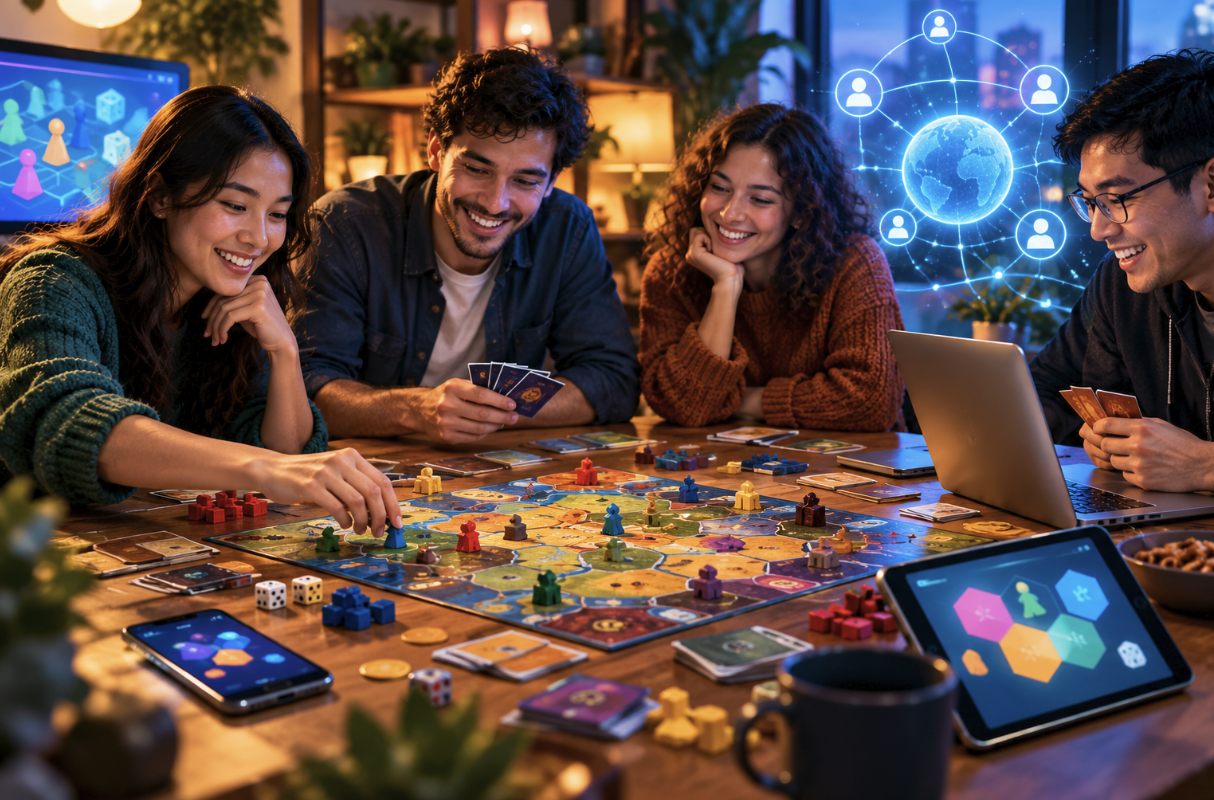
Given the sheer volume of streaming content, mobile games, and digital entertainment competing for attention today, board games might seem like exactly the kind of analog pastime destined for permanent decline. Instead, the tabletop gaming industry has experienced sustained, genuine growth over the past decade, with dedicated game stores, gaming cafes, and crowdfunded game designs finding an increasingly enthusiastic and diverse audience despite, or perhaps partly because of, the digital entertainment landscape surrounding this resurgence.
Understanding what has driven this genuine renaissance, and what specifically draws people back to a physical table with cards and dice rather than a screen, reveals something meaningful about what digital entertainment, for all its convenience, still doesn’t fully replicate for a significant segment of players.
Measuring the Genuine Scale of This Industry Growth
The tabletop gaming industry has grown substantially over recent years, with market research consistently showing sustained revenue increases across board games, card games, and related tabletop hobby products. This growth has occurred despite, not because of, a shrinking pool of entertainment alternatives, occurring precisely during a period when digital entertainment options have simultaneously expanded dramatically across streaming, gaming, and social media platforms.
Crowdfunding platforms have played a particularly significant role in this growth, allowing independent game designers to fund and produce ambitious, niche tabletop projects that traditional publishing models might never have supported, given the specialized, smaller audience many of these games target compared to mass-market entertainment products. This crowdfunding ecosystem has meaningfully diversified the games available, moving well beyond the handful of classic titles that dominated tabletop gaming for previous generations.
- Sustained revenue growth has occurred across the broader tabletop gaming industry
- This growth happened alongside, not despite, expanding digital entertainment options
- Crowdfunding has enabled ambitious, niche projects traditional publishing wouldn’t support
- Available game variety has diversified considerably beyond previous generations’ classic titles
The Social Connection Digital Gaming Struggles to Fully Replicate
Board games fundamentally require gathering people in the same physical space, creating a specific kind of social interaction that even sophisticated online multiplayer gaming doesn’t fully replicate. Players describe value in reading facial expressions, physical tells, and the unstructured conversation that naturally occurs around a game table, elements that video chat during online gaming sessions captures only partially compared to genuine, shared physical presence.
This social dimension has proven particularly appealing as many people report feeling that digital communication, despite its convenience, sometimes feels less genuinely connecting than in-person interaction. Board game nights provide a structured, low-pressure format for social gathering that doesn’t require the more open-ended, sometimes effortful conversation that purely social gatherings without a shared activity can sometimes demand from participants.
- Physical presence enables social nuance that digital multiplayer gaming captures only partially
- Reading facial expressions and physical cues adds a dimension screens cannot fully replicate
- Many people describe in-person interaction as more genuinely connecting than digital alternatives
- Structured game formats provide comfortable, low-pressure social gathering opportunities
How Modern Game Design Has Evolved Beyond Older Classics
Contemporary board game design has evolved considerably beyond the luck-heavy, often lengthy classic games many people associate with the category, incorporating more sophisticated strategic depth, shorter play times, and mechanics specifically designed to keep every player meaningfully engaged throughout an entire game rather than eliminated early and left waiting for others to finish. This design evolution has broadened tabletop gaming’s appeal considerably beyond its traditional core hobbyist audience.
Cooperative games, where players work together against the game itself rather than competing against each other, have grown particularly popular, offering a different social dynamic than traditional competitive formats and appealing to groups who prefer collaborative rather than adversarial social interaction during game night. This design innovation has helped tabletop gaming reach audiences who might have previously found traditional competitive board games less appealing or accessible.
- Modern design incorporates greater strategic depth and considerably shorter play times
- Games increasingly avoid early player elimination that left people waiting inactively
- Cooperative game formats offer collaborative rather than purely competitive social dynamics
- This design evolution has broadened tabletop gaming’s appeal beyond traditional hobbyist audiences
A Closer Look at How Gaming Cafes Have Built New Communities
Consider a dedicated board game cafe that opened in a mid-sized city, offering a library of hundreds of games alongside food and drinks, charging a modest entry fee for unlimited access to their collection throughout a visit. What began as a modest local business gradually built a genuine, recurring community, with regular weekly meetup groups forming around specific game types and skill levels that continued gathering consistently over subsequent years.
Patrons describe the venue providing something their existing social circles didn’t offer: a low-commitment way to meet new people who shared a specific interest, without the pressure of a formal social event or the superficiality some describe experiencing in purely digital social interactions. The cafe’s owner noted that many patrons initially came for the games but stayed specifically for the community connections that developed through consistent, repeated attendance over subsequent months and years.
Educational and Cognitive Benefits Drawing Families to the Hobby
Beyond entertainment value, many parents have gravitated toward board games specifically for the cognitive and social skill development they offer children, including strategic thinking, patience, and graceful handling of both winning and losing within a structured, supervised setting. This educational dimension has made board games appealing as a deliberate alternative to screen time, offering engaging entertainment that doesn’t come with the same concerns some parents express about excessive digital device use among children.
Family game nights have become a deliberately cultivated tradition in many households, valued specifically for creating dedicated, phone-free time together that competes directly against the pull of individual digital entertainment consumption that can otherwise fragment family time into separate, parallel screen-based activities happening in the same room without genuine shared interaction occurring at all.
- Board games offer cognitive and social skill development within a structured setting
- Many parents view tabletop gaming as a deliberate alternative to excessive screen time
- Family game nights provide dedicated, phone-free shared time increasingly valued by households
- This educational dimension has expanded the hobby’s appeal to families specifically
The Role of Online Communities in Supporting an Offline Hobby
Somewhat paradoxically, online communities have played a substantial role in supporting board gaming’s offline resurgence, with dedicated forums, review platforms, and social media groups helping enthusiasts discover new games, organize local meetups, and share strategy discussion that enriches the offline playing experience considerably. This combination illustrates that digital and analog entertainment don’t necessarily compete in a strictly zero-sum fashion, sometimes instead genuinely reinforcing and supporting each other in ways that benefit both.
Digital tools have also made board gaming more accessible in practical ways, with apps that handle complex scorekeeping or rules lookup reducing friction that might otherwise discourage newer players from trying more complex games, while online reviews help players find games genuinely suited to their specific group size, preferences, and available time before making a purchase decision.
- Online communities support offline board gaming through discovery, discussion, and meetup organization
- Digital and analog entertainment can reinforce rather than purely compete with each other
- Companion apps reduce friction around scorekeeping and complex rules for newer players
- Online reviews help players find games genuinely suited to their specific preferences and needs
How Digital Platforms Have Expanded Access to Niche Titles
Beyond physical gaming cafes and stores, digital marketplaces and platforms have played a meaningful role in expanding access to niche and independent board game titles that a shopper might never encounter in a typical retail store’s necessarily limited physical shelf space. Digital previews, rules explanations, and community reviews help players evaluate unfamiliar games before committing to a purchase, reducing the risk that once made trying obscure, specialized titles a considerably bigger gamble for casual buyers.
Print-on-demand and smaller production runs, made economically viable partly through crowdfunding and digital marketing reaching dedicated niche audiences directly, have allowed genuinely specialized games serving smaller communities to reach their specific audience without requiring the large production minimums that traditional retail distribution once demanded. This shift has meaningfully diversified what’s available to enthusiasts willing to look slightly beyond mainstream retail offerings.
- Digital platforms provide previews and reviews reducing risk for trying unfamiliar niche games
- Community-driven discovery helps specialized titles reach interested, dedicated audiences
- Print-on-demand production makes smaller, niche runs economically viable for creators
- This digital infrastructure has meaningfully diversified available options beyond mainstream retail
The Growing Overlap Between Board Games and Digital Adaptations
Many popular tabletop games have received digital adaptations, available as mobile or computer applications that allow playing the same core game against remote opponents or AI without requiring physical components at all. Rather than cannibalizing physical game sales, this trend has often worked in the opposite direction, with digital versions frequently serving as accessible introductions that drive interested players toward purchasing physical copies for the fuller, more social in-person experience many ultimately prefer once they’ve discovered a game they genuinely enjoy.
Publishers have increasingly embraced this dynamic deliberately, sometimes releasing digital adaptations specifically as marketing and discovery tools rather than treating them as competing revenue streams cannibalizing physical sales. This symbiotic relationship between digital and physical versions of the same underlying game illustrates the broader pattern of digital and analog entertainment reinforcing rather than simply competing against each other within this particular hobby space.
- Digital adaptations of popular tabletop games serve as accessible introductions for new players
- Rather than cannibalizing sales, digital versions often drive interest toward physical purchases
- Publishers increasingly treat digital adaptations as deliberate marketing and discovery tools
- This symbiotic relationship illustrates broader patterns of digital and analog reinforcement
What This Resurgence Suggests About Entertainment Preferences Broadly
Board gaming’s sustained growth alongside expanding digital entertainment options suggests that convenience and variety, while genuinely valuable, don’t fully satisfy every entertainment preference people hold, particularly around genuine social connection and shared, focused activity that doesn’t compete for attention against the passive, sometimes isolating nature that certain digital entertainment formats can involve. This doesn’t represent digital entertainment’s failure, but rather illustrates that different entertainment formats serve genuinely different underlying needs and preferences.
For many enthusiasts, board games occupy a genuinely distinct niche within their broader entertainment habits, complementing rather than replacing digital options, chosen specifically for occasions calling for focused social interaction that streaming a show or playing a solo video game simply wasn’t designed to provide in quite the same deliberately shared, interactive way.
Final Thoughts
Board games’ unexpected renaissance reflects something genuine about enduring human preferences for shared, focused social activity, even amid an entertainment landscape increasingly dominated by digital, often solitary options. As this resurgence continues, it offers a useful reminder that entertainment preferences remain genuinely diverse, with older, analog formats finding renewed relevance rather than inevitable obsolescence in a digital age.
Frequently Asked Questions
1. Is the board game resurgence limited mainly to younger generations?
No, the hobby has attracted genuine interest across age groups, with many families and older adults discovering or returning to tabletop gaming alongside younger, newer enthusiasts entering the broader hobby.
2. Do modern board games require significant time commitment to learn and play?
This varies enormously; many contemporary games specifically prioritize shorter play times and simpler rules compared to older classics, making the hobby considerably more accessible than some might assume.
3. How has crowdfunding specifically changed what board games get made?
Crowdfunding has allowed niche, ambitious designs targeting smaller specific audiences to get funded and produced, diversifying available games well beyond what traditional mass-market publishing typically supported previously.
4. Are cooperative board games genuinely different from traditional competitive ones?
Yes, cooperative games have players working together toward a shared goal against the game itself, creating a notably different social dynamic than traditional competitive formats where players compete directly against each other.
5. Can board gaming provide genuine cognitive benefits for adults, not just children?
Many games do engage strategic thinking, planning, and social skills relevant across age groups, though research specifically quantifying adult cognitive benefits remains less extensive than research focused on childhood development.
6. Do board game enthusiasts typically own a large personal collection?
This varies enormously; many casual players own just a handful of favorites, while dedicated hobbyists sometimes build substantial personal libraries, with gaming cafes and libraries offering access without requiring individual ownership.
7. Has the board game resurgence affected how traditional toy retailers stock their shelves?
Yes, many retailers have expanded their tabletop gaming sections considerably, and dedicated specialty stores have opened in many areas specifically to serve this growing, increasingly diverse customer base.
8. Do professional or competitive board game tournaments genuinely exist?
Yes, several popular strategy games have established competitive tournament scenes with dedicated players, regional and international events, and in some cases modest prize pools for top-performing competitors.
9. How has the board game hobby community used social media to grow its audience?
Video content showcasing gameplay, unboxing new releases, and strategy discussion has helped introduce the hobby to audiences who might never have encountered it through traditional retail exposure alone.