

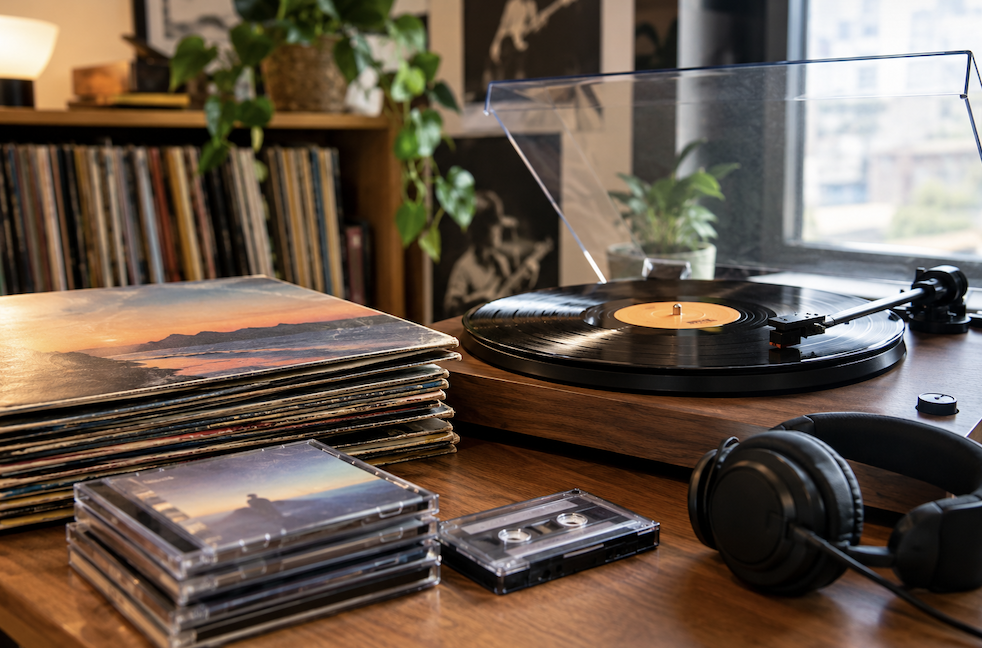
In an era where nearly any song, movie, or show sits available at the tap of a screen, vinyl record sales have climbed for well over a decade, and physical media in general has found a surprisingly devoted, growing audience despite streaming’s overwhelming convenience. This resurgence isn’t simply nostalgia; it reflects genuine, specific reasons that digital convenience hasn’t managed to fully replace.
Understanding what draws people back toward records, physical film collections, and other tangible formats reveals something meaningful about what streaming, for all its convenience, still doesn’t quite deliver for a meaningful segment of music and film enthusiasts.
The Numbers Behind Vinyl’s Sustained Growth
Vinyl record sales have grown consistently for more than a decade, eventually surpassing CD sales in recent years despite CDs remaining a more convenient and typically less expensive physical format. This growth has continued even as streaming has become the dominant way most people consume music day to day, suggesting vinyl serves a genuinely different purpose than simply playing songs.
Independent record stores, many of which struggled or closed during the height of digital music’s disruption, have found renewed footing as vinyl demand has grown, with some cities seeing new record shops open specifically to serve this returning customer base rather than merely surviving on nostalgia alone.
- Vinyl sales have grown steadily for over a decade despite streaming’s dominance
- Vinyl has surpassed CD sales even though CDs remain more affordable and convenient
- Independent record stores have found renewed viability amid this resurgence
- This growth suggests vinyl fulfills needs beyond simple music playback
The Tangible Ownership Streaming Can’t Replicate
Streaming offers access to music, not ownership of it, a distinction that matters more to some listeners than it might initially seem. A streaming subscription can change its catalog, raise prices, or disappear entirely, while a physical record sits on a shelf, genuinely owned, regardless of what happens to any particular streaming service down the road.
This sense of permanence appeals to collectors who want a tangible relationship with music they care about, something a digital file or streaming entry simply can’t replicate in quite the same way. Holding album artwork, reading liner notes, and physically placing a record on a turntable creates a deliberate, sensory ritual that streaming’s frictionless convenience actively works to eliminate.
- Physical ownership provides permanence that streaming access inherently lacks
- Album artwork and liner notes offer a tangible, collectible dimension to music
- The physical act of playing a record creates a deliberate, sensory listening ritual
- Collectors value having a genuine, lasting relationship with specific albums they cherish
How Vinyl Changes the Actual Listening Experience
Playing a record requires deliberate engagement in a way that streaming, often used as background noise while doing other tasks, generally doesn’t encourage. Selecting an album, placing the needle, and needing to physically flip the record partway through naturally encourages more focused, intentional listening than passively letting a streaming algorithm queue up song after song.
Many vinyl enthusiasts describe this friction as a genuine feature rather than an inconvenience, since it encourages listening to a full album as the artist intended, in sequence, rather than the fragmented, single-focused listening habits that streaming’s endless catalog and shuffle features tend to encourage among casual listeners.
- Vinyl’s physical process naturally encourages more intentional, focused listening
- Albums get experienced as complete sequences rather than isolated individual songs
- Many describe the format’s friction as a genuine benefit rather than a drawback
- This contrasts with streaming’s tendency toward fragmented, shuffle-based listening habits
Sound Quality Debates Within the Vinyl Community
Audiophiles have long debated whether vinyl genuinely offers superior sound quality compared to digital formats, a question with a more nuanced answer than either side of the debate often acknowledges. Vinyl produces a distinctly warm analog sound that many listeners genuinely prefer aesthetically, though this differs from digital audio rather than being objectively superior in every technical measure.
Regardless of where someone lands on this technical debate, many vinyl listeners report simply enjoying the format’s particular sonic character, describing it as warmer or more textured compared to digital audio, a subjective preference that doesn’t necessarily require winning a technical argument to remain genuinely meaningful to the person experiencing it.
- Vinyl produces a distinct analog sound character that differs from digital audio
- Technical audio quality debates remain genuinely contested among audio enthusiasts
- Many listeners value vinyl’s particular sonic character as a subjective preference
- This preference doesn’t require objective technical superiority to feel meaningful
Physical Media Beyond Music: Film and Collectibles
Vinyl isn’t alone in this resurgence; physical film media, including special edition Blu-rays packed with extras unavailable through streaming, has found a similarly devoted collector base. These special editions often include commentary tracks, behind-the-scenes documentaries, and artwork that streaming versions of the same film simply don’t offer.
Collectors in this space frequently cite the same underlying motivation as vinyl enthusiasts: genuine, permanent ownership of content they value, free from the risk that a favorite film might quietly disappear from a streaming catalog due to licensing changes that are entirely outside any individual subscriber’s control or awareness.
- Special edition physical releases often include content unavailable through streaming
- Film collectors value permanent ownership free from licensing-related removal risk
- Behind-the-scenes extras and commentary tracks add genuine value beyond the film itself
- This collector culture mirrors vinyl’s emphasis on tangible, lasting ownership
A Closer Look at a Family Turntable Passed Down Through Generations
Consider a woman who inherited her grandfather’s turntable along with a modest collection of jazz records after he passed away. Initially, she kept the setup mostly as a sentimental keepsake, rarely playing it, until a slow weekend afternoon when she finally sat down and put one of his favorite albums on, following the same physical steps he once had.
The experience struck her differently than she expected. Listening to the same crackling, warm recording her grandfather had loved for decades, using his actual equipment, created a tangible connection that streaming the same album digitally simply couldn’t replicate. She began buying new vinyl releases from artists she loved, not to replace her regular streaming habits entirely, but specifically to build her own version of that same deliberate, cherished ritual for albums that meant something personal to her.
What This Resurgence Reveals About Modern Consumption
The renewed interest in physical media suggests that convenience, while genuinely valuable, doesn’t satisfy every need people have around how they engage with music and film. Streaming excels at accessibility and discovery, offering an enormous catalog at minimal cost, but it doesn’t replicate the deliberate, tangible relationship some listeners and viewers want with the specific content they value most deeply.
This isn’t necessarily an either-or choice for most people; many vinyl collectors and physical media enthusiasts still use streaming extensively for everyday listening and casual discovery, reserving physical formats specifically for albums and films that hold genuine, lasting personal significance to them.
- Streaming and physical media often coexist rather than competing directly for the same use
- Physical formats get reserved for content holding genuine personal significance
- Streaming remains valuable for everyday discovery and casual listening
- This resurgence reflects a desire for deliberate engagement alongside convenient access
The Role of Younger Collectors in Vinyl’s Renewed Popularity
While vinyl’s resurgence initially drew heavily on nostalgic listeners who grew up with the format, a substantial share of newer collectors are younger people encountering vinyl for the first time, often through a favorite contemporary artist releasing a special vinyl edition rather than any personal history with the format itself.
For this younger audience, vinyl offers something genuinely novel rather than nostalgic: a tangible, collectible alternative to a lifetime spent almost entirely within digital and streaming environments. Record labels have responded by increasingly designing vinyl releases as collectible objects in their own right, featuring elaborate artwork, colored pressings, and limited editions that appeal specifically to this newer, younger collector base discovering the format fresh.
- A significant portion of new vinyl buyers are younger listeners without prior nostalgia
- Vinyl offers novelty rather than nostalgia for audiences raised entirely on digital music
- Labels increasingly design collectible editions targeting this newer collector demographic
- This generational shift suggests vinyl’s appeal extends beyond a single nostalgic audience
Getting Started With Vinyl as a New Collector
Newcomers to vinyl collecting don’t need an expensive setup to begin genuinely enjoying the format, and a modest, budget-friendly turntable paired with a handful of favorite albums offers a perfectly reasonable entry point before investing further once someone confirms the format genuinely resonates with their listening habits.
Visiting a local record store, rather than buying exclusively online, often provides valuable guidance from staff who can recommend pressings known for quality, and it supports the same independent shops that have found renewed relevance thanks to this broader collecting resurgence in the first place.
Final Thoughts
Vinyl and physical media’s resurgence reflects something more substantial than simple nostalgia, revealing a genuine, ongoing appetite for tangible ownership, deliberate engagement, and a sensory relationship with music and film that streaming’s considerable convenience simply wasn’t designed to replicate. For a meaningful segment of listeners and viewers, that difference continues to matter enough to justify the format’s return.
Frequently Asked Questions
1. Does vinyl actually sound better than streaming or digital music?
This remains genuinely debated among audio enthusiasts, with vinyl offering a distinct analog character many prefer, though it isn’t objectively superior across every technical measurement.
2. Is vinyl collecting an expensive hobby to start?
It can be as affordable or costly as someone chooses, since budget-friendly turntables exist alongside high-end audiophile equipment for those wanting to invest further later on.
3. Why are special edition Blu-rays still popular despite streaming’s convenience?
They often include exclusive extras like commentary and behind-the-scenes content, plus permanent ownership free from the risk of a film disappearing from a streaming catalog.
4. Do most vinyl collectors avoid streaming entirely?
No, most use both, reserving physical formats for albums that hold particular personal significance while still using streaming for everyday, casual listening and discovery.
5. Is the vinyl resurgence likely to continue growing?
Sales trends suggest sustained interest rather than a passing fad, though growth rates naturally fluctuate year to year alongside broader economic and cultural conditions.
6. Do new artists still release music on vinyl, or is it mostly older reissues?
Both are common today, with many contemporary artists releasing new albums on vinyl alongside digital formats, recognizing the format’s continued appeal among dedicated fans.
7. What should a beginner look for when buying a first turntable?
A reputable, entry-level model with a solid reputation for reliability matters more than premium features, since a beginner can always upgrade later once their interest is confirmed.