

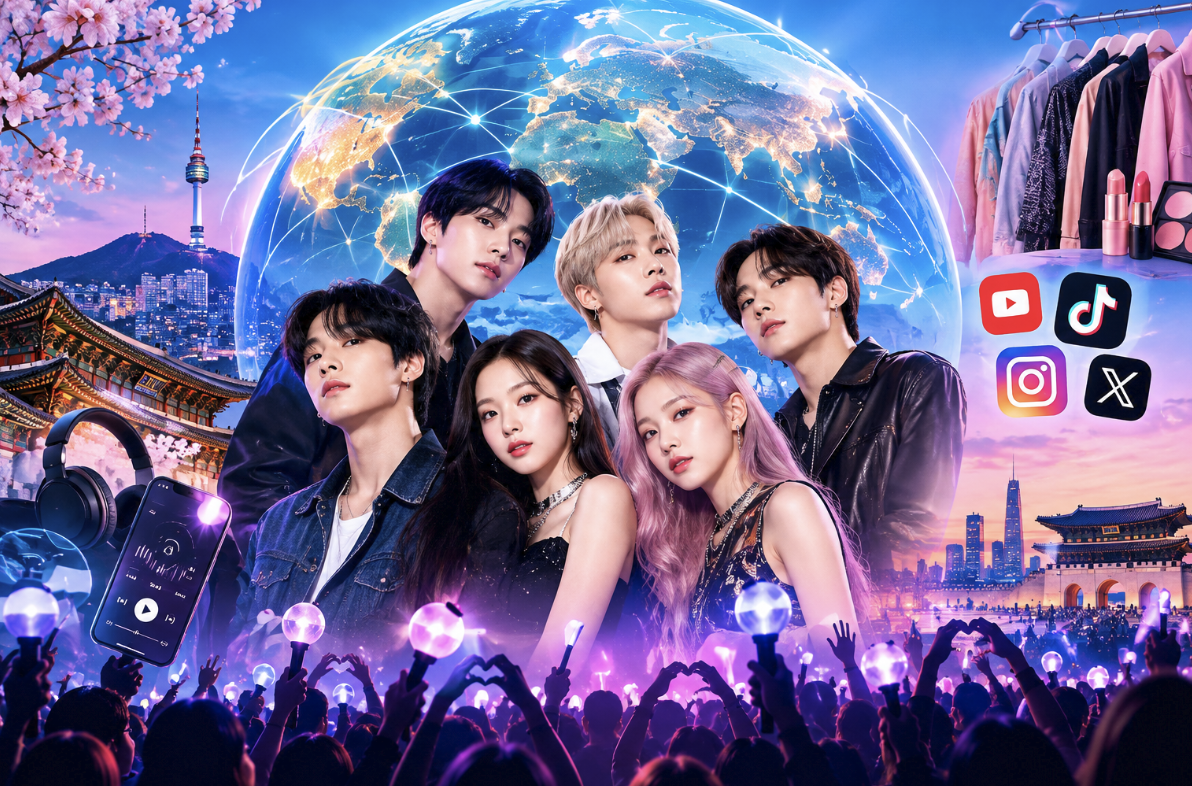
K-Pop is no longer limited to South Korea. Over the past few decades, Korean popular music has developed into a worldwide cultural force that influences music, fashion, entertainment, social media, and even tourism.
What began as a regional music scene has gradually attracted millions of listeners around the world. Artists such as BTS, BLACKPINK, TWICE, EXO, SEVENTEEN, Stray Kids, and many others have helped introduce Korean music to audiences who may previously have had little exposure to it.
However, K-Pop’s success cannot be explained simply by catchy songs or impressive performances. Its global growth comes from a combination of strong entertainment production, dedicated fan communities, digital platforms, visual storytelling, and an ability to connect with audiences across cultural and language barriers.
1. How K-Pop Became a Global Phenomenon
The international growth of K-Pop is closely connected to the broader Korean Wave, commonly known as Hallyu. Korean television dramas, films, food, beauty products, and music have all contributed to the growing international interest in South Korean culture.
K-Pop played a particularly important role because music can travel quickly through digital platforms. YouTube, streaming services, social networks, and fan communities allowed Korean artists to reach listeners far beyond traditional music markets.
In earlier decades, international audiences often discovered foreign music through television, radio, or physical albums. Today, a music video can reach viewers worldwide almost instantly.
This digital accessibility created opportunities for K-Pop artists to build international audiences without depending entirely on traditional Western media.
2. The Role of K-Pop Groups and Global Stars
Individual artists and groups have played a major role in expanding K-Pop’s global influence.
BTS became one of the most recognizable names associated with modern Korean music. Their international success demonstrated that a Korean-language group could develop a massive audience outside Asia.
BLACKPINK also helped strengthen K-Pop’s presence in international pop culture through music, performances, collaborations, fashion, and social media.
Meanwhile, groups such as Stray Kids, SEVENTEEN, TWICE, NewJeans, aespa, IVE, and many others have continued to introduce different sounds and styles to international audiences.
Their success has also changed perceptions about language. Many international listeners enjoy K-Pop even when they do not understand every Korean lyric. Music videos, choreography, emotions, visuals, and translated content help bridge the language gap.
3. Why K-Pop Has Such a Dedicated Fan Base
One of the strongest elements behind K-Pop’s global influence is its fan culture.
K-Pop fandoms are not simply groups of people who listen to music. Many fans actively participate in online communities, discuss releases, create fan art, translate content, organize streaming projects, and promote their favorite artists.
Social media has made this participation even easier.
Fans can communicate with people from different countries, share recommendations, and celebrate new releases together. As a result, a K-Pop fan in Pakistan, Brazil, the United States, France, or the Philippines can become part of the same online community.
This sense of belonging is an important reason why K-Pop can create such strong and long-lasting connections with listeners.
4. K-Pop’s Influence on Fashion and Beauty
K-Pop’s impact extends well beyond music.
Artists frequently become trendsetters in fashion, hairstyles, makeup, accessories, and overall visual presentation. Their appearances in music videos, concerts, interviews, and advertising campaigns can influence what fans consider fashionable.
Korean beauty trends have also benefited from the popularity of K-Pop. International audiences interested in Korean music often become curious about Korean skincare, makeup techniques, hairstyles, and beauty products.
Fashion brands have recognized this connection as well. K-Pop stars increasingly appear in major campaigns and at international fashion events, creating another bridge between Korean entertainment and global consumer culture.
Therefore, K-Pop’s influence is not restricted to the entertainment industry. It contributes to a broader interest in Korean lifestyle and creativity.
5. Social Media Made K-Pop More Accessible
Social media has transformed the way K-Pop artists communicate with their audiences.
Platforms such as YouTube, Instagram, TikTok, and other social networks allow artists and entertainment companies to share music videos, behind-the-scenes footage, dance content, interviews, short clips, and announcements directly with fans.
Short-form video has been particularly useful for K-Pop. A memorable dance move or song segment can become popular among users who may have never previously listened to Korean music.
This creates a powerful cycle:
Music release → social media content → fan participation → viral attention → new listeners
As more people discover a song through social media, some become interested in the artist’s other music. In this way, social platforms can turn a single popular clip into a gateway to an entire music catalog.
6. K-Pop’s Impact on the Korean Economy
The global popularity of K-Pop has also created economic opportunities for South Korea.
Music sales, concerts, streaming, merchandise, advertising, fashion, tourism, and international collaborations all contribute to the wider entertainment ecosystem.
Fans who become interested in Korean music may also develop an interest in visiting South Korea. They may want to attend concerts, explore locations connected with their favorite artists, experience Korean food, or learn more about the country’s culture.
This demonstrates how entertainment can influence consumer behavior and international tourism.
The Korean entertainment industry has therefore become an important part of South Korea’s international cultural presence.
7. K-Pop Is Changing the Global Music Industry
Perhaps the most significant part of K-Pop’s global influence is the way it challenges traditional ideas about what successful international pop music looks like.
For many years, English-language music dominated much of the international mainstream market. K-Pop demonstrated that language does not necessarily prevent an artist from developing a worldwide audience.
K-Pop’s success has encouraged more international collaborations between Korean artists and musicians from other countries. It has also increased attention toward Asian artists and entertainment markets.
At the same time, K-Pop has introduced a highly organized approach to performance, choreography, visual storytelling, and fan engagement.
Its influence can be seen in the growing international interest in Korean entertainment and in the increasing willingness of global audiences to explore music outside their own languages.
8. The Cultural Connection Behind K-Pop’s Success
K-Pop’s global influence is ultimately about more than popularity.
Fans often connect with themes such as friendship, ambition, personal growth, confidence, relationships, and overcoming challenges. These subjects are understandable across cultural boundaries.
Additionally, K-Pop provides audiences with an opportunity to explore another culture while still enjoying familiar elements of modern pop entertainment.
Music becomes a form of cultural exchange.
Someone may begin by listening to a K-Pop song and eventually become interested in Korean dramas, food, language, fashion, history, or travel. This gradual cultural discovery is one reason Hallyu has become such a significant international phenomenon.
9. What the Future Holds for K-Pop
K-Pop’s global journey is still developing.
New artists continue to enter the industry, while established groups experiment with different musical styles and international collaborations. Streaming platforms and social media will likely remain important tools for reaching global audiences.
At the same time, K-Pop faces challenges. The industry operates in a highly competitive environment, and artists can face intense expectations regarding performance, public image, and constant content production.
For K-Pop to maintain long-term global growth, the industry will need to balance commercial success with sustainable careers for its artists.
Nevertheless, the international audience for Korean music remains significant. As digital communication continues to connect people across borders, K-Pop has a strong foundation for continued cultural influence.
Conclusion
K-Pop’s global influence is the result of much more than a collection of successful songs. It represents a powerful combination of music, technology, visual creativity, fandom, fashion, and cultural exchange.
From social media feeds to international concert stages, Korean artists have reached audiences that once seemed difficult to access. Their success has also encouraged people around the world to explore Korean culture in new ways.
Most importantly, K-Pop has shown that music does not have to be performed entirely in English to become globally meaningful. With the right combination of creativity, digital accessibility, and genuine audience connection, music can cross borders and bring people from different cultures together.
Frequently Asked Questions
1. What is K-Pop’s global influence?
K-Pop’s global influence refers to the way Korean popular music affects international music, fashion, entertainment, social media, tourism, and interest in Korean culture.
2. Why is K-Pop so popular worldwide?
K-Pop combines memorable music, professional choreography, visually engaging content, strong fan communities, social media interaction, and accessible digital distribution. These factors help artists connect with audiences around the world.
3. How did social media help K-Pop become popular?
Social media allows K-Pop artists to reach international audiences directly. Music videos, dance challenges, short clips, livestreams, and fan-created content can spread quickly across borders.
4. Does K-Pop influence fashion?
Yes. K-Pop artists frequently influence clothing, hairstyles, makeup, accessories, and beauty trends. Their partnerships with fashion and beauty brands have further strengthened this influence.
5. Can people enjoy K-Pop without understanding Korean?
Absolutely. Many international listeners enjoy K-Pop because of its melodies, performances, choreography, production, and emotional themes. Translations and subtitles also make the music and content easier to understand.
6. Will K-Pop continue to influence global culture?
K-Pop is likely to remain an important part of global entertainment. New artists, digital platforms, international collaborations, and increasingly connected fan communities can continue expanding its reach.