

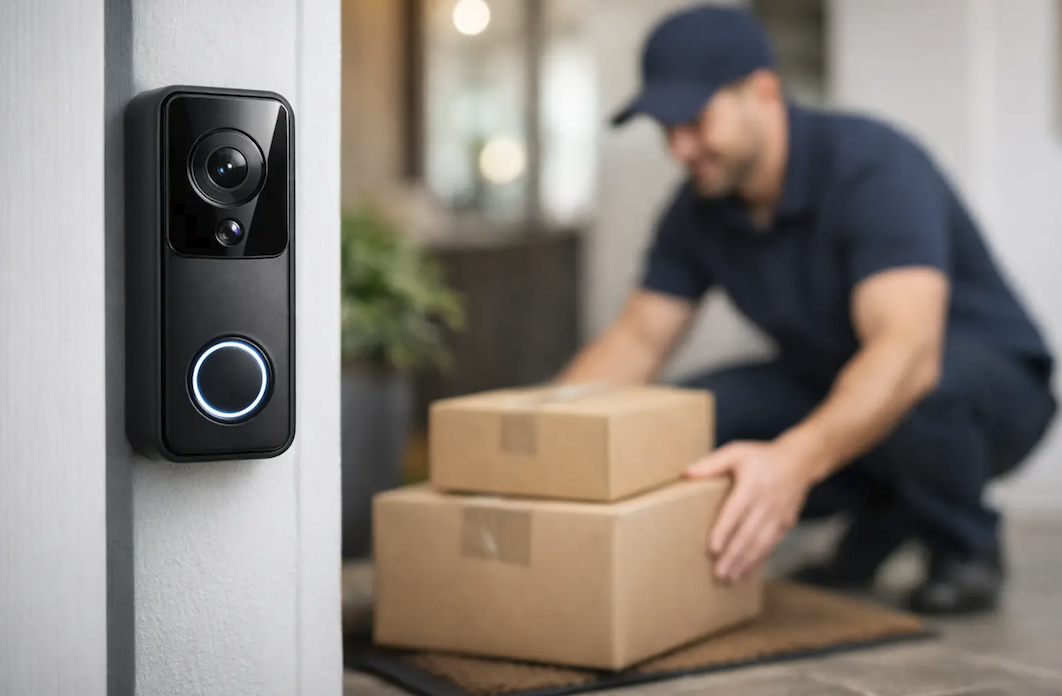
A cardboard box sitting on a porch for even a few hours has become a target in many neighborhoods, and the rise of same-day and next-day delivery has only increased the number of packages left unattended at front doors across the country.
Package theft, sometimes called porch piracy, has pushed millions of households to install video doorbells and outdoor cameras as a first line of defense, turning what was once a niche home security purchase into one of the most common additions to a modern front porch.
Ring, Nest, and a growing list of competitors have built entire product lines around this single problem, and the resulting footage has changed how neighborhoods communicate, how police departments gather evidence, and how delivery companies operate.
The Scale of the Package Theft Problem
Online shopping has grown steadily for more than a decade, and the volume of packages delivered to homes has grown right along with it. Every major holiday season now brings a fresh wave of local news coverage showing porch camera footage of a stranger walking up, grabbing a box, and walking away within seconds.
Because so many purchases now ship directly to a home rather than being picked up in a store, a single missing package can represent a real financial loss for a household, especially around the holidays when higher-value gifts are more likely to be sitting on a porch.
Insurance industry surveys and retailer-reported data have consistently shown that a large share of households report at least one stolen package per year, with theft rates climbing in dense urban areas and multi-unit buildings where packages are often left in a shared lobby or entryway rather than a private porch. Delivery drivers working under tight time pressure sometimes leave packages in visible locations near a sidewalk or driveway rather than tucked out of sight, which can make theft easier for anyone walking or driving past a delivery in progress.
Local news stations in nearly every major metro area now run recurring segments dedicated to porch piracy, often built entirely around footage shared by residents. This coverage has done more than simply document a problem; it has shaped public perception of how common package theft really is, sometimes to a degree that outpaces the underlying data.
Criminologists studying the phenomenon note that widely shared viral footage of a single theft can create an impression of an epidemic even in neighborhoods where theft rates remain relatively low, since a dramatic video travels much further than a quiet week with no incidents at all.
This gap between perceived and measured risk has nonetheless driven real purchasing decisions, with camera sales climbing in the weeks following a highly shared local news story about a theft in a nearby area.
- Holiday season spikes: Package theft reports rise sharply between late November and early January as delivery volumes peak.
- Multi-unit vulnerability: Apartment buildings and condos with shared lobbies see higher theft rates than single-family homes with private entrances.
- Visible drop-off points: Packages left near a sidewalk or driveway are more exposed than those placed closer to a door or side entrance.
- Repeat targeting: Some neighborhoods report the same porches being targeted multiple times once a thief identifies a pattern of unattended deliveries.
Ring and the Rise of Consumer Video Doorbells
Ring, now owned by Amazon, played an outsized role in popularizing the video doorbell category, marketing its product directly around the fear of package theft and unwanted visitors. The company’s aggressive advertising, which often featured real doorbell footage of attempted break-ins or theft, tapped directly into a growing anxiety among homeowners about safety and property protection.
Google’s Nest brand entered the same market with a competing lineup, and other manufacturers such as Arlo and Eufy have carved out their own share of a category that barely existed as a mainstream consumer product a decade ago.
Installation trends have also shifted alongside the product itself, with a growing share of buyers choosing a battery-powered model that requires no electrician or existing wiring, making it possible to set up a functioning camera within minutes of unboxing it. This ease of setup has broadened the customer base well beyond the tech-savvy early adopters who bought the first generation of these products, bringing video doorbells into homes where a resident might otherwise have never considered a security camera purchase at all.
The appeal of these devices goes beyond simple deterrence. Video doorbells allow homeowners to see who is at the door without opening it, communicate with a delivery driver in real time through two-way audio, and receive an instant phone notification the moment someone approaches the entrance.
For renters and homeowners alike, the relatively low cost and simple installation process, often requiring nothing more than a screwdriver and an existing doorbell wiring setup, has made the technology accessible to a much wider range of households than earlier home security systems that required professional installation and ongoing monitoring contracts.
- Amazon’s Ring ecosystem: Ring devices integrate with a broader Amazon smart home lineup, including alarm systems and outdoor cameras.
- Google’s Nest lineup: Nest doorbells connect with Google’s smart home platform and offer similar motion-detection and notification features.
- Budget alternatives: Brands like Wyze and Eufy have introduced lower-cost doorbell cameras that appeal to price-sensitive shoppers.
- Battery versus wired models: Some doorbells run on rechargeable batteries for easier installation, while others require existing doorbell wiring for continuous power.
Neighborhood Watch Goes Digital
One of the more notable side effects of the video doorbell boom has been the rise of neighborhood-focused apps that let residents share footage and safety alerts with each other. Ring’s own Neighbors app allows users to post video clips and written reports of suspicious activity, effectively creating a crowdsourced watch network built on camera footage rather than in-person patrols. Nextdoor, a broader neighborhood social platform, has also become a common place for residents to post porch camera footage of a theft in progress, sometimes leading to a package being returned after a poster is recognized by a neighbor.
Law enforcement agencies have taken notice of this shift, with many local police departments now maintaining formal partnerships that let them request footage directly from Ring users in a given area when investigating a reported theft. This arrangement has drawn criticism from privacy advocates who worry about the expansion of a private camera network functioning as an informal extension of police surveillance, raising questions about consent, data retention, and how footage might be used beyond its original purpose of catching a package thief.
Despite these concerns, the practical effect in many communities has been faster identification of repeat offenders and, in some cases, footage submitted as evidence in criminal cases.
- Formal police partnerships: Some departments maintain agreements with camera companies to request footage from residents in a defined area after a reported incident.
- Crowdsourced alerts: Neighborhood apps let residents post real-time warnings about suspicious activity spotted on camera footage.
- Privacy pushback: Civil liberties groups have raised concerns about private camera networks functioning as an informal surveillance layer without independent oversight.
- Community identification: Footage posted publicly has, in a number of cases, led neighbors to recognize a person and help recover a stolen item directly.
Privacy Concerns Over Camera Overreach
Not everyone views the rapid spread of doorbell cameras as an unambiguous good. Civil liberties organizations have raised concerns that a dense network of privately owned cameras pointed at public sidewalks creates a surveillance environment that residents never explicitly agreed to, even though each individual camera owner is simply protecting their own property. Questions about how long footage is stored, who can access it beyond the original account holder, and whether footage can be subpoenaed in unrelated legal proceedings remain active points of discussion among policymakers and privacy researchers.
Some cities and homeowners associations have debated rules around doorbell camera placement, especially when a camera’s field of view captures a neighbor’s porch or window rather than just the homeowner’s own entryway. These disputes rarely result in outright bans, since the devices are generally legal to install on private property, but they have prompted some manufacturers to add privacy zone features that let a user block out sections of the camera’s view that fall on a neighbor’s property.
As the technology becomes even more common, expect continued debate over where the line falls between reasonable home security and an unintended expansion of neighborhood surveillance.
Lawmakers in a handful of states have introduced bills addressing footage retention limits and data-sharing agreements between camera companies and law enforcement, though comprehensive national standards have not yet emerged, leaving most of the current rules to a patchwork of company policy and local ordinance.
How Retailers and Carriers Have Responded
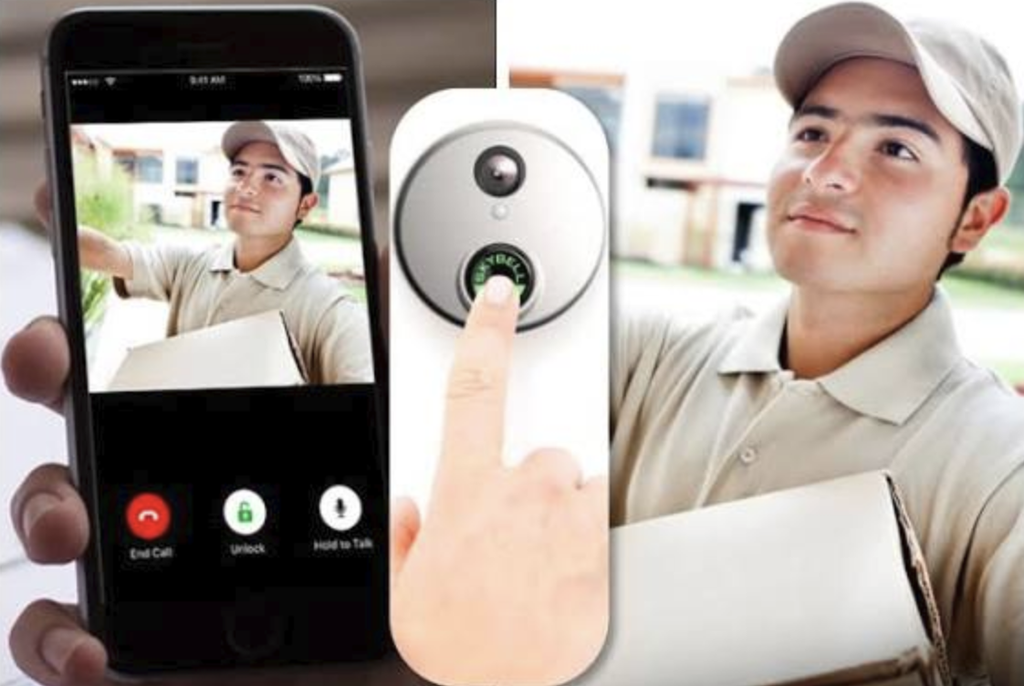
Delivery companies and online retailers have not been passive bystanders to the package theft problem, since a stolen or missing delivery often results in a refund or replacement that cuts into their own margins. Amazon has expanded programs allowing packages to be delivered inside a garage through a connected smart garage door opener, or directly into a vehicle trunk for shoppers who opt into that delivery method.
Locking package boxes, sold by companies like Yale and other smart lock manufacturers, give homeowners a secure drop location that a delivery driver can access with a one-time code while keeping the contents locked until the resident retrieves them.
Retailers have also expanded pickup locker networks in partnership with pharmacies, convenience stores, and dedicated locker companies such as Amazon Hub, giving shoppers an alternative to home delivery entirely for higher-value purchases they would rather not risk leaving on a porch. UPS and FedEx have both grown their network of staffed pickup locations and self-service lockers, allowing customers to redirect a delivery away from their home address if they know they will not be available to receive it in person.
These alternatives have become especially popular among renters in multi-unit buildings, where a shared lobby offers little practical security for an unattended package.
- Garage and in-vehicle delivery: Smart garage integrations and trunk delivery options let shoppers avoid leaving packages exposed on a porch entirely.
- Locking delivery boxes: Secure boxes installed near a front door allow drivers to leave packages that only the homeowner can retrieve.
- Locker networks: Retailer and carrier-operated lockers at retail locations give shoppers a secure alternative to home delivery.
- Delivery instructions and time windows: Many carriers now let customers specify a preferred drop location or delivery window to reduce theft risk.
- Signature-required shipping: High-value orders increasingly default to requiring a signature, preventing a package from being left unattended at all.
Insurance, Refunds, and the Cost of Theft
For all the attention on prevention technology, package theft still carries a real financial cost that falls on retailers, shipping carriers, and sometimes consumers themselves. Most major retailers, including Amazon and Walmart, will replace or refund a package reported as stolen after delivery confirmation shows it arrived, though repeated claims from the same account can trigger a review or a denial of future claims. Shipping carriers generally place liability on the retailer or shipper rather than the recipient, though the process for filing a claim and receiving a resolution varies widely by company and by the specific circumstances of the loss.
Homeowners insurance policies sometimes cover stolen packages under a broader personal property provision, though the deductible on a typical policy often exceeds the value of a single stolen item, making a claim impractical for anything but an expensive purchase. A small number of insurers and third-party services have introduced specific package protection add-ons, marketed directly at frequent online shoppers who want coverage without filing a full homeowners claim.
Whether this niche product category grows into a mainstream offering will likely depend on how persistent the package theft problem remains as delivery volumes continue to climb year over year.
- Retailer refund policies: Amazon, Walmart, and Target typically replace or refund confirmed stolen deliveries, though repeated claims can trigger closer review.
- Homeowners policy limits: Standard personal property coverage may include stolen packages, but deductibles often exceed the value of a single item.
- Third-party package protection: A small number of specialized services now offer add-on coverage marketed specifically to frequent online shoppers.
- Documentation matters: Saving delivery confirmation emails and camera footage speeds up the claims process with both retailers and insurers.
Frequent online shoppers who have experienced repeated theft sometimes find it worthwhile to compare the cost of a dedicated package protection plan against the value of goods they typically have shipped in a given year. For a household ordering only occasionally, the math rarely favors a paid add-on, but for someone running a small business that relies on frequent shipments of valuable inventory, the calculation can look different, and a modest monthly fee may be a reasonable trade for peace of mind.
Final Thoughts
Package theft has become a routine part of modern life alongside the convenience of online shopping, and the response from homeowners, retailers, and technology companies reflects how seriously the problem is taken. Video doorbells have moved from a novelty product to a near-default feature of home security, while delivery companies have expanded lockers, locking boxes, and flexible drop-off options to reduce the number of packages left exposed.
None of these measures eliminate theft entirely, but together they have shifted the balance in favor of the homeowner, giving both evidence and options that did not exist a decade ago.
As delivery volumes continue to grow, the tools built to protect that last stretch between the delivery truck and the front door are likely to keep expanding as well, giving households more say over how and where their purchases finally land.
Read more about Newstwick
Frequently Asked Questions
Do video doorbells really reduce package theft?
Visible cameras act as a deterrent for opportunistic theft, and footage helps identify repeat offenders, though a determined thief wearing a hood or mask can sometimes still get away with a package despite being recorded.
Is it legal to share doorbell footage with police or on neighborhood apps?
Homeowners generally have the legal right to share footage captured on their own property, though laws vary by state regarding audio recording consent in shared or public spaces.
What should someone do if a package is marked delivered but never arrives?
Contacting the retailer directly, checking with neighbors and building management, and reviewing any available doorbell footage are the standard first steps before filing a formal claim.
Are locking package boxes worth the investment?
For households that receive frequent deliveries and have experienced theft in the past, a locking box often pays for itself within a year or two by eliminating the cost of replaced items.
Do delivery companies take responsibility for stolen packages?
Liability typically rests with the retailer or shipper rather than the delivery carrier itself, and most major retailers will replace or refund a package confirmed as stolen after delivery.
How can renters in apartment buildings protect against package theft?
Redirecting deliveries to a workplace, a locker location, or a building’s secure package room, when available, reduces exposure compared with leaving items in a shared, unmonitored lobby, and asking a property manager about camera coverage in common areas can also help.